LEIPZIG, Germany – Transport ministers and high-ranking officials from Organisation for Economic Cooperation and Development (OECD) member countries recently convened in Leipzig, Germany, to address the pressing need for strengthening the resilience of global transport systems. This critical discussion comes as international trade and travel increasingly face disruptions worldwide.
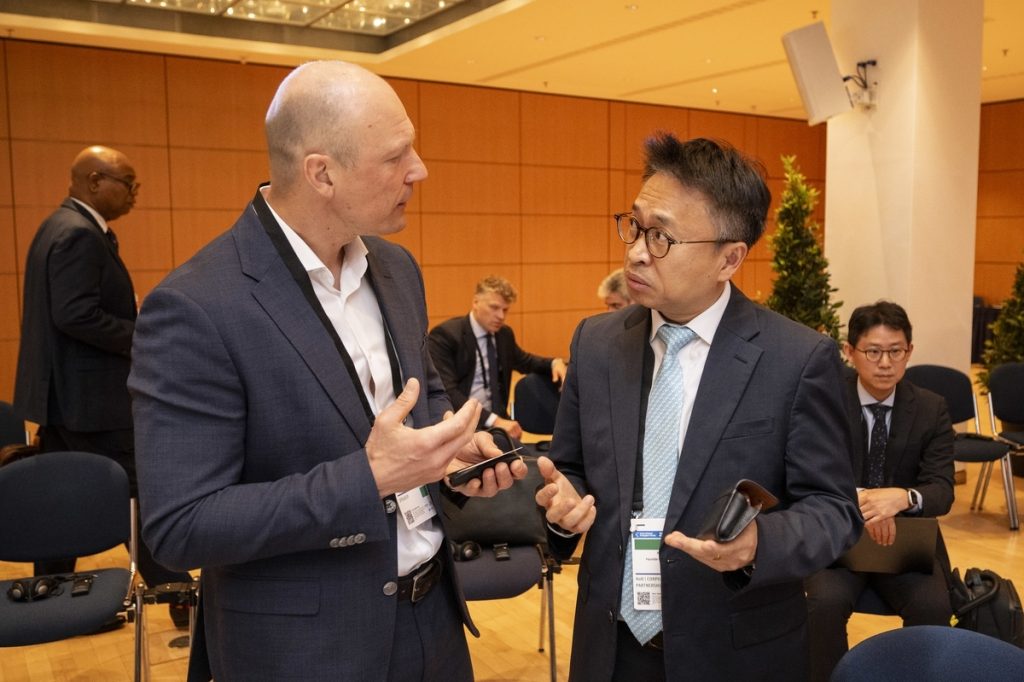
The three-day International Transport Forum (ITF) Summit, held in the eastern German city, gathered over 1,000 participants from 69 member countries under the crucial theme of “Funding Resilient Transport.” Attendees focused on innovative strategies to mobilize investment and develop financing mechanisms designed to enhance the long-term reliability, operational efficiency, and critical connectivity of global transport infrastructure.
Defining resilience within the transportation sector, experts emphasized its importance as the capacity of transport systems to maintain operations or swiftly recover from various external shocks and unforeseen challenges. This year’s summit, running from May 6 to 8 under Azerbaijan’s presidency, represents the world’s largest gathering of transport ministers and stands as a pivotal global forum for shaping transport policy. The 2026 theme is the second in a comprehensive three-year series on transport resilience, spanning from 2025 to 2027.
A significant highlight of the forum was the extensive discussion around leveraging Artificial Intelligence (AI) to bolster transport resilience. A dedicated ministerial roundtable, aptly titled “Steering AI for Transport Resilience: Governance and Funding Pathways,” featured prominent speakers including South Korea’s Vice Minister of Land, Infrastructure and Transport Hong Jee-sun and Na Ki-ho, Vice President at Hyundai Motor Co.
The adoption of AI by transport authorities was, notably, one of two key recommendations endorsed by ITF members in the previous year. As part of ongoing follow-up initiatives, the South Korean government is actively planning to integrate vast datasets from telecommunications networks and public transport cards. This data integration will underpin the development of advanced AI-based systems crucial for accurate demand forecasting and strategic investment analysis, as outlined by Vice Minister Hong. He further underscored the government’s steadfast commitment to supporting private-sector innovation as a fundamental role.
“As AI technology continues its rapid evolution, it is imperative that regulatory frameworks adapt and keep pace with both technological advancements and dynamic market shifts,” stated Vice Minister Hong. He highlighted South Korea’s proactive approach, explaining, “We are actively establishing testbed environments and creating regulatory-free zones where cutting-edge technologies can be rigorously tested and refined in real-world road and urban settings.”
Hyundai Motor Co. showcased its pioneering AI-enabled mobility solutions, including sophisticated autonomous driving technologies and its innovative demand-responsive transport platform, “Shucle.” This platform expertly utilizes real-time data to optimize vehicle operations and enhance urban mobility. The Shucle service is currently operational in key South Korean locations, including Sejong City and Gyeonggi Province.
Na Ki-ho also articulated Hyundai’s strategic vision to significantly expand the application of AI within its manufacturing processes, building upon its existing robust adoption of robotics in logistics. Hyundai aims to strategically transform its identity from a traditional automaker into a comprehensive mobility solutions provider. This ambitious transition involves substantial investment in advanced robotics, exemplified by Atlas, the sophisticated humanoid robot developed by its U.S. subsidiary, Boston Dynamics Inc.
The company has announced plans to establish a dedicated robotics production facility in the United States by 2028, with the capacity to mass-produce up to 30,000 Atlas units annually for integration into its manufacturing operations. However, despite the undeniable benefits of AI, Na issued a cautionary note, emphasizing that its successful deployment necessitates not only substantial upfront investment but also sustained financial commitment towards attracting and retaining skilled personnel crucial for managing and overseeing complex AI systems.
During a press conference held at the Congress Center Leipzig (CCL) to mark the summit’s opening, ITF Secretary General Kim Young-tae highlighted the organization’s pivotal role in assisting governments worldwide to more effectively assess risks and enhance preparedness in response to escalating geopolitical uncertainties. Referencing recent disruptions in vital shipping lanes, such as the Strait of Hormuz, Kim underscored how such events powerfully illustrate the urgent global necessity for strengthening resilience across international transport systems.
Citing projections from the World Bank, Secretary General Kim warned that the cumulative cost of inaction in addressing these vulnerabilities over the next decade could potentially reach a staggering US$1 trillion. “Policymakers must compellingly build a strong case for investing in resilience,” he urged, “by clearly demonstrating tangible returns and accurately quantifying the significant long-term benefits of such crucial investments.”