
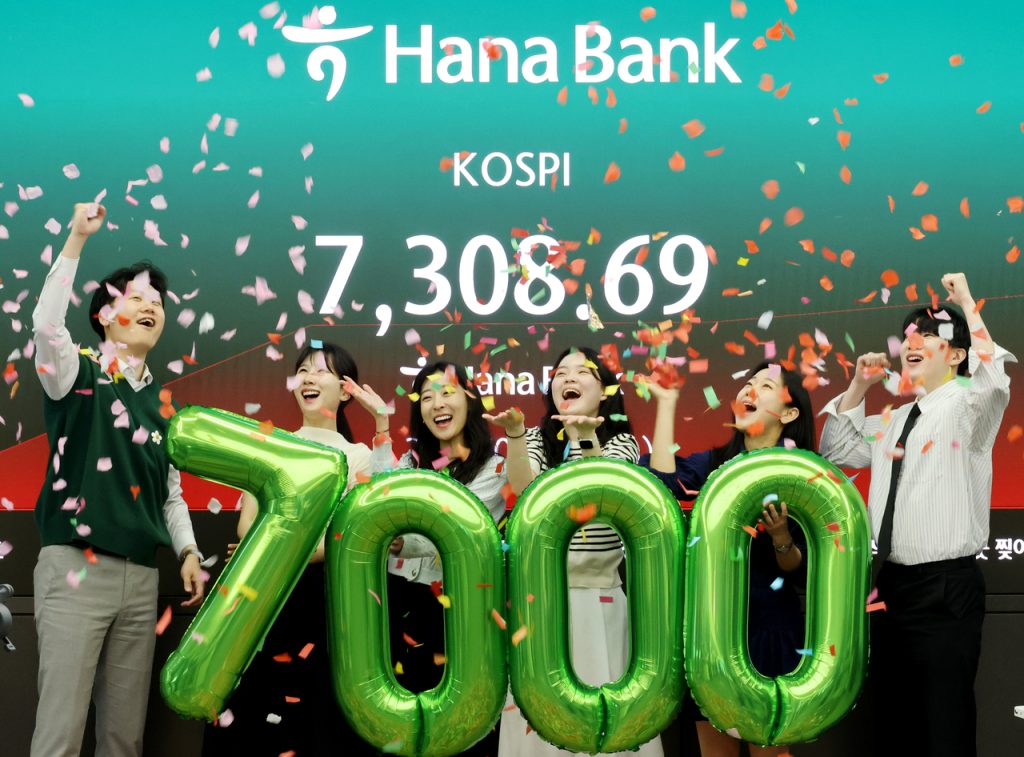
The South Korean stock market achieved a historic milestone on Wednesday as the benchmark Korea Composite Stock Price Index (KOSPI) surged past the unprecedented 7,000-point mark at the opening bell. This significant rally was primarily fueled by positive global sentiment following an announcement from US President Donald Trump regarding efforts to finalize a deal with Iran, specifically involving a pause in operations concerning vessels in the critical Strait of Hormuz.
At the start of trading, the KOSPI recorded a fresh all-time high of 7,093.01 points, marking a robust increase of 156.02 points, or 2.25 percent. This momentous occasion signifies the first time in history that the main index of South Korea’s vibrant stock exchange has breached this crucial psychological and numerical barrier, reflecting strong investor confidence and an optimistic market outlook.
The stellar performance of the KOSPI is part of a multi-week record-breaking ascent, significantly bolstered by substantial gains in the technology sector, particularly among stocks related to cutting-edge artificial intelligence (AI). This enthusiasm for AI-driven equities has played a key role in sustaining the market’s impressive upward trajectory and attracting investor interest.
Highlighting its recent rapid growth, the Korean benchmark index had already reached 6,600 points just last Wednesday and further climbed by over 5 percent to close above 6,900 on Monday, setting the stage for Wednesday’s groundbreaking achievement and further reinforcing its bullish trend.
The immediate catalyst for Wednesday’s market surge stemmed directly from President Trump’s declaration. In a social media post released just before the market opened, he confirmed the pausing of US operations aimed at guiding stranded vessels through the critical Strait of Hormuz. This strategic move is part of broader diplomatic efforts to finalize a settlement with Iran, ultimately seeking to bring an end to the ongoing conflict and foster regional stability, which significantly eased geopolitical tensions and boosted investor optimism in global markets.


