
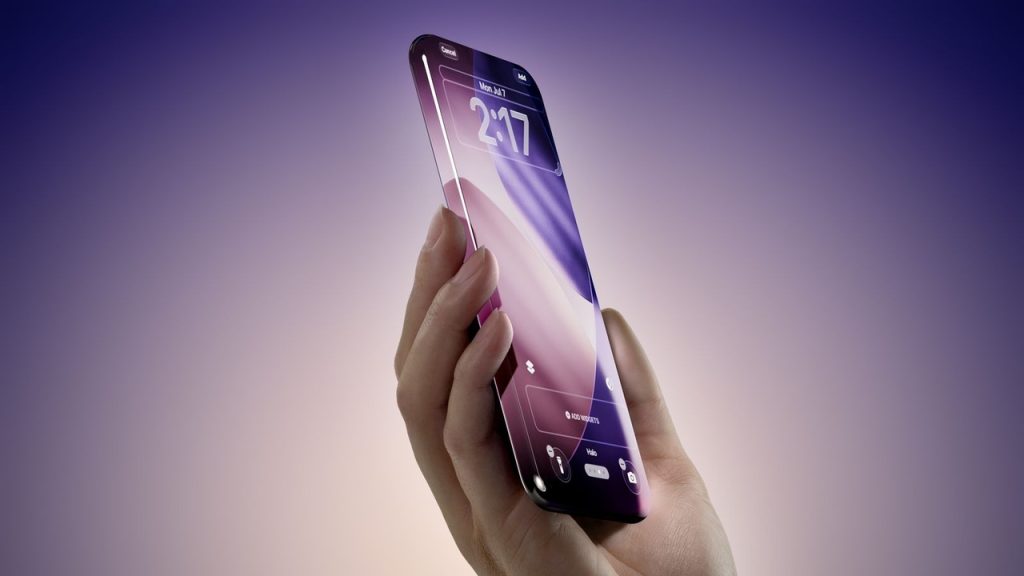
Fresh supply-chain insights from Greater China indicate that Samsung Display is on track to become the exclusive OLED panel supplier for Apple’s much-anticipated 20th-anniversary iPhone in 2027. Should this arrangement materialize, it would echo the sole-vendor agreement that saw Samsung provide all display panels for the iPhone X in 2017.
Within the past week, three separate leaks have independently highlighted details of a custom screen tailored for this future iPhone. The display is described as featuring gently curved edges on all four sides and notably lacks the conventional polarizing film typically found atop OLEDs.
Prominent Greater China leaker Ice Universe, via a post on X (formerly Twitter) on Monday, suggested that Apple might market this innovative screen as a “Liquid Glass Display.” Crucially, the physical curve itself is expected to be very shallow. The striking visual effect of an almost invisible bezel would instead derive from how light is meticulously bent and guided within the panel, making the screen appear to flow seamlessly over the edge rather than physically wrapping around it. Ice Universe emphasized that edge viewing would remain natural and completely undisturbed.
Last week, Weibo-based leaker Digital Chat Station further corroborated these reports, stating that Apple is specifically requesting a “pol-less” panel from Samsung Display. The removal of the polarizing film serves a dual purpose: it thins the overall display stack and significantly increases light transmission. This critical technological advancement is what enables the optical illusion of a disappearing bezel.
Both descriptions strongly point towards Samsung Display’s proprietary COE, or Color Filter On Encapsulation, technology. COE involves applying the color filter directly onto the panel’s encapsulation layer. This advanced technique offers substantial benefits, including a reduction in overall thickness, an increase in brightness by approximately 30 percent, and a decrease in power consumption by roughly 25 percent.
Samsung first brought COE technology to market with the Galaxy Z Fold 3 in 2021. This year, the technology has seen its adoption expand to include the Galaxy S26 Ultra. A report from ETNews in September indicated that this accelerated rollout strategy is timed to establish Samsung’s technological leadership well in advance of Apple’s projected adoption in 2027.
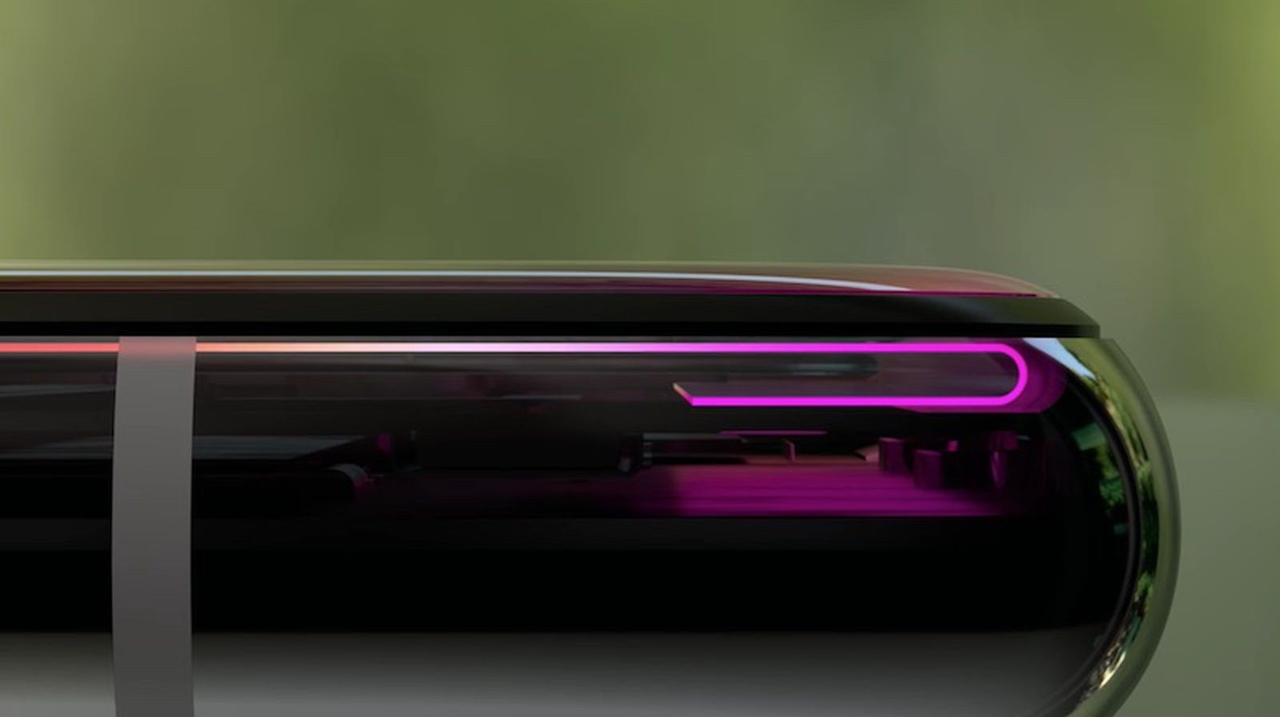
The 2017 precedent of the iPhone X carries considerable weight regarding potential pricing for the 2027 anniversary model. Samsung reportedly charged an estimated $110 to $120 per iPhone X module, a price roughly double that of the LCD panels it replaced. In the years since, Apple has diligently worked to cultivate LG Display and BOE as alternative display sources. However, Korean firms continue to maintain a dominant position within the high-end LTPO (Low-Temperature Polycrystalline Oxide) display segment.
Despite these promising display advancements, the realization of the rumored “all-glass” aesthetic for the 2027 iPhone remains critically dependent on the successful integration of under-display Face ID technology. Ross Young of Display Supply Chain Consultants has voiced concerns that this key technology might not be production-ready within the timeframe. Internally code-named V72 at Apple, the device is currently targeted for a fall 2027 launch, according to a roadmap published by The Information in December.
mjh


