South Korea’s Diversification Edge Over Taiwan Wanes as Semiconductor Dominance Grows
South Korea’s comprehensive industrial foundation historically provided a structural advantage over Taiwan. However, this economic diversification edge is now facing increasing pressure as the Korean economy deepens its reliance on the booming semiconductor sector, notes an economist from Moody’s Analytics.
Often compared with Taiwan due to similar economic scales and significant dependence on chip manufacturing, South Korea’s economy boasts a more diversified mix. This includes robust sectors like automobiles, machinery, and other traditional industries, which have historically acted as a crucial buffer against specific industry shocks. Yet, these very traditional sectors are now confronting mounting challenges from escalating US tariffs and intensified global market competition, prompting concerns about the long-term resilience of Korea’s economic advantage.
“South Korea’s industrial base demonstrates greater diversity than Taiwan’s,” explained Dave Chia, an economist with Moody’s Analytics. “Beyond a substantial tech sector, Korea maintains a significant foothold in traditional manufacturing industries, encompassing automotive and machinery production, an area where Taiwan’s presence is less pronounced.”
“This economic diversity is widely recognized as a fundamental strength, as it ensures South Korea is not solely dependent on the technology sector, which can experience pronounced cyclical and structural fluctuations,” he added.
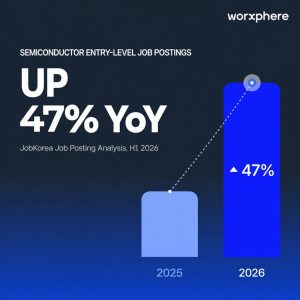
Despite this, the strategic role of semiconductors within the South Korean economy is progressively deepening. Major Korean chipmakers, notably Samsung Electronics and SK hynix, are currently capitalizing on a powerful artificial intelligence-driven memory boom, fundamentally reshaping the nation’s export dynamics.
“First-quarter trade data clearly indicated a significant export rebound, overwhelmingly propelled by semiconductor shipments,” Chia observed. “While semiconductor exports largely remain tariff-exempt, wider global trade uncertainties continue to linger.”
This increasing reliance highlights a growing concentration risk for the South Korean economy. Although semiconductors undeniably serve as a primary engine for economic growth, their escalating dominance sparks concerns that Korea might become overly exposed to sector-specific volatility – precisely the kind of risk its historically diversified industrial base was designed to mitigate.
Concurrently, South Korea’s traditional industries are experiencing a discernible loss of momentum.
“The primary concern is that these established sectors now confront significant headwinds,” Chia elaborated. “The combined impact of US tariffs and intensified global competition has negatively affected their performance, placing considerable pressure on segments of the non-tech manufacturing base.”
Furthermore, external shocks are anticipated to amplify these existing pressures. Dave Chia forecasts a slowdown in South Korea’s economic growth during the second quarter, primarily as escalating geopolitical tensions in the Middle East start impacting global exports and domestic demand.
“The ongoing conflict is projected to hinder South Korean exports by weakening overall global demand. Simultaneously, it will constrain household and business spending domestically through upward pressure on energy prices,” he explained.
South Korea’s economy registered a 0.5 percent quarter-on-quarter expansion in the initial three months of the year. However, projections indicate that economic growth is expected to moderate to approximately 0.3 percent in the second quarter, on a seasonally adjusted basis.
The anticipated slowdown is projected to be “meaningful but not abrupt,” Chia commented, emphasizing that the economic outlook for South Korea remains highly contingent on the evolving geopolitical conflict.
“Provided that geopolitical tensions ease in the coming weeks, the overall economic and inflationary impact should remain manageable,” he stated. “However, a prolonged conflict or any further escalation would significantly heighten the risk of a more pronounced economic slowdown.”
Against this economic backdrop, the Bank of Korea (BOK) is widely anticipated to maintain its policy rate at 2.5 percent for an extended duration, notwithstanding recent changes in its leadership.
“The central bank is poised to sustain its pause, primarily due to the risk of renewed inflationary pressures stemming from higher global commodity prices,” Chia noted. He also highlighted supplementary concerns regarding currency weakness in South Korea, elevated levels of household debt, and firm housing market prices.
He did not, however, preclude the possibility of a significant policy shift should economic conditions materially deteriorate.
“Our baseline economic forecast assumes no additional interest rate cuts this year, unless South Korean economic growth significantly weakens,” he concluded. “Should inflation reaccelerate or currency pressures intensify considerably, the BOK might even consider moving towards interest rate hikes.”
silverstar