
South Korea Repositions Public Procurement as Strategic Engine for Industrial Innovation and National Competitiveness
South Korea’s public procurement system is undergoing a profound and strategic transformation, evolving from a traditional back-office function focused primarily on price and administrative efficiency into a potent frontline policy tool. This significant shift aims to actively shape industrial strategy, fortify critical supply chains, and accelerate the development of cutting-edge emerging technologies across the nation.
At the forefront of this pivotal transition is the Public Procurement Service (PPS), the key governmental agency responsible for overseeing approximately 225 trillion won (roughly $160 billion) in annual public spending. This substantial sum accounts for about 9 percent of South Korea’s gross domestic product, highlighting the immense leverage available for driving national objectives.
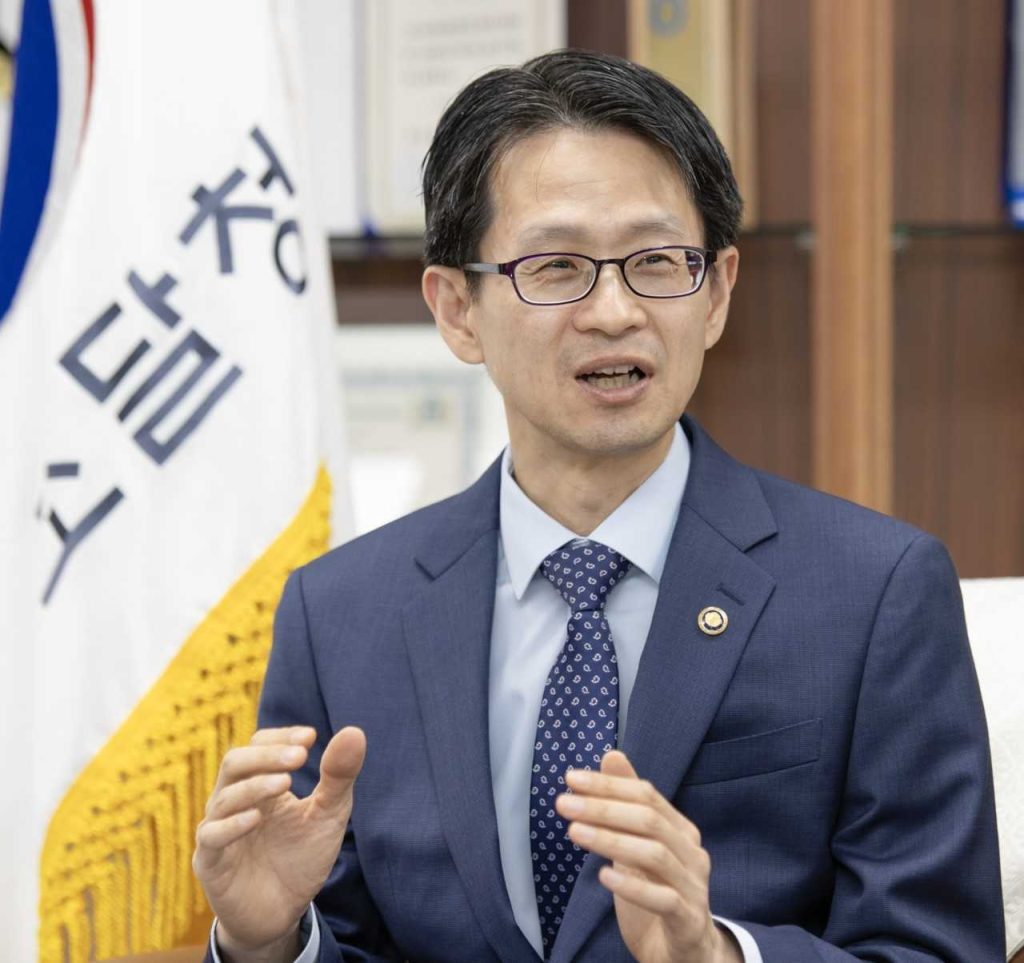
In a recent interview with The Korea Herald, Public Procurement Service Administrator Baek Seung-bo articulated how public procurement is being strategically leveraged to stimulate growth in vital sectors such as artificial intelligence (AI), robotics, and climate technologies. This forward-looking approach is implemented while rigorously upholding the core mandate of transparency, accountability, and ensuring optimal value for taxpayer money.
“Public procurement must continually adapt and evolve in tandem with the dynamic global economy,” Baek emphasized. “Its role extends far beyond merely acquiring goods and services efficiently; it is now fundamentally about harnessing the immense power of government purchasing to foster innovation, strengthen national supply chain resilience, and cultivate entirely new markets for future growth.”
Transforming Public Procurement: From Operational Efficiency to Strategic National Policy
Historically, South Korea’s public procurement framework has predominantly emphasized securing necessary goods and services at the most competitive prices, all while meticulously ensuring fairness and transparency within the process. While these foundational principles remain immutable, the scope and strategic importance of public procurement are now considerably expanding.
As escalating geopolitical tensions continue to redefine and reconfigure global supply chains, and as rapid advancements in AI and diverse digital technologies reshape entire industries, procurement is increasingly being recognized and utilized as a powerful policy instrument to address these complex challenges and opportunities.
“Amidst a landscape of escalating uncertainty, ranging from critical supply chain disruptions to unforeseen energy shocks, the strategic imperative of public procurement has become more pronounced and vital than ever before,” Baek noted.
This strategic pivot is particularly evident in what officials now term “strategic procurement.” Under this paradigm, government demand is deliberately utilized to advance critical national priorities, encompassing everything from achieving ambitious carbon neutrality goals to bolstering overall industrial competitiveness and technological leadership.
Innovation Procurement: Government as Catalyst and First Buyer for Emerging Technologies
A cornerstone of South Korea’s new strategic procurement policy is “innovation procurement,” a groundbreaking initiative where the government actively functions as an early adopter and first buyer of nascent technologies. This crucial role helps innovative companies successfully navigate the perilous “valley of death” – the critical phase between successful product development and full commercialization.
This pioneering practice has seen significant expansion. Government purchases of innovative products have surged dramatically, climbing from approximately 400 billion won in 2020 to exceeding 1 trillion won by 2024, demonstrating a strong commitment to fostering innovation.
A key mechanism facilitating this is pilot procurement, where the government procures early-stage, innovative products and enables public institutions to rigorously test them under real-world operating conditions. Participating companies gain invaluable feedback and critical performance data, which can then be used to refine their products and establish a credible track record in the market.
“This creates a highly beneficial virtuous circle,” Baek explained. “Companies continually improve their technology and product offerings, build essential market credibility, and subsequently expand their presence into the broader commercial market.”
The innovation procurement program has already yielded tangible positive outcomes. For instance, floor-mounted pedestrian signals, which are now a common and effective safety feature at crosswalks nationwide, were initially designated as an innovative product under this very program. Within five years, these signals were instrumental in reducing pedestrian accidents by an impressive 40 percent and have since grown into a substantial market valued at over 700 billion won.
Officials cite such success stories as compelling evidence of how public procurement can not only support existing industries but also proactively generate entirely new sectors and market opportunities.
The next ambitious phase of innovation procurement is set to be significantly driven by the transformative potential of artificial intelligence (AI).
With global competition in AI rapidly intensifying, the South Korean government aims to strategically deploy its purchasing power to accelerate the widespread adoption of advanced AI technologies across all public services, while simultaneously providing robust support for domestic AI developers and solution providers.
“Leadership in AI will undoubtedly be a decisive factor in determining future national competitiveness,” Baek asserted. “Public procurement can serve as an indispensable catalyst by becoming the primary and most reliable early buyer for these cutting-edge AI solutions.”
To achieve this objective, the Public Procurement Service plans to introduce a specialized evaluation track specifically tailored for AI products. This unique framework will meticulously account for the distinct characteristics of AI technology, including its inherent reliability, model performance metrics, and comprehensive risk management protocols.
Furthermore, the agency is actively easing market entry barriers for emerging AI firms by streamlining registration procedures for the government’s comprehensive online procurement platform and offering preferential treatment during competitive bidding processes.
In parallel with these initiatives, the PPS is actively pursuing what it terms an “AI transformation” of its own procurement operations. This involves strategically deploying sophisticated AI tools across the entire procurement lifecycle – from advanced price analysis and objective bid evaluation to efficient contract management and proactive supply chain monitoring.
The overarching goal of this internal AI transformation is not only to dramatically improve operational efficiency but also to significantly enhance data-driven decision-making capabilities within increasingly complex and dynamic procurement environments.
Alongside these forward-looking initiatives, the government is also actively pursuing extensive regulatory reform to make the public procurement system more agile, flexible, and fundamentally market-oriented.
Under a sweeping program aptly named “Procurement Reboot,” authorities are meticulously reviewing and revising dozens of long-standing rules that have historically governed the sector, many of which are now considered outdated or overly prescriptive.
One of the most keenly anticipated changes involves granting greater autonomy to local governments in their procurement decisions.
Previously, local authorities were often mandated to procure many goods and services through centrally managed contracts. This forthcoming reform will empower them to strategically choose between centralized and independent procurement methods, based on which option offers superior value and efficiency for their specific needs.
While this significant change is widely expected to foster increased competition and enhance overall efficiency, it has also raised some concerns regarding potential side effects, such as the risk of excessive price competition or potentially reduced opportunities for small and medium-sized businesses.
To proactively mitigate these potential risks, the agency plans to implement the reform in carefully phased stages, commencing with pilot programs and introducing robust safeguards, including stricter oversight mechanisms and enhanced transparency requirements.
Balancing Strategic Growth, Fairness, and Sustainable Procurement Objectives
Despite the intensifying emphasis on strategic objectives and fostering innovation, officials steadfastly affirm that the foundational principles of public procurement – namely fairness, transparency, and uncompromising quality – remain absolutely non-negotiable.
“The bedrock of public procurement is unwavering trust,” Baek stated firmly. “We are committed to ensuring that all procurement processes are fully transparent and that all participating companies compete on a truly level playing field, fostering genuine meritocracy.”
Concurrently, public procurement is increasingly being utilized to actively support broader societal goals, including ambitious carbon reduction targets, significant job creation efforts, and vital support for small and disadvantaged businesses, promoting inclusive economic growth.
The formidable challenge, as the PPS chief openly acknowledged, lies in meticulously balancing these multifaceted objectives without compromising the fundamental efficiency and effectiveness of the procurement system itself.
Eight months into his impactful role, Administrator Baek outlined his management philosophy, which is anchored on four core principles: field-oriented decision-making, swift responsiveness to change, visionary leadership, and cultivating a positive and empowering workplace culture.
“Effective procurement truly happens in the dynamic marketplace, not merely behind office desks,” he emphasized. “Actively listening to the invaluable insights from both companies and public institutions is absolutely essential for designing and implementing truly effective public policies.”
This hands-on approach has involved frequent and meaningful engagement with a diverse range of stakeholders, from fledgling small businesses to large public agencies, alongside continuous, real-time monitoring of policy implementation directly on the ground.
Looking ahead, Baek envisions public procurement as a pivotal lever for South Korea’s next phase of robust economic growth – particularly in cementing the nation’s technological leadership and innovation prowess on the global stage.
“Public procurement has a direct and tangible impact on the daily lives of citizens and the operational vitality of businesses,” he concluded. “By strategically harnessing its power, we can not only stimulate groundbreaking innovation and strengthen national competitiveness but also propel our economy towards its next significant leap forward.”
kwonhl


