
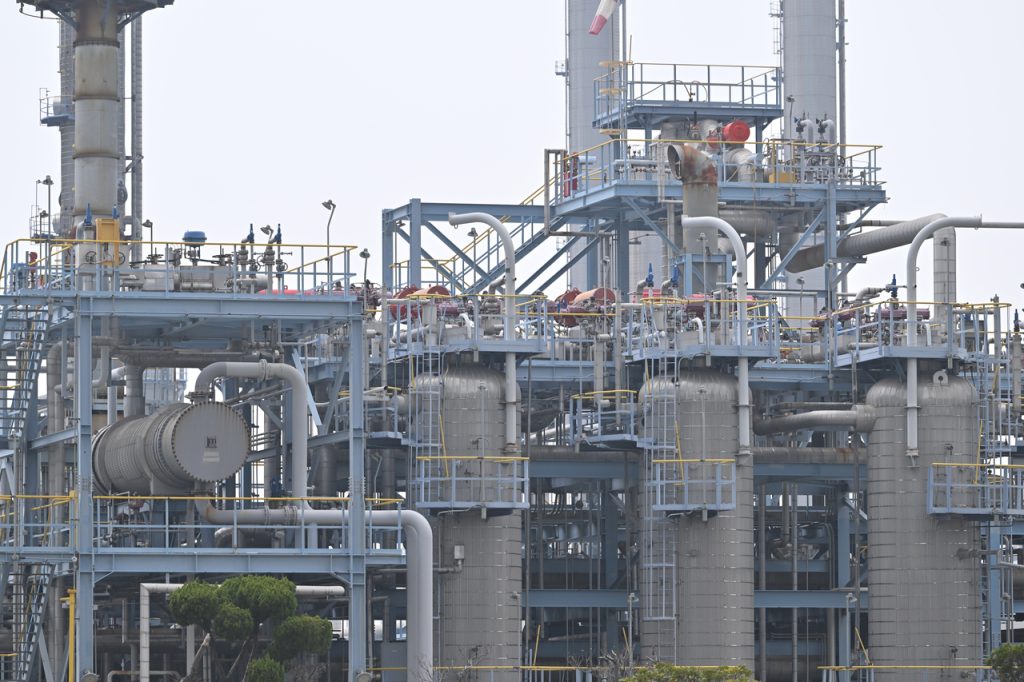
South Korea is set to secure a significant portion of its vital naphtha supplies for May, with the industry ministry announcing Tuesday that up to 90 percent of pre-conflict levels are expected. This encouraging development is prompting major petrochemical companies across the nation to ramp up their plant operations in direct response to the bolstered inbound supplies of this critical industrial feedstock.
The operational capacity at Yeochun NCC, a key player in the petrochemical sector that previously declared force majeure on some products due to naphtha shortages, has seen a notable increase. According to the Ministry of Trade, Industry and Resources, its plant operation rate surged to 65 percent as of last Friday, up from 55 percent at the beginning of April.
Similarly, Korea Petrochemical Ind. Co. also reported a significant improvement, with its operation rate rising from 62 percent to 72 percent during the same period, underscoring a broader recovery trend in South Korea’s petrochemical industry.
The anticipated stable naphtha supplies for the upcoming month are a direct result of the South Korean government’s proactive efforts to secure alternative energy sources and alleviate the substantial cost burden faced by domestic companies importing this essential raw material. Naphtha is indispensable not only for the petrochemical sector but also for various other industrial applications.
Earlier this month, the industry ministry unveiled plans to inject 674.4 billion won (approximately US$457 million) into a support program. This initiative aims to cover up to 50 percent of the price differential between pre-conflict prices and increased import costs of naphtha for the April-June period, ensuring the stabilization of this crucial material’s availability.
Furthermore, South Korea has successfully diversified its naphtha procurement, securing 2.1 million tons from four Middle Eastern nations, including Oman and Saudi Arabia, by the end of this year. This strategic acquisition is equivalent to roughly one month’s supply, based on last year’s national demand, reinforcing the nation’s energy security.
In a related move to bolster energy resilience, the ministry also provided updates on the government’s innovative crude oil swap system. South Korean oil refineries have actively applied for swap deals, totaling approximately 31 million barrels for the current and upcoming months.
As of Tuesday, the government has already finalized agreements to exchange a combined 14 million barrels of crude with various companies. Plans are also underway to sign additional swap deals for around 16.5 million barrels in May, further enhancing the flexibility of crude oil management.
Introduced this month, the crude oil swap system allows the government to lend portions of its strategic oil reserves, primarily Middle Eastern crude, to domestic oil refineries. Companies are then responsible for restoring these reserves with alternative crude supplies they procure, effectively ensuring continuous supply while managing geopolitical risks.


