Hyundai’s Pivotal China Reset: Auto China 2026 Unveils EV & Software-Driven Future
Hyundai Motor Group is strategically moving beyond its traditional image in China, where it was once primarily recognized for affordable, gasoline-powered vehicles.
The South Korean auto giant is now embarking on its most ambitious transformation in over two decades, aiming to reinvent itself as a leading manufacturer of advanced electric and software-driven vehicles within the world’s largest and most dynamic automotive market.
Auto China 2026, the world’s largest auto show, opening this Friday in Beijing, will be Hyundai’s pivotal platform to formally launch its Ioniq brand in China. This strategic move aims to reposition its local joint venture, Beijing Hyundai Motor, as a prominent new-energy vehicle (NEV) brand.
This profound strategic shift represents Hyundai’s most significant repositioning since its initial entry into the Chinese market in 2002, established through a 50-50 joint venture with BAIC Motor.
Historically, Hyundai Motor and its sister brand Kia were among China’s top three foreign carmakers. By 2016, Beijing Hyundai, alongside Dongfeng Yueda Kia (now known as Jiangsu Yueda Kia Motors), collectively captured over 10 percent of the competitive Chinese passenger vehicle market.
Between 2010 and 2016, the Hyundai brand consistently achieved annual sales exceeding 1 million vehicles in China, peaking at an impressive 1.1 million units in 2016. This established China as Hyundai’s largest global market, even surpassing its home market of South Korea.
However, Hyundai’s market fortunes shifted dramatically following a diplomatic dispute between Seoul and Beijing concerning the 2017 deployment of THAAD, an advanced US antimissile system, in Korea. This situation led to a significant consumer backlash against Korean brands across China.
Concurrently, Hyundai faced challenges in keeping pace with China’s rapid transition towards electric and software-driven vehicles. The nation’s aggressive push for EVs significantly boosted the growth of domestic brands like BYD and Geely. By 2025, new-energy vehicles (NEVs), encompassing both EVs and hybrids, constituted over half of all new vehicle sales in the Chinese market.
Now, Hyundai is strategically eyeing a comprehensive market reset in China.
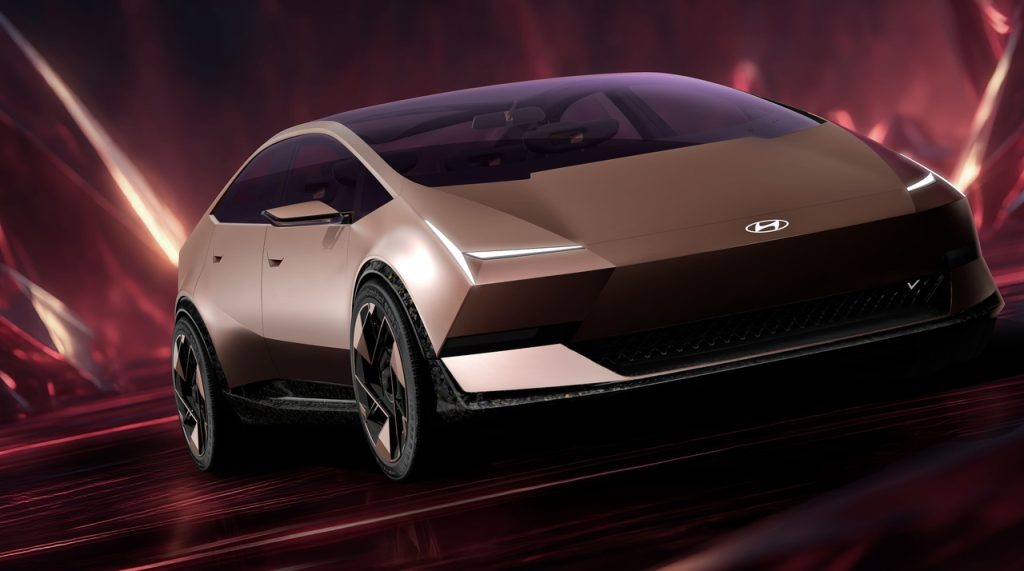
During Auto China 2026, Hyundai will proudly unveil its first mass-produced electric vehicle (EV) under the Ioniq brand, meticulously designed specifically for the discerning Chinese market.
Hyundai emphasizes that deep localization will be central to its strategic revamp, encompassing all aspects from vehicle design, advanced autonomous driving software, and connected services to robust charging infrastructure.
This new Ioniq EV model will incorporate cutting-edge autonomous driving technology, developed in collaboration with Chinese startup Momenta. Its functions are precisely tailored to local road conditions, which is a crucial differentiator when competing with established Chinese EV manufacturers.
Furthermore, Hyundai plans to introduce extended-range electric vehicles (EREVs) in China for the first time next year. These EREVs specifically target consumers who frequently drive long distances and may still have concerns regarding charging availability.
Extended-range electric vehicles (EREVs) combine an electric motor with an efficient gasoline engine that actively recharges the battery while driving. This innovative powertrain configuration has emerged as one of the fastest-growing segments within the Chinese automotive market.
During last month’s shareholders meeting, Hyundai Motor CEO Jose Munoz underscored China’s critical importance to the company’s future trajectory. Operating under the strategic slogan “In China, For China, To Global,” Munoz announced ambitious plans for Hyundai to unveil six new electric vehicles (EVs) by 2030, targeting an annual sales goal of 500,000 units.
Sister brand Kia is similarly accelerating its electrification efforts in China. The company has commenced mass production of its popular EV5 SUV at its Yangcheng plant, serving both the robust local market and facilitating exports to international markets such as Australia and Latin America.
Hyundai Motor Group’s revitalized China strategy encompasses far more than just vehicle production and sales.
In January, senior Hyundai executives engaged with major Chinese industry leaders, including CATL, Sinopec, and Yueda Group. These discussions explored broader strategic partnerships across crucial sectors like advanced batteries, hydrogen energy solutions, and future mobility innovations.
Specifically, Hyundai and leading battery manufacturer CATL deliberated on next-generation battery technologies, including advanced cell-to-pack systems, and strategies to ensure a more resilient and stable supply chain.
Collaborating with energy giant Sinopec, Hyundai is actively expanding its cooperation in hydrogen infrastructure development through HTWO Guangzhou, Hyundai’s dedicated hydrogen fuel-cell subsidiary located in the strategically important southern Chinese city.
The Hyundai Motor Group is also exploring extensive cooperation opportunities with Yueda Group, Kia’s established Chinese joint venture partner. The aim is to forge a long-term, integrated business model that spans advanced vehicle batteries, sustainable hydrogen solutions, and innovative future mobility services.
sahn