By Woo Jae-yeon
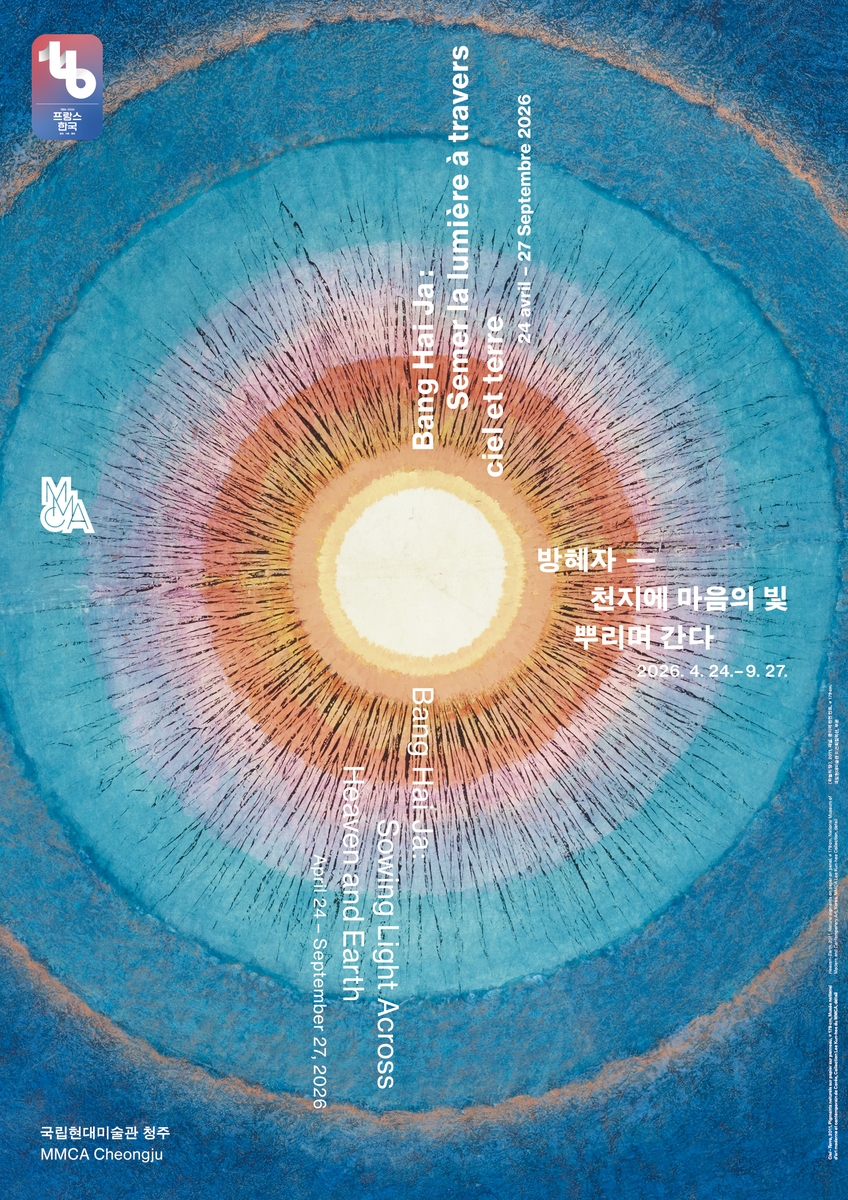
The highly anticipated major exhibition, “Bang Hai-ja: Sowing Light Across Heaven and Earth,” is set to captivate art enthusiasts with a profound journey through the artistic world of the acclaimed Korean-French artist. Opening at the National Museum of Modern and Contemporary Art (MMCA) Cheongju, this extensive showcase features 67 artworks spanning Bang Hai-ja’s entire career, from her formative years to her late masterpieces. Complementing the visual feast are over 200 archival materials, collectively offering a comprehensive insight into her distinctive artistic philosophy and rich oeuvre.
This significant exhibition, honoring the late artist who primarily lived and worked in France, also commemorates the 140th anniversary of diplomatic relations between South Korea and France, highlighting the cultural bridge she embodied.
A truly special aspect of this Bang Hai-ja retrospective is that over half of the exhibited works are making their debut in her home country, including invaluable pieces loaned from prestigious institutions like the Centre Pompidou and other prominent French museums.
Born in Seoul in 1937, Bang Hai-ja displayed an innate artistic talent from an early age. Despite her initial aspirations to study literature and become a poet, her high school teacher strongly encouraged her to pursue fine art, recognizing her unique potential.
“Painting is done not by the hand but by the heart. And you already have it in you,” the revered artist recalled her teacher wisely saying during an interview with News Agency in April 2018.
Following her graduation from Seoul National University, Bang Hai-ja moved to Paris in 1961 to immerse herself in the European art scene. Her parents, both art lovers and educators, fully supported this pivotal decision. It was in Paris that she met Pierre Courthion, a highly respected art historian and critic who became her most ardent supporter until his passing in 1988 at the age of 86.
In the same interview, Bang Hai-ja vividly described the moment she felt an undeniable connection to light as an artistic subject. She recounted watching sunlight dance across a small stream near her grandparents’ house, prompting a profound curiosity about capturing its essence on canvas.
Ultimately, she believed that light itself chose her as its artistic medium and subject, rather than the other way around, defining her career-long exploration of light’s spiritual and physical dimensions.


A crowning achievement in her distinguished career came when she was commissioned to design and create stunning windows for the historic Chartres Cathedral in France. This UNESCO World Heritage Site, revered as one of medieval Europe’s most celebrated monuments, now features four contemporary windows by Bang Hai-ja, each exquisitely themed around the concepts of light, life, love, and peace. These unique installations offer a modern spiritual dimension to the ancient edifice.
“This creates a virtuous cycle in which light is life, life is love and love in turn is peace,” she eloquently explained during the 2018 interview, articulating the profound interconnections within her work.
MMCA Director Kim Sung-hee commented that the late artist, despite her significant contributions, perhaps did not receive the full recognition she deserved during her lifetime. She emphasized that the current exhibition “offers an important opportunity to fully reexamine” and appreciate Bang Hai-ja’s profound artistic world.
“By presenting both works from the MMCA’s esteemed collection and pieces held in France that have never before been introduced to Korean audiences, we aim to provide visitors with a unique occasion to explore this exceptional artist’s practice more broadly and deeply,” Director Kim stated.
The “Bang Hai-ja: Sowing Light Across Heaven and Earth” exhibition officially opens its doors on Friday and will run until September 27th at the MMCA’s Cheongju branch, inviting all to experience the luminous legacy of a remarkable artist.