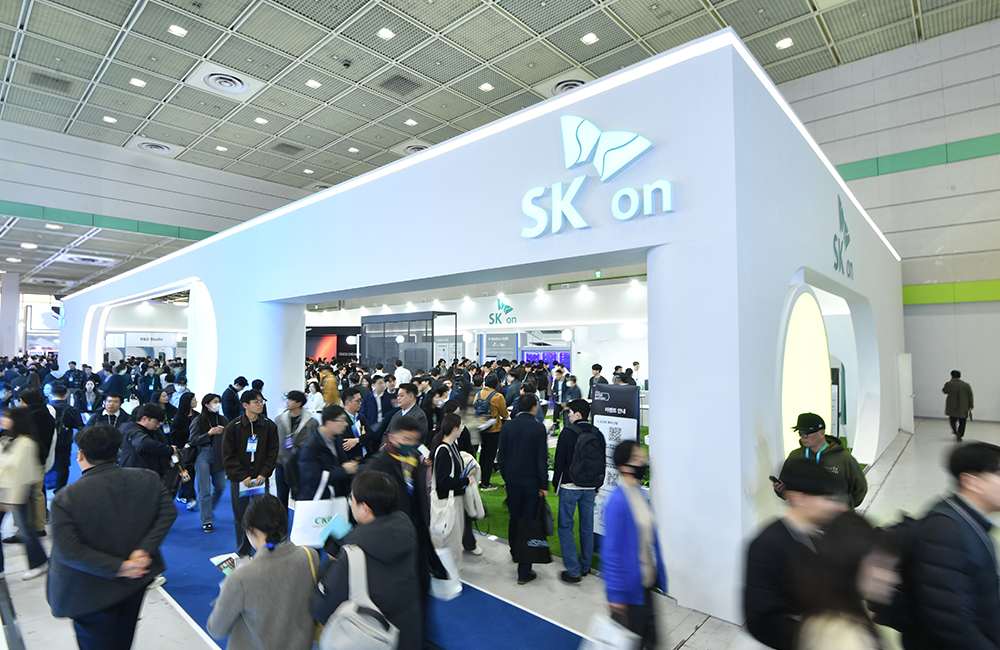
SK On announced Wednesday its strategic move to establish a new office in Tokyo as early as this month, significantly intensifying its foray into Japan’s burgeoning electric vehicle (EV) and energy storage system (ESS) markets.
This new Tokyo branch marks SK On’s fourth global operational base, joining its existing offices in the US, China, and Hungary, underscoring the company’s expanding international footprint in the advanced battery sector.
An SK On official elaborated on the decision, stating, “The Tokyo office is poised to become a pivotal strategic hub, accelerating our market penetration within Japan’s dynamic automotive and ESS sectors. It will enable us to respond with greater agility to customer demands, secure new orders, and drive sustained profitability.”
Japan, traditionally a stronghold for hybrid vehicles, is now witnessing a robust and accelerating shift towards EV adoption, bolstered by enhanced government subsidies. The Ministry of Economy, Trade and Industry recently boosted incentives for battery-powered vehicles and other sustainable mobility solutions by 400,000 yen ($270), raising the maximum subsidy to 1.3 million yen.
Market data from Nikkei confirms this upward trend, reporting record new passenger EV sales of 26,959 units in Japan during the first quarter. This represents an impressive 80 percent year-over-year increase and marks the first time quarterly sales have surpassed 20,000 units since 2023, signaling a clear growth trajectory for electric vehicles in the region.
Furthermore, Japan’s policy landscape is evolving to reduce reliance on specific overseas supply chains, now incentivizing batteries produced domestically or sourced through “Japan-linked” supply networks. Industry observers suggest this creates a compelling window of opportunity for leading Korean battery manufacturers like SK On, even without direct Japanese manufacturing facilities.
SK On has proactively cultivated strong relationships with Japanese automakers. A notable example is its landmark partnership with Nissan, secured last year. This substantial 15 trillion won ($10.1 billion) deal will see SK On supply 99.4 gigawatt-hours of advanced high-nickel pouch-type battery cells for Nissan’s North American models between 2028 and 2034.
Beyond EVs, Japan’s energy storage system (ESS) market presents another significant growth opportunity for SK On. Forecasts from LS Electric project substantial expansion, with the market expected to grow from $343.6 million in 2024 to an estimated $1.1 billion by 2030, highlighting its immense potential for new ventures and partnerships.
hyejin2