South Korea’s Fiscal Health: Minister Park Hong-geun Addresses Debt, Boosts Growth & Tightens Spending
South Korea’s top budget official, Minister Park Hong-geun, has strongly countered the International Monetary Fund’s (IMF) recent warnings regarding the nation’s escalating debt burden. He asserted that Korea’s debt-to-GDP ratio remains commendably low compared to other advanced economies, underscoring the government’s rigorous approach to “strictly managing” fiscal spending.
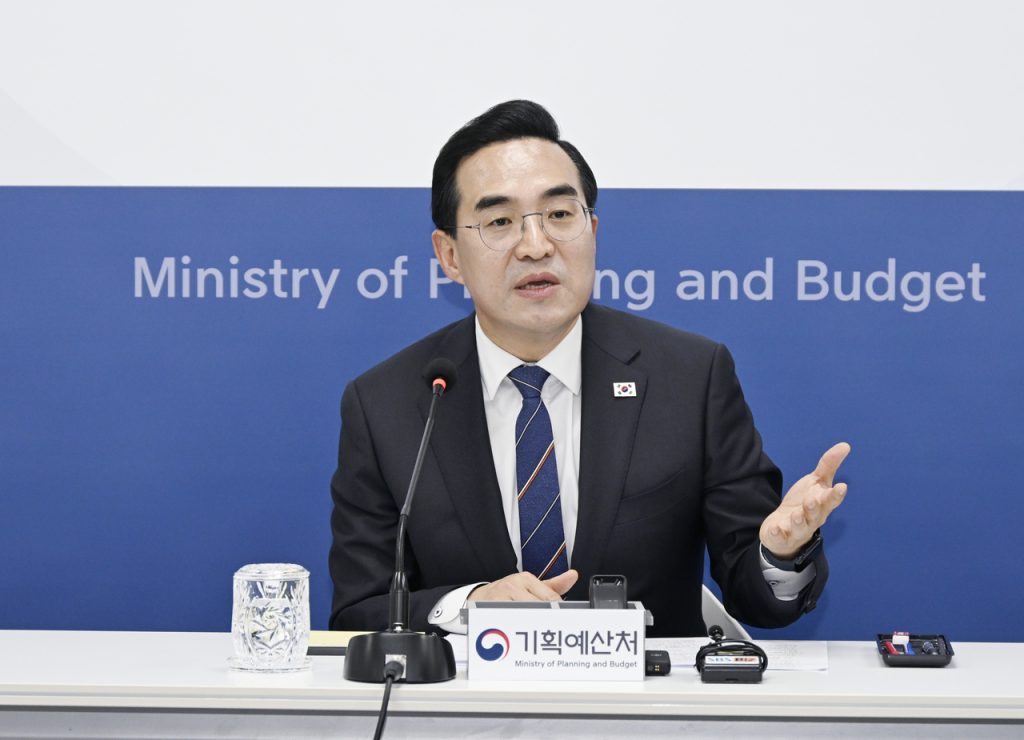
During his inaugural press conference since assuming office last month, Planning and Budget Minister Park Hong-geun reinforced his stance, stating that South Korea’s national debt level is “lower compared to many key countries.” This statement aimed to alleviate concerns sparked by the IMF’s most recent Fiscal Monitor report.
The contentious IMF report forecasted South Korea’s debt-to-GDP ratio could climb to 63.1 percent by 2031, marking the highest projection yet for the nation and flagging the increase as “significant,” comparable to Belgium’s trajectory. Currently, South Korea’s debt ratio stands at 54.4 percent, nearing the 54.7 percent average observed in non-reserve-currency economies.
Minister Park further challenged the accuracy of IMF debt forecasts, noting their historical tendency to be overly pessimistic. He cited specific examples, such as the IMF’s 2021 projection for South Korea’s debt-to-GDP ratio to hit 61.5 percent by 2024, a figure significantly higher than the actual 49.7 percent recorded.
Addressing widespread concerns about the projected pace of debt increase, Minister Park affirmed the government’s commitment to “strictly managing” its finances through comprehensive instruments. This includes an unprecedented 27 trillion won ($18.3 billion) in spending restructuring for the current year, alongside a groundbreaking initiative to restructure mandatory spending in the upcoming year’s budget planning.
Minister Park emphasized that improving South Korea’s debt ratio goes beyond mere spending cuts; it necessitates effective and strategic investment. “Future potential growth rates will largely depend on our active and efficient investment,” he stated. “Now is the critical moment for us to invest properly to elevate the national growth rate. Fiscal policy’s role in achieving this is unequivocally clear.”
He drew parallels with Sweden and the Netherlands, nations that successfully reduced their debt ratios by prioritizing GDP expansion over a singular focus on debt reduction. “Similarly, I believe it is crucial for South Korea to integrate this virtuous cycle into its long-term fiscal strategy,” Minister Park added.
When questioned about the potential use of additional tax revenue for national debt repayment, Minister Park offered a concise response, indicating that any such action would strictly adhere to “legislated procedures.”
Regarding the speculation of a second supplementary budget for South Korea, Minister Park asserted it was premature for discussion. He highlighted that the initial supplementary package, crafted to address economic ramifications from the recent Middle East conflict, has only recently cleared the National Assembly and awaits execution. “The first budget was strategically planned to account for the potential prolongation of the Middle East situation, making it too early to ascertain if conditions will deteriorate further,” he explained. He concluded by emphasizing the immediate priority: “Our focus now must be to maximize the impact of the already-approved supplementary budget through swift and efficient execution.”
jwc