Samsung Union Pushes for 15% Profit Share Amidst SK Hynix Payouts and Broader Compensation Debate
Following recent strong earnings and exceptionally large bonuses, a significant debate is escalating within South Korea’s crucial chip sector and beyond. Employees at technology giants Samsung Electronics and SK Hynix are actively disputing the allocation of these financial windfalls, fueling a broader discussion about corporate profit sharing and the structure of employee compensation in Korea’s top industries.
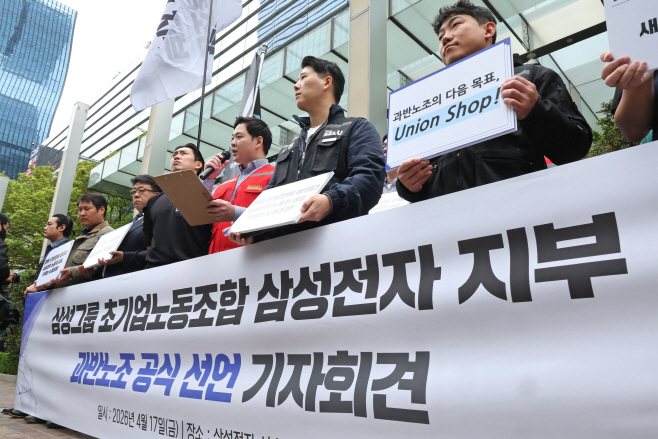
Samsung Electronics currently faces a tense standoff with its powerful labor union. The union is threatening a potentially disruptive strike, which could lead to massive financial losses for the semiconductor powerhouse. Their demand is substantial: 15 percent of the company’s operating profit to be earmarked for employee bonuses. Based on projected operating profits of approximately 297 trillion won ($202 billion) for the current year, this would amount to an astonishing roughly 45 trillion won in bonus payouts.
Such a sum for employee compensation would significantly exceed Samsung’s annual research and development (R&D) spending, which is around 37 trillion won, and nearly quadruple its annual dividend payout of approximately 11 trillion won. This highlights a growing divide regarding whether the South Korean tech sector’s compensation practices are aligning with global industry standards or potentially overshooting, sparking public and internal debate.
Should negotiations falter, the Samsung union plans to hold a major rally at the Pyeongtaek campus in Gyeonggi Province this Thursday, potentially followed by a general strike from May 21 to June 7. Industry analysts estimate that a full-scale strike at the world’s largest memory chip maker could result in potential losses ranging from 5 trillion to 10 trillion won for the company.
The compensation dispute at South Korea’s largest conglomerate by revenue is also garnering significant public attention. Last week, a protester identifying himself as “a person who loves Samsung” publicly urged workers to “know when to be satisfied.” He argued that corporate performance is not solely attributable to employee abilities, citing broader public support and extensive national infrastructure as contributing factors to the company’s success.

SK Hynix, another leading memory chip manufacturer, previously finalized its bonus framework with its labor union. However, the company is now facing internal scrutiny over its lump-sum payout model. Some employees are questioning the fairness of highly specialized engineers receiving the same bonus rates as production workers, reigniting the debate on differentiated compensation.
Last year, SK Hynix made headlines across Korea by paying out approximately 140 million won in bonuses to employees earning an average annual salary of about 100 million won – an unprecedented scale of employee remuneration in the country.
In a significant move last September, SK Hynix removed the cap on its profit-sharing bonus scheme, committing to payouts equivalent to 10 percent of its operating profit for the next decade. With operating profit anticipated to approach 200 trillion won this year, the total bonus pool could reach around 20 trillion won. This could translate to roughly 580 million won per employee, based on a workforce of approximately 34,500 individuals.
Despite establishing a clear bonus formula, internal tensions persist at SK Hynix. Employees remain divided on whether uniform payouts are appropriate across diverse roles, ranging from Ph.D.-level researchers to essential production workers. Critics are advocating for greater differentiation in compensation and cautioning against undervaluing front-line contributions to the company’s success.
At Samsung Electronics, tensions are similarly escalating as the union advocates for substantial bonus payouts across its chip-focused device solutions division. This includes loss-making units such as logic chip and foundry operations, which is drawing strong pushback from device experience employees who argue that the proposed compensation structure disproportionately favors the semiconductor business.
“The memory chip business has generated hundreds of trillions of won in profits over the past several years, so higher bonuses are entirely justified,” commented a Samsung employee on the anonymous workplace forum, Blind. “However, applying the same bonus payouts to units that are currently operating at a loss is fundamentally unfair and creates internal discord.”
Should the union’s proposal be implemented as currently structured, employees in Samsung’s system large-scale integration and foundry divisions—which have not reported a profit in recent years—could potentially receive bonuses approaching 400 million won per person this year, intensifying the fairness debate.
The discussion around employee compensation is expanding beyond individual companies into a broader national conversation about optimal pay structures. On Blind, one user emphasized that remuneration should better reflect individual expertise and specific contributions.
“Pay shouldn’t be dictated by industry cycles alone,” the user wrote, referring to the recent boom in the semiconductor sector. “When highly specialized talent in other vital sectors earns significantly less than broadly defined roles within a booming industry, it distorts the true value of expertise and long-term career planning.”
The user further argued that heavily tying compensation solely to sector-wide performance might inadvertently steer skilled workers toward transiently booming industries rather than encouraging long-term specialization and development in critical fields.
Hwang Yong-sik, a professor of business administration at Sejong University, commented that this ongoing debate profoundly highlights a structural challenge inherent in South Korea’s current compensation system.
“Korea’s latest bonus debate is highly unusual, both domestically and globally, because such exceptionally large cash bonuses tied directly to operating profit are rare. Outside Korea, stock-based incentives are typically a more common form of employee reward,” Professor Hwang noted, emphasizing the unique nature of the current situation.
From a corporate perspective, the union’s extensive demands are difficult to justify, especially if meeting them comes at the expense of crucial investment in future growth and innovation, Hwang explained.
“However, this also represents a critical opportunity for companies to thoroughly rethink and establish clearer, more transparent frameworks for bonus payouts and overall employee compensation,” he added, urging a forward-looking approach to resolve these complex issues.