
Apple’s First OLED MacBook Pro: Samsung Display Sets Premium Standard as BOE Ramps Up Competition
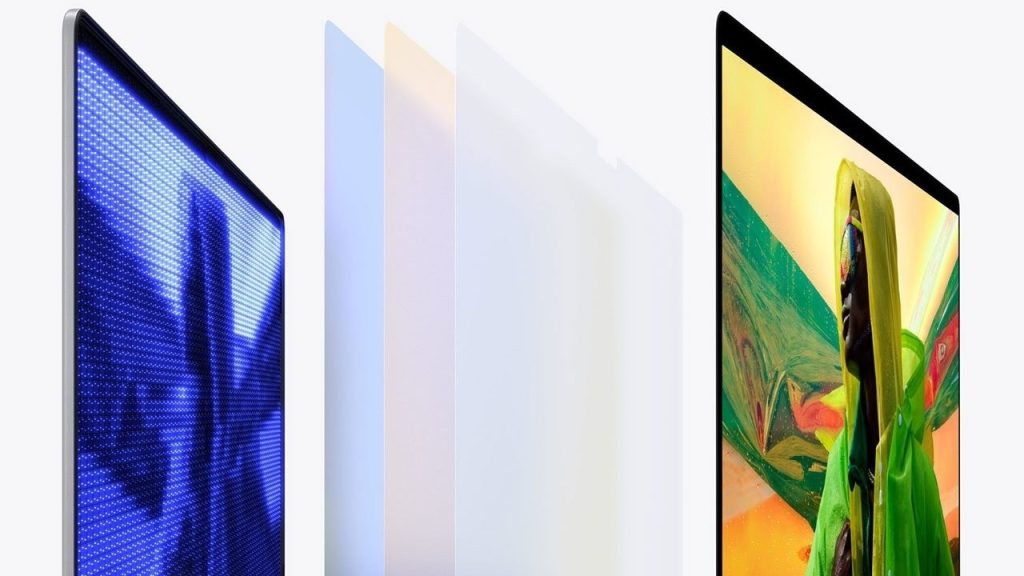
When Apple unveils its highly anticipated 2026 MacBook Pro refresh this fall, the expected thinner, lighter design, and powerful M6 Pro silicon chip will undoubtedly capture headlines. However, the most significant transformation lies within its display technology.
The upcoming Pro models are reportedly transitioning from mini-LED, the backlit technology Apple introduced in 2021, to advanced OLED panels. This marks the first fundamental display shift for the MacBook Pro in nearly two decades. OLED technology allows individual pixels to emit light, resulting in unparalleled deeper blacks, significantly higher contrast ratios, and much thinner display panels.
Apple previously adopted OLED for its iPhones in 2017 and the iPad Pro in 2024. The delay in bringing OLED to the Mac lineup was due to the time it took for laptop-sized OLED panels to be produced affordably and at scale.
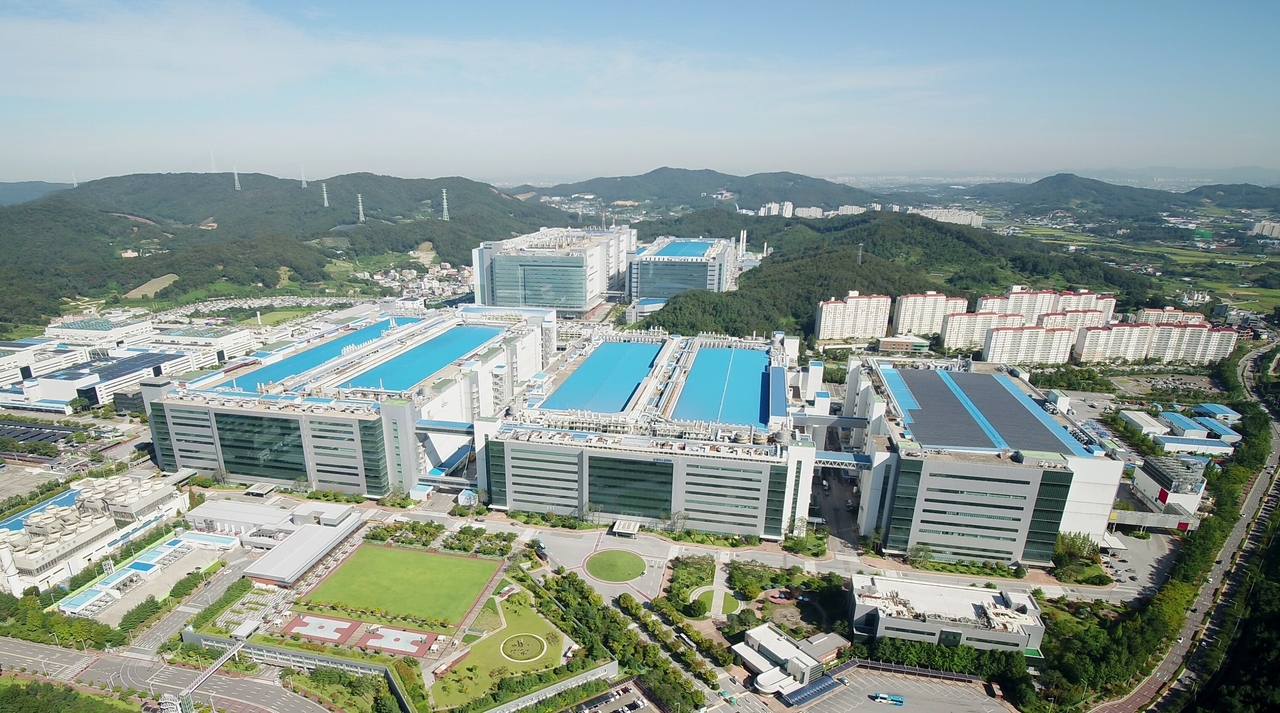
That pivotal moment has now arrived. Currently, only one facility globally possesses the capability to produce these high-quality OLED panels at Apple’s demanding specifications: Samsung Display’s advanced A6 line, located in Asan, South Chungcheong Province, Korea.
This exclusive production arrangement, however, is not expected to last indefinitely. Industry analysts estimate that Samsung Display holds a crucial two-year lead over its Chinese competitor, BOE, in this specialized manufacturing. The question of whether this advantage will persist through the next MacBook Pro product cycle remains unanswered by the 2026 launch.
8.6-Generation OLED: Driving Down Costs for Premium Laptop Displays
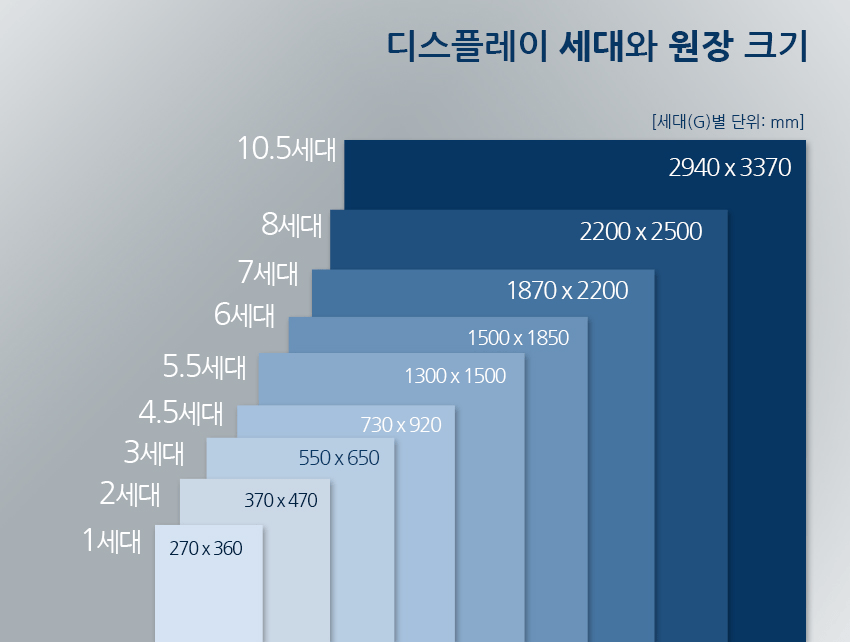
In the realm of display manufacturing, a “generation” refers to the dimensions of the glass sheet from which panels are cut, with higher generation numbers indicating larger sheets. Samsung Display’s A6 line, critical for Apple’s new MacBook Pro OLED panels, is the industry’s pioneering 8.6-generation OLED facility to achieve commercial scale. This technological leap is widely regarded by industry experts as a “game changer” for the laptop market.
The economic benefits are significant and straightforward: an 8.6-generation glass substrate is approximately 2.25 times larger than the 6th-generation lines that underpinned the initial smartphone OLED industry. While smaller glass sheets are efficient for smartphone displays, they are not optimal for larger laptop and tablet panels, typically ranging from 10 to 16 inches.
Operating at 8.6-generation scale dramatically reduces the per-panel cost of IT-sized OLED displays, bringing them closer to the price point of traditional LCDs for the very first time.
Samsung Display invested roughly 4.1 trillion won (approximately $2.8 billion) into the A6 line in 2023, commencing sample shipments in January. By April, industry sources reported impressive yield rates in the mid-80s, swiftly approaching the crucial 90 percent threshold for efficient mass production.
Apple’s initial order for the 2026 MacBook Pro is estimated at 2 million OLED panels.
Kim Jun-ho, an analyst at UBI Research, which closely monitors OLED supply chains, emphasizes that the 2026 MacBook Pro’s adoption of these panels holds significance far beyond a single product cycle.
“Investments in 8.6-generation facilities are too substantial to be sustainable without a major anchor customer,” Kim stated. “The MacBook Pro’s integration of these panels not only validates their technological feasibility but also confirms their commercial viability at the premium tier of the market.”
Other leading laptop manufacturers are keenly observing Apple’s move. “Once Apple qualifies an 8.6-generation panel, it significantly increases the likelihood that other original equipment manufacturers (OEMs) will use that same benchmark for their own products,” Kim added.
China’s OLED Aspirations: From Smartphones to Laptops
Chinese panel manufacturers have aggressively pursued and significantly narrowed the gap in smartphone OLED production over the past five years. BOE, for instance, now accounts for roughly 15 percent of global smartphone OLED shipments and, last year, briefly supplied panels for specific iPhone 17 Pro models.
However, this expertise gained in smartphone displays does not automatically translate to the complex requirements of laptop OLED production.
“The most challenging aspect of 8.6-generation IT OLED is ensuring the stability of oxide TFTs (key display driving components) across a much larger panel area,” explained Park Jin-seong, a distinguished OLED display researcher at Hanyang University and a former Samsung researcher.
“(Smartphone display) expertise does not transfer directly. Challenges such as large-area uniformity, threshold drift, and long-term reliability are distinct and considerably more difficult to overcome in larger panels,” Park elaborated.
Laptop panels are designed to operate for extended periods—typically eight hours a day for five years. Maintaining consistent brightness, color uniformity, and power efficiency throughout this lifespan represents a measurably higher engineering standard than what is required for smartphones.
Lee Mi-hye, a senior researcher at the Export-Import Bank of Korea, underscores the highly customized nature of the OLED business.
“OLED manufacturing is a made-to-order business, not a commodity like mature LCD technology. The crucial factor is whether a panel maker can consistently deliver the advanced technology and robust reliability that global clients truly demand. While BOE’s smartphone experience is beneficial, scaling 8.6-generation production for laptops presents a fundamentally different set of challenges,” Lee commented.
BOE’s recent track record further complicates its position. In late 2025, quality defects discovered in its iPhone 15, 16, and 17 panels compelled Apple to reallocate orders to Samsung Display and LG Display. This history directly influences how Apple will evaluate BOE’s suitability for high-grade laptop panels.
The Future of IT OLED: Competition Beyond the 2026 MacBook Pro
Despite the current lead held by Korean manufacturers, Chinese panel makers are not far behind in their ambitious plans. On April 2, BOE confirmed that its 8.6-generation line at the B16 facility in Chengdu has entered the customer sample validation phase, with mass production targeted for the latter half of 2026. Its projected capacity of 30,000 sheets per month at full buildout is double that of Samsung Display’s current capacity.
Lee Mi-hye, who recently authored a March 2026 report on Korea’s OLED competitiveness, now estimates the technology gap between Korea and China in IT OLED to be approximately two years. This is a narrower gap than her 2023 estimate of three to four years, a figure that has been widely interpreted as evidence of China’s rapid progress.
“Two years is often misinterpreted as near-parity; it is not,” Lee cautioned, emphasizing that while China has developed the basic capability, there’s still a significant lead in advanced, reliable production.
This capacity disparity highlights divergent strategic approaches. Samsung Display is solidifying its position as a customer-first, premium supplier, leveraging its strong relationship with Apple to establish the benchmark for high-end OLED displays. Conversely, BOE is positioning itself as a volume-first supplier, betting that sheer scale and lower production costs will enable it to capture the broad middle segment of the market once its technology stabilizes.
“The true risk to Korea isn’t necessarily losing Apple as a client,” stated Kim of UBI Research. “The greater threat is that Samsung Display successfully establishes the premium standard with Apple, only for BOE, with its larger capacity and lower cost structure, to subsequently dominate the tiers below.”
mjh


