South Korea’s Kospi Soars, Outperforming Global Indices Including S&P 500 and Nasdaq
South Korea’s benchmark Kospi index is experiencing a remarkable resurgence, nearing its pre-conflict peak and aiming for a new record high. This significant uplift in investor sentiment is primarily driven by the easing of tensions in the Middle East.
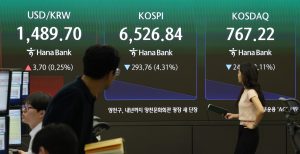
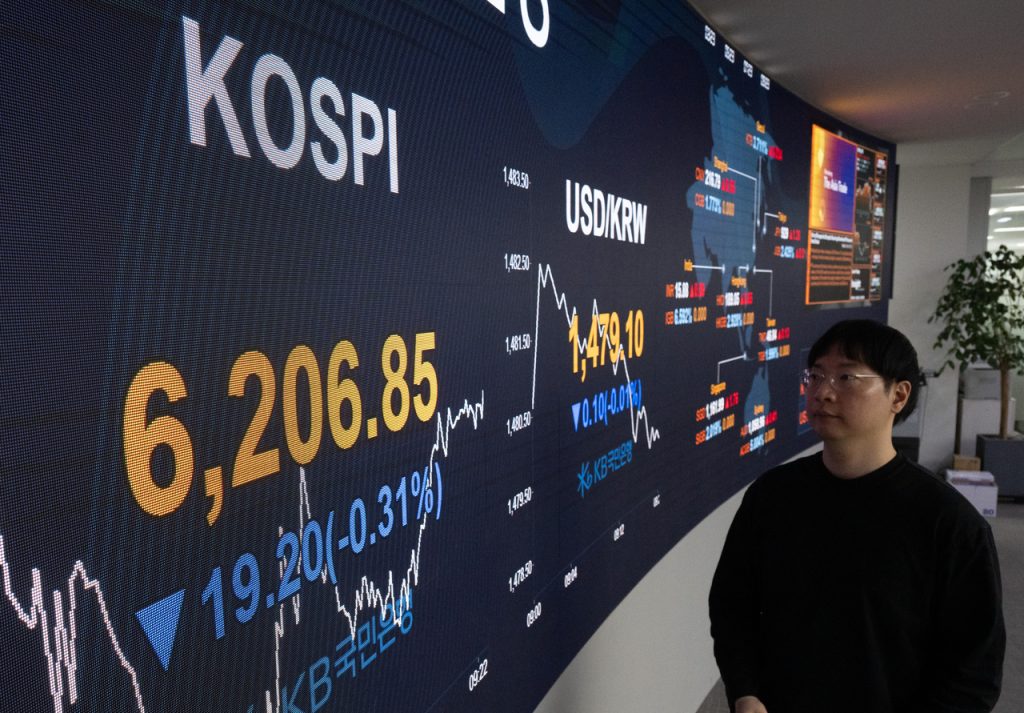
Fueled by optimistic expectations surrounding progress in US-Iran talks, the Kospi index demonstrated robust growth, climbing 5.68 percent over the past week. It successfully added over 300 points, moving from 5,858.87 to 6,191.92. Notably, the South Korean benchmark reclaimed the crucial 6,000 mark during intraday trading on Tuesday, further extending its impressive gains to reach 6,231.03 on Thursday.
The country’s secondary bourse, the Kosdaq, also mirrored this positive trend, recording an even sharper increase of 6.99 percent over the identical period. The Kosdaq surged from 1,093.63 to 1,170.04, maintaining a strong winning streak of six consecutive sessions since April 10.
This recent market rally has positioned the Kospi tantalizingly close to its all-time previous peak. Prior to the conflict’s outbreak, the index’s intraday high stood at 6,347.41 points on Feb. 27. On a closing basis, the highest recorded point was 6,307.27 from the preceding trading session.
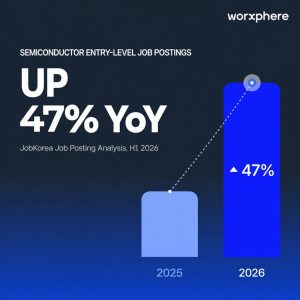
Analysis of sector indices for both the main Kospi and secondary Kosdaq bourses, compiled by the Korea Exchange, reveals key drivers of this growth. Information technology stocks spearheaded the gains with an impressive 8.36 percent increase. Following closely were machinery and equipment at 6.42 percent, the vital semiconductor sector at 6.38 percent, K-content industries at 6.1 percent, and automobiles at 5.35 percent.
Shin Eol, an analyst at Sangsangin Securities, commented on this trend: “The recent revival in investor risk appetite originates from increasing confidence that the ongoing conflict can now be considered a constant, manageable variable.”
He further elaborated, stating, “The South Korean market is transitioning into a new phase where periods of volatility are perceived as strategic opportunities, bolstered by strong expectations for robust earnings performance, especially within technology and high-growth stocks.”
Examining performance on a monthly basis reveals the Kospi’s exceptional surge. As of Friday, the index has achieved a staggering 22.55 percent gain this month, positioning it as the sole major global index to surpass a 20 percent increase, according to comprehensive data from Koscom.
In a comparative overview of global stock market performance, Taiwan’s Taiex secured the second position with a substantial 16.02 percent rise, closely followed by Japan’s Nikkei 225 at 14.52 percent. The US Nasdaq Composite saw a 13.33 percent increase, while South Korea’s Kosdaq posted an 11.18 percent gain.
Further down the list, the US S&P 500 recorded a 9.15 percent rise, the Dow Jones Industrial Average climbed 6.70 percent, Hong Kong’s Hang Seng Index advanced 5.54 percent, and China’s Shanghai Composite Index concluded with a 4.1 percent increase.
It is important to note that the Kospi experienced a sharp 19.08 percent decline last month, reacting more intensely than other global counterparts to the escalating Middle East tensions. Therefore, the current robust rebound largely aligns with and compensates for the magnitude of its previous downturn.
Concurrently with this impressive market rally, the number of South Korean companies boasting a market capitalization exceeding 1 trillion won (approximately $680 million) has also successfully rebounded to pre-conflict levels.
As of Friday, a significant 377 companies on the local stock market were valued at over 1 trillion won, effectively restoring the figures observed at the end of February. This strong recovery comes after a notable dip to 331 companies on March 4, a period when the Kospi saw a dramatic 12 percent plunge in a single trading session.
Furthermore, the cohort of companies with a market capitalization surpassing 10 trillion won has also largely restored its pre-conflict valuation levels.
By Friday, 76 companies exceeded this substantial threshold, marking a solid rebound from a low of 72 on March 4. While this figure remains just slightly below the 78 companies recorded prior to the war’s outbreak, it signifies a strong market recovery trend.
silverstar