
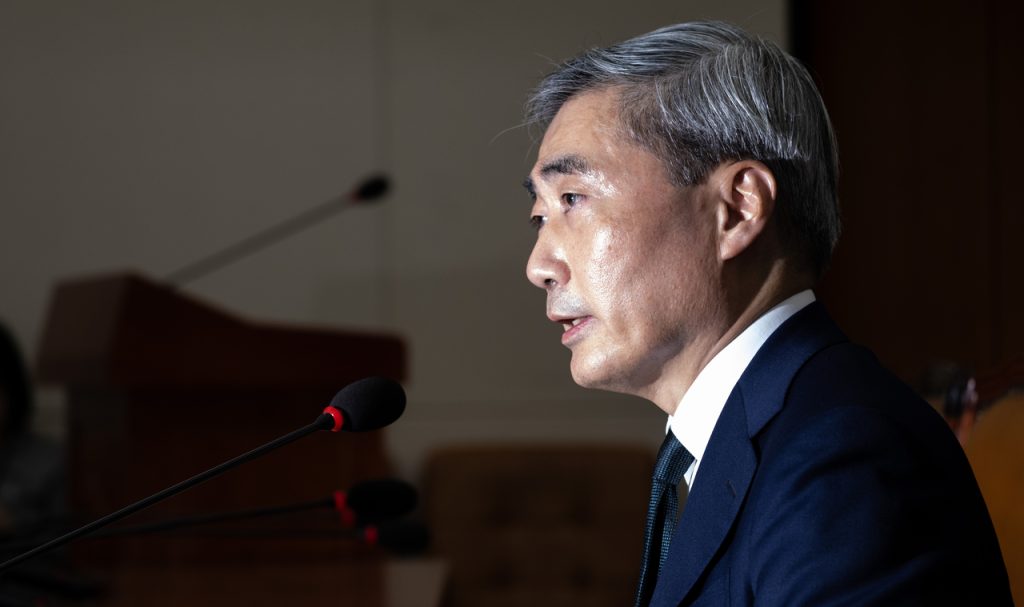
Shin Hyun-song Warns of Inflationary Surge from Oil, FX; South Korea’s Growth Outlook Dims
Shin Hyun-song, the nominee for governor of the Bank of Korea, issued a stark warning Wednesday, indicating that escalating external uncertainties are fueling both inflationary pressures and posing significant downside risks to South Korea’s economic growth. His remarks signal that maintaining price stability will remain the central bank’s paramount priority.
During a comprehensive parliamentary confirmation hearing, Shin elaborated that a combination of higher global oil prices and a persistently weaker Korean won is poised to drive inflation even higher in the upcoming months.
“The Korean economy confronts dual challenges: upward pressure on prices and downward pressure on growth,” Shin stated. While acknowledging that a potential rebound in the semiconductor sector and a proposed supplementary budget might mitigate the economic slowdown, he cautioned that overall growth is likely to fall short of previous expectations.
Global inflationary risks have notably intensified following the recent outbreak of conflict in the Middle East. Data from the Bank of Korea revealed a significant surge in import prices by 16.1 percent in March compared to the previous month, marking the steepest increase witnessed since the 1998 Asian financial crisis.
Shin emphasized that a critical question facing monetary policymakers is whether these inflationary pressures will prove temporary or become more persistent. “The longer these external shocks endure, the greater the inherent inflation risk,” he asserted, suggesting that further policy tightening may become necessary if these pressures begin to spread to core inflation indicators or inflation expectations.
Addressing concerns surrounding the weakening won, Shin downplayed anxieties about its specific level. He stated that it is not practical to define a “fair” exchange rate, instead stressing the importance of continuously monitoring directional imbalances. He attributed the won’s recent decline partly to increased global risk aversion among investors and other offshore factors.
Shin, a former chief economist at the prestigious Bank for International Settlements (BIS), is widely recognized as one of Korea’s most globally influential monetary economists. He has built a strong reputation for his deep focus on financial stability risks, including the dangers of excessive leverage and volatility in capital flows.
His career highlights also include instrumental involvement in designing South Korea’s post-crisis macroprudential framework. Shin has consistently advocated for preemptive policy responses to effectively contain both inflation and broader systemic financial risks.
Reflecting this principled stance, Shin characterized the central bank’s recent decision to hold interest rates as a “strategic pause.” He underscored that future monetary policy decisions would be strictly guided by evolving economic conditions and data, rather than being bound by fixed labels such as “hawk” or “dove.”
He further highlighted critical structural risks within the South Korean economy, notably the high level of household debt, which currently stands at approximately 89 percent of the gross domestic product. Shin pledged to complement traditional monetary policy with robust macroprudential measures to address these underlying vulnerabilities.
Looking ahead, Shin expressed his commitment to promoting the internationalization of the Korean won. This includes ambitious plans to expand foreign exchange trading hours to 24 hours a day and to develop advanced offshore settlement systems, alongside fostering a dynamic digital currency ecosystem.
During the hearing, lawmakers raised several pertinent concerns, including the prolonged weakness of the won, the adequacy of South Korea’s foreign exchange reserves, and potential conflicts of interest related to Shin’s overseas assets.
In response, Shin affirmed that he had converted a substantial portion of his foreign currency holdings into won-denominated assets. He pledged full transparency to address all concerns, firmly denying any intent of personal financial gain.
Shin is slated to commence his four-year term as the Bank of Korea governor next month, pending final parliamentary approval.
ch0221


