
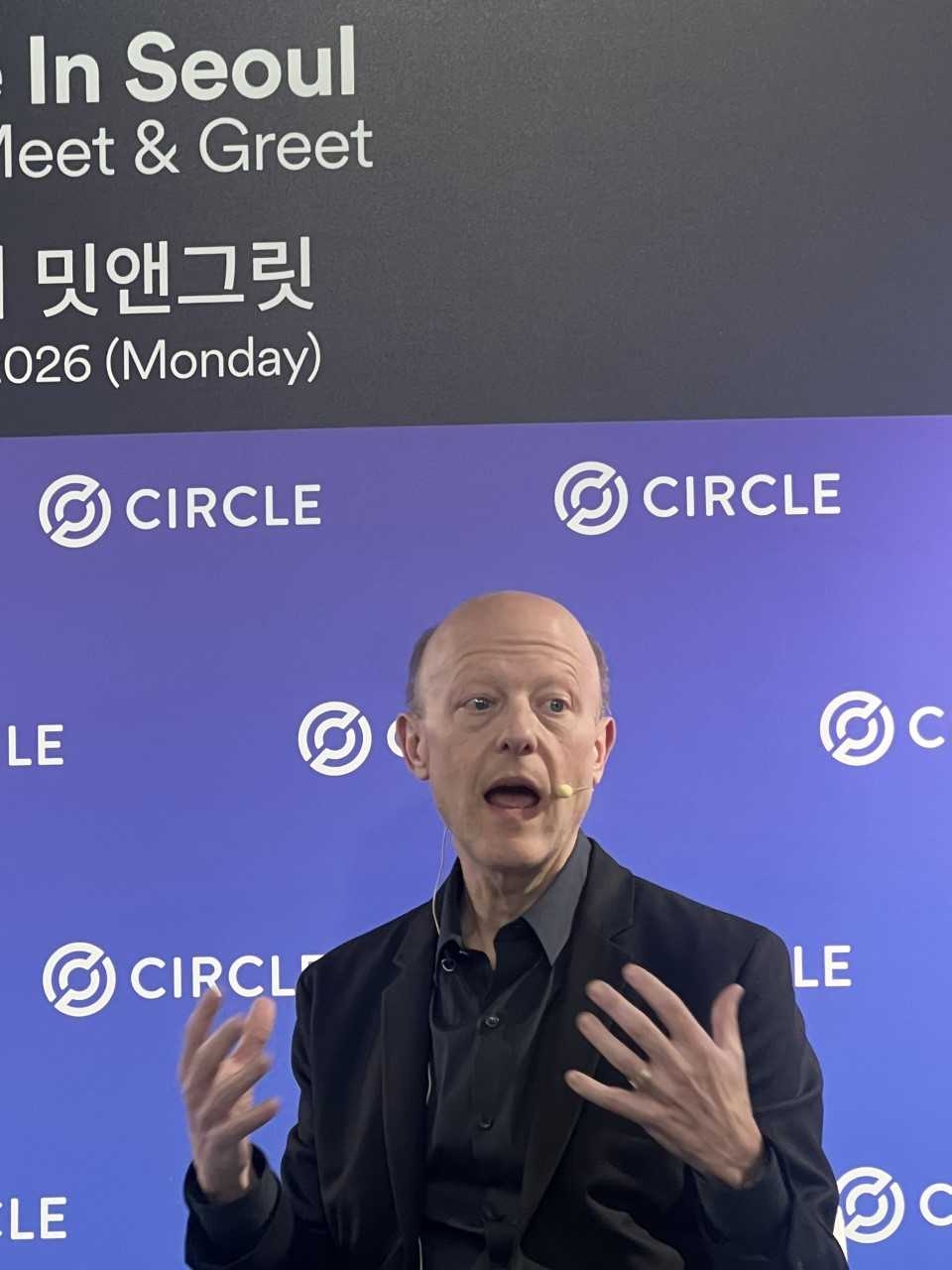
Circle CEO Jeremy Allaire Explores Korean Entity Amidst Expanding Partnerships and Arc Technology Launch
Jeremy Allaire, Co-founder and CEO of Circle, recently visited South Korea, a global powerhouse in crypto trading, with a strategic focus on expanding partnerships and user adoption. His visit comes ahead of the commercial launch of Arc, Circle’s innovative new financial settlement technology.
“We are actively broadening our reach in areas that promise significant benefits for the Korean financial ecosystem, particularly with Arc, which we plan to launch commercially this year,” Allaire stated during a press briefing held on Monday.
Arc represents a pioneering financial settlement rail, meticulously engineered on advanced blockchain technology. Circle anticipates Arc will facilitate the instantaneous, secure, and highly predictable movement of stablecoins across the internet.
“Arc holds immense appeal for the thriving Web3 ecosystem here, and is particularly valuable for developing robust stablecoin foreign exchange protocols,” Allaire emphasized. He further highlighted that a pilot KRW1 stablecoin is already operational on the Arc platform, which Circle officially unveiled in late 2025.
Addressing Circle’s evolving strategy, Allaire underscored the company’s expansion beyond merely issuing money, recognizing its vulnerability to macroeconomic shifts. “We have been diligently constructing a diverse portfolio of product platforms and services, which are now generating revenue,” he explained. “At the close of 2024, many of these businesses generated minimal revenue. However, this year, we project their contribution to reach between $150 million and $170 million, demonstrating our rapid success in creating new revenue streams.”
Established in 2013, Circle’s journey has evolved significantly, transitioning from a Bitcoin payment processor to becoming the world’s second-largest issuer of US-pegged stablecoins, notably USDC. More recently, Circle has strategically repositioned itself as a leading provider of financial infrastructure technology.
Allaire views South Korea as a vital partner and customer for this refined corporate vision. “Korea already stands as one of the world’s foremost markets for digital assets. The engagement of its adult population in the digital asset ecosystem is substantial, and the nation boasts leading technology companies making significant investments in blockchain technology,” he elaborated, outlining the primary objectives of his visit.
The CEO expressed his willingness to establish a legal entity in Korea, provided the timing and regulatory environment align favorably.
However, Allaire drew a clear distinction regarding Korean currency-denominated stablecoins. “Circle will not be issuing a Korean won-backed stablecoin,” he confirmed. Industry observers note this decision is prudent, given that, unlike regions such as Europe, Korea’s regulatory landscape is currently unlikely to permit a single non-banking entity to issue stablecoins.
Nonetheless, Allaire aligned with Korean policymakers in advocating for Korean won-pegged stablecoins. He suggested that as on-chain currency gains prominence as a superior form of money, the Korean government will require stablecoins to maintain the won’s competitive edge.
Allaire reiterated Circle’s strong commitment to collaborate closely with the Korean government, emphasizing the company’s consistent approach of working hand-in-hand with law enforcement agencies.
He also touched upon the complexities posed by Circle’s stringent compliance policies, which have previously prevented actions such as freezing wallets during instances of market misconduct. The company is now actively engaged in discussions to establish ‘safe harbors,’ which would enable it to act under predefined conditions.
During his recent visit to Korea, Allaire engaged in high-level meetings and solidified key partnerships with prominent local players, including leading crypto exchanges Upbit and Bithumb. He also held productive discussions with major financial institutions such as KB, Shinhan, and Hana banks, in addition to dialogues with financial regulators.
“There is considerable interest in exploring how stablecoins can effectively support cross-border and international payments,” Allaire commented. “These are critical areas where we are actively collaborating with banks and asset managers globally, and certainly within Korea as well.”
By Kim Ji-hyun
jemmie


