
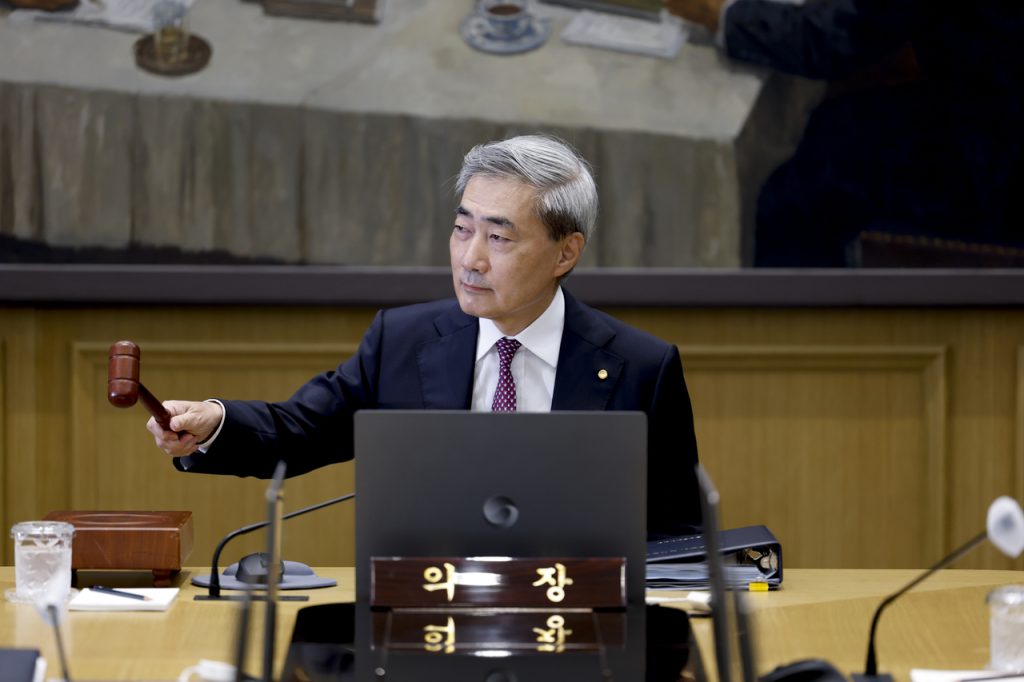
The **Bank of Korea** (BOK) has announced its first **benchmark interest rate hike** since May 2025, ending a prolonged pause in **monetary policy** that spanned over a year. This pivotal decision on Thursday was driven by escalating **inflationary pressures** and the persistent weakness of the **Korean won**, underscoring the necessity for tighter **monetary tightening** to stabilize the economy.
During its latest session, the **Monetary Policy Board** reached a consensus to increase the **benchmark interest rate** by 0.25 percentage point, setting the new **base rate** at 2.75 percent.
This crucial move comes amidst a backdrop of surging **global oil prices**, largely fueled by the ongoing conflict involving the US, Israel, and Iran. These rising costs have consistently translated into higher **domestic prices**, pushing **inflation** significantly above the central bank’s targeted level.
South Korea’s **consumer prices** recorded a 3.2 percent year-on-year increase in June, substantially exceeding the **Bank of Korea’s** 2 percent target. This marked the highest rate of **inflation** observed since December 2023, when **consumer prices** also climbed by 3.2 percent.
While **headline inflation** remained within the 1-2 percent range through January and February, it saw a sharp acceleration in March following the outbreak of the Middle East conflict. By May, it surpassed the 3 percent threshold, maintaining this level through June. The **living cost index**, a measure of everyday necessities, also reflected this trend, rising 3.4 percent in June.
The sustained depreciation of the **Korean won** has further solidified the argument for this **rate hike**. Although the **Korean currency** has recently shown a modest recovery, strengthening to approximately 1,485 **won per dollar**, it had previously traded above the psychologically significant 1,500-won mark for over a month.
Currently, **South Korea’s benchmark interest rate** lags behind the **US Federal Reserve’s policy rate** by as much as 1.25 percentage points. This considerable **interest rate differential** has spurred demand for **dollar-denominated assets**, exerting additional downward pressure on the **Korean won**.
With the **Federal Reserve** widely anticipated to implement further **interest rate hikes** in the latter half of this year, the **policy rate gap** could expand even further. This situation necessitates proactive measures from the **Bank of Korea** to prevent wider disparities.
A more significant **interest rate differential** would likely intensify the downward pressure on the **won** and introduce greater **volatility in the foreign exchange market**, impacting the broader **South Korea economy**.
silverstar


