
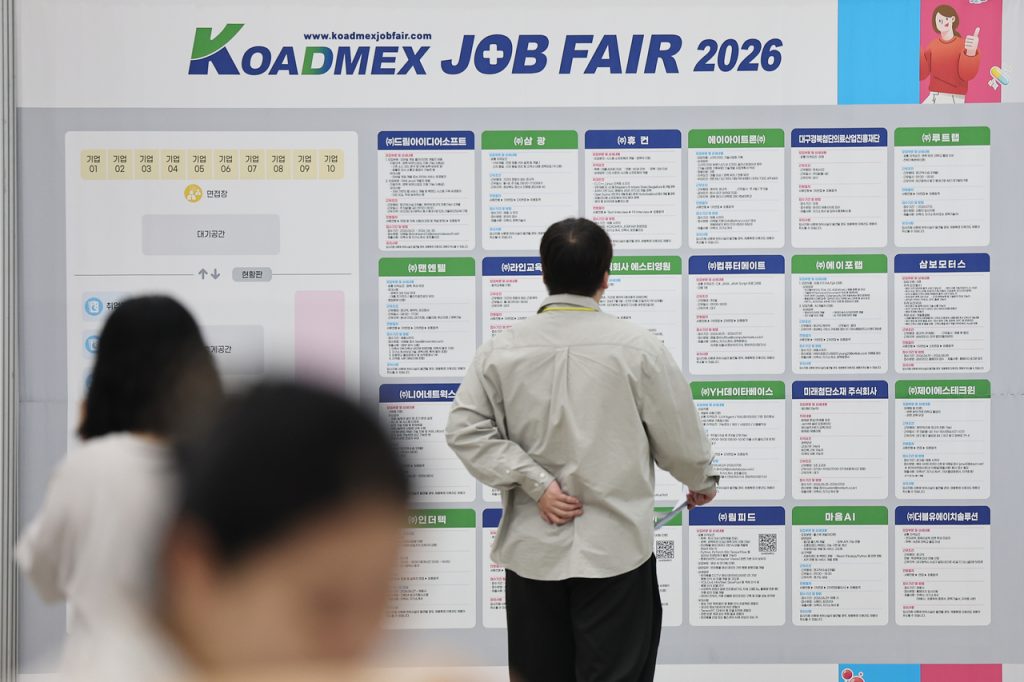
South Korea’s job market showed a significant rebound in June, adding 63,000 new employment positions compared to a year earlier, government data released Wednesday indicated. This marked the first instance of job growth in two months, despite ongoing struggles within the manufacturing sector.
The total number of employed individuals in the nation reached 29.15 million in June, an increase from 29.09 million recorded in the same period last year, according to detailed statistics from the Ministry of Data and Statistics.
Earlier in the year, South Korea experienced robust job growth, with figures remaining in the 200,000 range for February and March. However, this momentum slowed considerably to 74,000 new jobs in April, followed by an employment contraction of 40,000 in May—a significant event marking the first decline in 17 months before June’s recovery.
Regarding unemployment, the country’s jobless rate stood at 2.8 percent last month, consistent with figures from a year ago. The number of unemployed individuals totaled 834,000 in June, representing an increase of 10,000 year-on-year.
The employment rate for the key demographic of people aged 15 to 29 saw a decrease, falling to 43.9 percent, which is 1.7 percentage points lower than the previous year.
For the broader working-age population aged 15 to 64, the employment rate slightly dipped by 0.1 percentage point to 70.2 percent. Conversely, the employment rate for South Koreans aged 65 and older improved, rising by 0.8 percentage point to reach 41.8 percent.
A sector-specific analysis reveals significant job gains in certain areas. The health and social welfare services sector notably increased its workforce by 214,000 positions from a year earlier. Similarly, the arts, sports, and recreation-related services sector also expanded, adding 55,000 jobs.
Other sectors experiencing major job growth included the transportation and logistics sector, which successfully added 48,000 new employment opportunities.
However, the report highlighted persistent challenges in key traditional industries. The manufacturing sector faced a considerable loss of 97,000 jobs in June compared to the previous year. Likewise, the agriculture, forestry, and fisheries sector shed 95,000 positions, impacting rural employment.
This downturn in manufacturing employment marks the 24th consecutive month of year-on-year job declines for the crucial sector, underscoring ongoing structural shifts in South Korea’s economy.


