
The Bank of Korea (BOK) has firmly stated that the global semiconductor market is still facing an undersupply, projecting the current **AI-driven chip supercycle** to persist for a considerable period. This optimistic outlook, detailed in a recent report released Monday, directly addresses and dismisses growing **investor concerns** that the **semiconductor cycle** may have already peaked, reassuring stakeholders about sustained **chip market growth**.
According to the BOK’s report, submitted to Rep. Park Sung-hoon, the robust surge in **semiconductor demand** is primarily fueled by substantial investments in **artificial intelligence infrastructure**. However, the central bank highlighted that the rate of **supply expansion** has been notably sluggish, indicating that the prevailing **semiconductor market cycle** shows no immediate signs of decelerating.
The Bank of Korea emphasized that this **current chip cycle** distinctively diverges from historical trends. It is fundamentally propelled by aggressive and **competitive corporate investments**, made in anticipation of profound, **AI-driven transformations** across the entire industrial ecosystem.
Furthermore, the BOK pointed out that **supply expansion** faces greater constraints compared to previous cycles, largely because the market is increasingly dominated by specialized **custom products**, most notably **High-Bandwidth Memory (HBM)**. Consequently, the bank anticipates the **global semiconductor market** will sustain its strong **expansionary trend** for an extended duration.
This optimistic assessment from the BOK emerges amidst increasing **market volatility** and concerns. Investors have been wary of **debt-funded AI infrastructure spending**, elevated **market valuations**, and the looming specter of a potential **memory chip oversupply**, factors that have recently triggered significant **sell-offs in major technology stocks**.
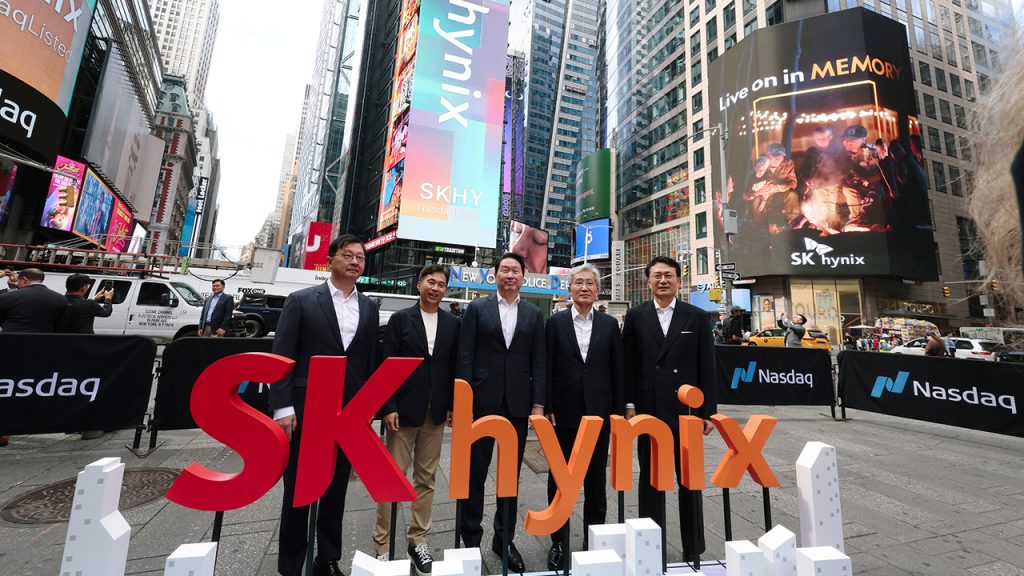
Leading South Korean chipmakers, including **Samsung Electronics Co.** and **SK Hynix Inc.**, have recently experienced notable stock price declines. On July 2, Samsung Electronics’ shares dropped over 9 percent, while SK Hynix saw a nearly 15 percent decline. Further illustrating this trend, last Tuesday witnessed Samsung Electronics shares falling 7 percent and SK Hynix losing 6 percent, despite Samsung reporting an impressive nearly 90 trillion won ($59.9 billion) in second-quarter operating profit, surpassing market expectations.


