
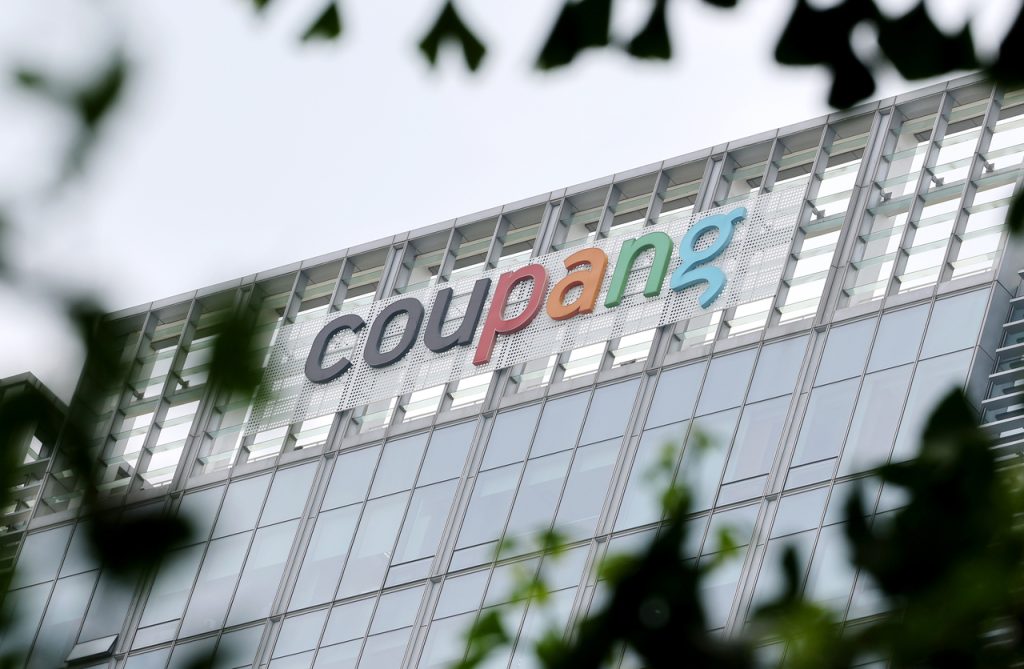
South Korea and the United States share a mutual understanding to “stably” manage a sensitive issue involving U.S.-listed e-commerce leader Coupang Inc., ensuring it does not “burden” their bilateral relations, Seoul’s top envoy to Washington announced Wednesday.
Ambassador Kang Kyung-wha made these remarks during a press briefing, following recent criticisms from a House Judiciary Committee report and a White House official. Both had characterized South Korea’s regulatory investigations into a significant data leak involving Coupang as “discriminatory.”
“There has been a shared understanding between the two governments that Seoul and Washington should stably manage the Coupang issue so that it would not burden South Korea-U.S. relations,” she stated.
“We will consistently explain our government’s position through continued consultations with the U.S. side,” she added.
Last week, the House Judiciary Committee released an interim staff report alleging “discriminatory attacks” by the South Korean government against Coupang and other American-owned businesses, specifically identifying Coupang as a “consistent target.”
Subsequently, a White House official voiced concerns that Coupang was being “singled out” by President Lee Jae Myung’s administration in South Korea, highlighting what was termed “discriminatory” targeting of the company.
In response, Seoul’s foreign ministry expressed regret regarding the committee report, asserting that it appeared to present Coupang’s claims in a “one-sided” manner and omitted Seoul’s official stance and the “factual information” previously provided to the committee.
Addressing the ongoing U.S. trade investigations under Section 301 of the 1974 Trade Act, which could result in new tariffs on South Korea and other nations, Ambassador Kang affirmed that her embassy would maintain close consultations with the U.S. to mitigate any potential negative impact from these probes.
“Seoul has consistently stressed the importance of maintaining a balance of interests between the two nations, and the U.S. side has also expressed its willingness toward that end.”
The Office of the U.S. Trade Representative (USTR) has initiated Section 301 trade investigations against 60 countries, including South Korea, China, and Japan, citing concerns over forced labor. These investigations have led to proposed 12.5 percent tariffs on South Korea and numerous other economies.
Furthermore, USTR is conducting additional Section 301 trade investigations targeting South Korea, China, Japan, and 13 other economies to uncover “unfair” trade practices linked to “structural” excess capacity and production.


