
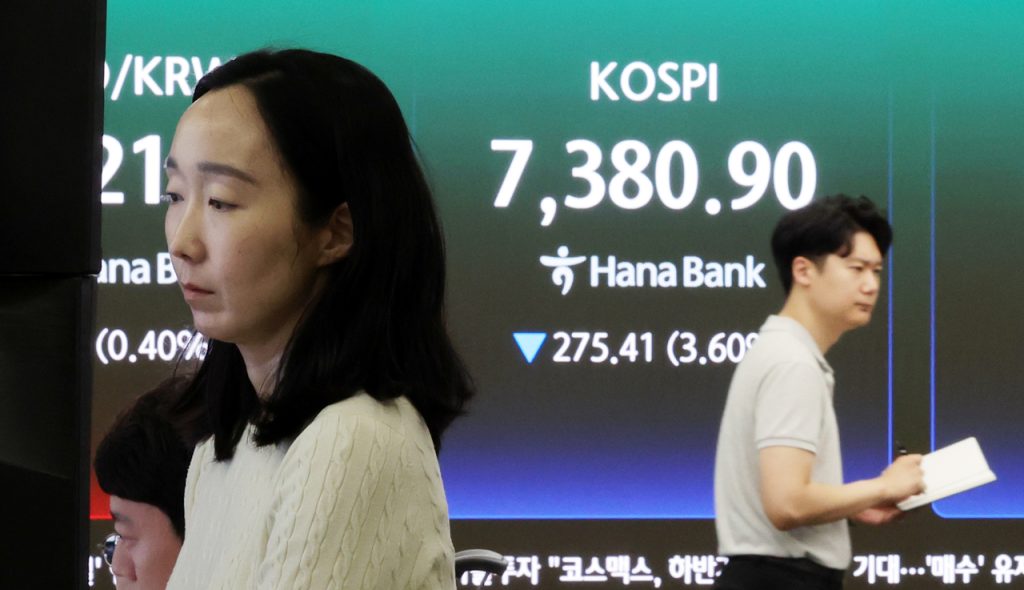
South Korean Single-Stock Leveraged ETFs Linked to Samsung, SK hynix Under Scrutiny After W212 Trillion First-Month Trading
South Korea’s ruling political party has initiated a review into potential restrictions on single-stock leveraged exchange-traded funds (ETFs) directly linked to industry giants Samsung Electronics and SK hynix. This move comes as financial regulators intensify their scrutiny of these popular investment products, which critics argue contribute to heightened market concentration and increased volatility within the South Korean financial market.
Leading asset managers in the region anticipate a halt to further listings of these specialized single-stock ETFs. Concurrently, some prominent industry officials are now advocating for the delisting of existing leveraged funds to mitigate what they perceive as an overheated and potentially unstable market environment.
Since their introduction on May 27, these innovative financial products have experienced rapid growth. As of Wednesday, the total market capitalization of the 14 single-stock leveraged ETFs specifically linked to Samsung Electronics and SK hynix reached an impressive 13.88 trillion won ($9.19 billion). Furthermore, their cumulative trading value soared to 212 trillion won within just their inaugural month of trading, highlighting significant investor interest.
South Korean Financial Regulators Consider Tighter Oversight for Leveraged ETFs
Industry sources confirm that the ruling party’s K Capital Market Special Committee convened on Monday to address critical capital market issues. During this meeting, the committee received a comprehensive briefing specifically on the performance and implications of single-stock leveraged ETFs associated with Samsung Electronics and SK hynix.
Oh Gi-hyung, who chairs the committee, emphasized that financial authorities are closely monitoring these investment products. He noted that leveraged ETFs inherently possess the potential to significantly amplify overall market volatility, a key concern for stability.
The Financial Services Commission (FSC), South Korea’s primary financial regulator responsible for policy development and rulemaking, has confirmed it is actively reviewing various possible regulatory measures. Separately, the Financial Supervisory Service (FSS), tasked with overseeing financial institutions, is scheduled to convene with asset management CEOs next week. Their agenda includes discussions on specific strategies to address the perceived overheating within the rapidly expanding single-stock leveraged ETF market.
These ongoing regulatory discussions are largely driven by escalating concerns regarding market concentration, particularly within the equity markets.
Notably, the Bank of Korea (BOK) recently issued a warning, highlighting that single-stock leveraged ETFs have the potential to deepen market concentration in their underlying stocks. The central bank also indicated these funds could significantly increase overall market volatility due to their inherent daily rebalancing of both spot and futures positions.
Against this backdrop of mounting concerns, a regulatory official stated that additional listings of single-stock leveraged ETFs are now “effectively off the table.” The official further emphasized that “the immediate priority is to cool the currently overheated market,” signalling a clear shift in regulatory approach.
Delisting of Leveraged ETFs: The Debate Gains Significant Traction in South Korea
Beyond halting new listings, some influential asset management executives have argued that regulators should take more decisive action by actively pursuing the delisting of existing single-stock leveraged ETF products.
An industry official commented, “If these financial products have proven ineffective in stabilizing the foreign exchange market or calming overall market sentiment, while simultaneously generating significant adverse side effects, then authorities should swiftly initiate delisting procedures instead of prolonging further discussions.”
The official further asserted, “There is a pressing need for straightforward yet robust regulations to effectively curb excessive participation by retail investors in these products and to alleviate the current abnormal levels of market concentration observed.”
He also suggested that these single-stock leveraged ETF products should ultimately be scrapped if they fail to accomplish their original strategic objectives, which included re-engaging domestic investors in the market and easing considerable pressure on the foreign exchange market.
However, the feasibility of financial regulators actually implementing the delisting of these complex financial products remains a significant point of uncertainty.
As exchange-traded funds (ETFs) are essentially investment funds, their delisting process is strictly governed by the comprehensive listing rules of the Korea Exchange. Standard grounds for delisting typically involve the failure to maintain the required correlation between the fund’s net asset value and its underlying asset, the absence of an appointed liquidity provider, or the termination of the underlying investment trust itself.
Notably, a recent revision to the Enforcement Decree of the Capital Markets Act, which became effective in April and initially facilitated the introduction of single-stock leveraged ETFs, also mandates their delisting if the underlying individual stock itself is delisted from the market.
Despite their substantial trading activity and considerable assets under management, the leveraged ETFs specifically tied to Samsung Electronics and SK hynix are “unlikely to meet conventional delisting requirements,” according to a Korea Exchange official. This is primarily because these funds “remain highly liquid and actively traded,” fulfilling key criteria for continued listing.
The official clarified that “the majority of ETF delistings typically occur due to weak trading activity or insufficient assets under management, rather than circumstances involving excessive trading volume, as seen with these funds.”
He further added that it remains legally ambiguous whether the sole justification of ‘investor protection’ would provide sufficient legal grounds to proceed with the delisting of these specific leveraged ETF products.
Should these particular ETFs eventually be delisted, industry officials suggest that the direct impact on retail investors would likely be relatively limited. This is because, unlike individual equities, delisted ETFs undergo a liquidation process, ensuring investors receive redemption proceeds calculated based on the fund’s net asset value, after deducting any applicable fees.
Conversely, the asset management firms themselves would likely bear a more significant financial impact, primarily through a reduction in their management fee income. Prominent firms such as Mirae Asset Global Investments and Samsung Asset Management, which currently operate the largest single-stock leveraged ETFs in terms of both assets under management and trading volume, are anticipated to be the most severely affected by any such delisting.
ch0221


