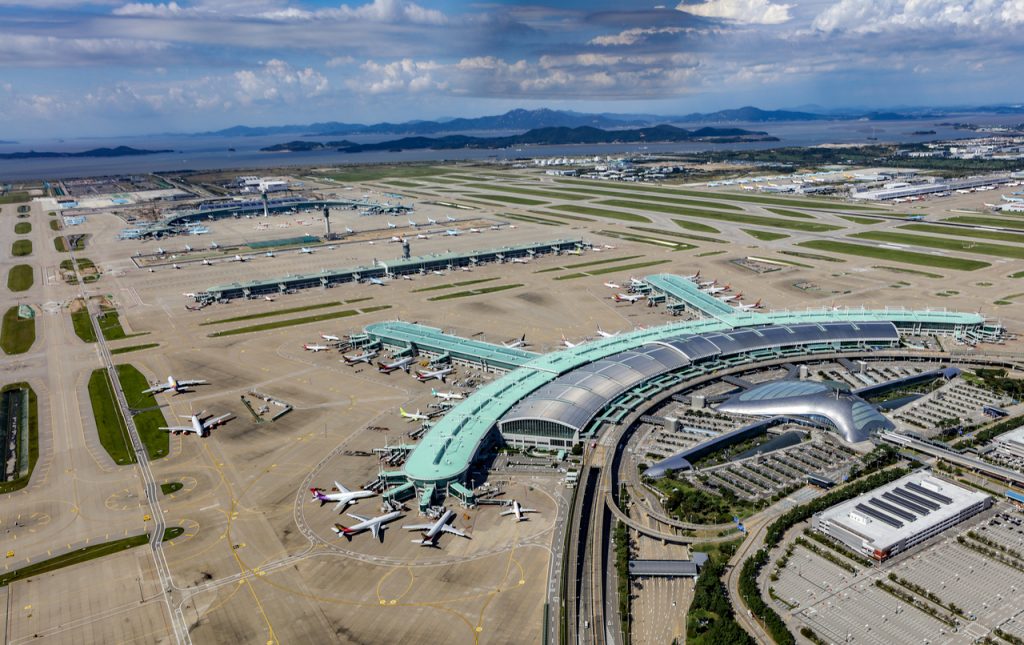
Incheon International Airport (IIAC), South Korea’s premier global gateway, proudly announced a historic achievement this Tuesday: surpassing 1 billion cumulative passengers. This remarkable milestone was reached just over 25 years since its inauguration, establishing Incheon Airport as the fastest major international airport globally to achieve such a feat.
Since its opening in March 2001, Incheon Airport’s growth trajectory has been nothing short of phenomenal. It quickly reached 100 million cumulative passengers by 2005, hit the 500 million mark in 2016, and now, this month, proudly crosses the 1 billion threshold. This rapid ascent directly reflects South Korea’s burgeoning status as a critical global aviation and economic hub.
This achievement underscores Incheon Airport’s unparalleled speed in accumulating passenger traffic compared to other world-renowned aviation hubs. For instance, Munich Airport required nearly 34 years to reach this milestone, Singapore Changi Airport approximately 35 years, Narita International Airport 39 years, and Dubai International Airport more than 58 years, showcasing Incheon’s exceptional operational efficiency and strategic importance.
“Incheon Airport has transformed into a leading global gateway, a testament to the unwavering support from the government, the public, and our dedicated airport workers,” stated Kim Bum-ho, acting president of IIAC. He further affirmed the airport’s commitment to future growth: “We are steadfast in our mission to continually invest in state-of-the-art facilities and service innovations, ensuring unparalleled convenience for global travelers and robustly supporting South Korea’s dynamic aviation industry.”
This significant passenger milestone firmly solidifies Incheon’s position as one of the world’s elite and most influential aviation hubs.
Beyond its passenger achievements, Incheon International Airport serves as a vital economic powerhouse and critical logistics center for South Korea. It connects 183 cities across 53 countries via 101 airlines and remarkably processes approximately 99 percent of Korea’s valuable semiconductor exports. According to the Airports Council International, Incheon Airport secured its rank as the third-largest globally for international passenger traffic in 2025, having facilitated the journeys of 74.1 million international passengers.
To sustain its competitive advantage and accommodate future growth in global aviation, Incheon Airport has undergone strategic, multi-phase expansions since its 2001 inception. The recently completed Fourth Phase in 2024 significantly boosts its annual capacity to 106 million passengers. This expansion positions Incheon as the world’s third-largest airport by international capacity, a testament to its forward-thinking approach, trailing only Hong Kong and Dubai.
Looking ahead, Incheon International Airport Corporation is committed to enhancing regional connectivity, planning to deepen links between the airport and vital destinations across South Korea. This strategic initiative directly supports the government’s ambitious national tourism goal: attracting 30 million foreign visitors, a substantial increase from approximately 18.94 million in 2025, further cementing Incheon Airport’s role as a catalyst for national prosperity and international exchange.