
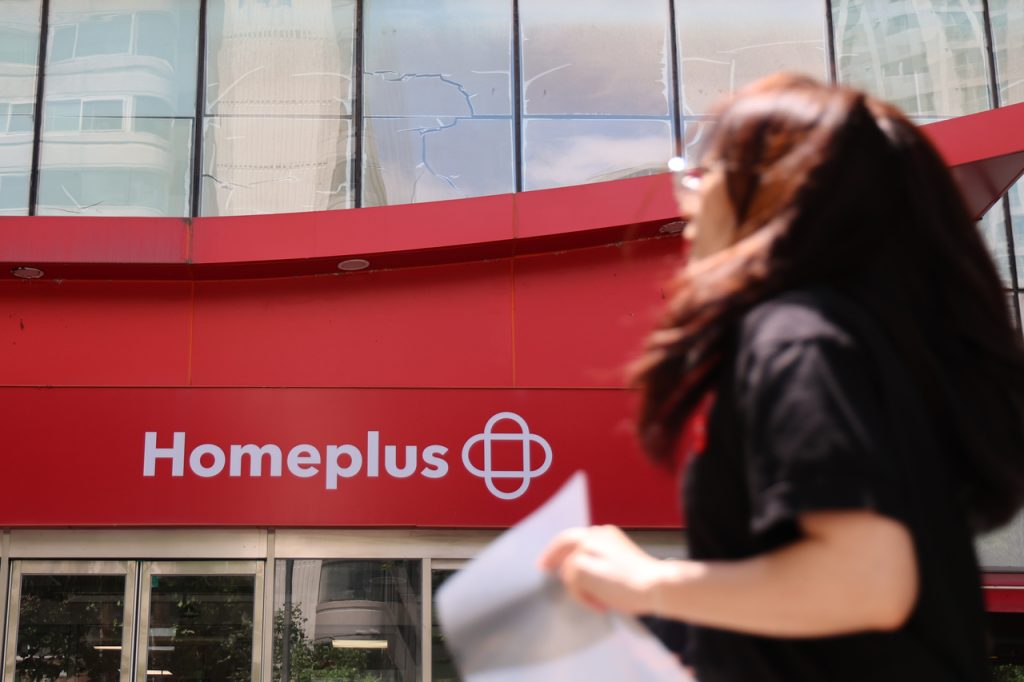
Meritz approves funding only with MBK guarantees, calls for greater shareholder responsibility
MBK Partners is under increasing scrutiny regarding its obligations as the primary shareholder of Homeplus, amidst a conflict with Meritz Financial Group concerning the conditions for urgent funding required by the beleaguered retailer.
Meritz recently granted approval for 100 billion won ($65 million) in debtor-in-possession (DIP) financing, crucial for Homeplus’s rehabilitation. This approval, however, is contingent on the funding being secured by legally binding guarantees from MBK and its Chairman, Michael Byung-ju Kim.
Meritz contends that as the controlling shareholder, MBK must bear primary responsibility before creditors are asked to undertake further risk. The financial institution itself navigates significant internal pressures, including potential shareholder backlash and legal ramifications stemming from directors’ fiduciary duties. Some Meritz shareholders have even hinted at collective legal action should the group increase its exposure to Homeplus.
This dispute emerges at a critical juncture for Homeplus, which urgently requires emergency operating funds to sustain its stores, remunerate suppliers, and facilitate the sale of its remaining assets. The company has stated its need for 200 billion won in DIP financing, with the deadline for its rehabilitation plan’s approval rapidly approaching in early July.
MBK, however, has resisted, asserting that it has already extended considerable support to the retailer. The private equity firm has also pressed Meritz to move forward with the funding, emphasizing that Homeplus represents more than mere collateral; it is a vital enterprise linked to the livelihoods of numerous employees and suppliers.
According to MBK, its total contribution to Homeplus amounts to approximately 400 billion won, encompassing cash injections, loans, and credit support. This figure includes Chairman Kim’s personal donation of 40 billion won, along with DIP-related assistance and various loan guarantees.
Nevertheless, doubts persist regarding what proportion of that stated amount constitutes fresh cash. Analysts and market observers suggest that a significant segment of the reported support largely comprises loans or guarantees, rather than direct equity infusions.
MBK’s assertion that it possesses limited capacity to offer further assistance has also attracted close examination. Industry evaluations indicate the firm oversees approximately $33 billion in assets, generating annual management fees estimated to be in the hundreds of billions of won. In its annual communication in March, MBK disclosed distributing $1.7 billion to investors in 2025. Moreover, its Buyout Fund III, the vehicle used for the Homeplus investment, reported a 15.4 percent return last year.
The substantial personal wealth of Chairman Kim has further intensified this debate. Forbes positioned him second on its 2026 list of Korea’s wealthiest individuals, projecting his net worth at approximately $9.9 billion. These considerable figures complicate MBK’s argument that creditors ought to assume greater risk while the principal shareholder minimizes its own financial commitment.
This disagreement escalated following Homeplus’s initial request for 300 billion won in DIP financing, which was intended to be divided equally among MBK, Meritz, and Korea Development Bank. When KDB expressed reservations, Homeplus redirected its efforts toward Meritz, prompting the National Assembly to intervene as a mediator.
Subsequently, Homeplus requested Meritz to supply 200 billion won, with 100 billion won of this amount being supplementary to the sum already secured by MBK’s guarantee. Meritz granted approval for half of this appeal, stating that the remaining portion must either be organized by MBK or supported by additional, accountable commitment from the shareholder.
This unfolding scenario has inevitably fueled questions about whether MBK is deliberately attempting to curtail its financial burden as the principal shareholder, concurrently urging creditors to accept a larger share of responsibility.
Meritz stands as a significant creditor, having extended approximately 1.3 trillion won in loans collateralized by prime Homeplus store properties. To date, reports suggest it has recovered merely 260 billion won. Providing new loans to a company undergoing rehabilitation inherently involves considerable risk, and Meritz’s duties to its shareholders, along with its legal obligations, render unconditional support challenging to rationalize without more robust commitments from MBK.
MBK has put forth the argument that in the event of Homeplus’s liquidation, Meritz could potentially realize an additional collateral value of 1.56 trillion won, recovering up to 1.8 trillion won even if it extends another 200 billion won. Nevertheless, critics contend that this figure relies on MBK’s internal projections rather than independently verified collateral assessments, failing to adequately factor in risks such as declining property valuations, tenant claims, and potential delays in asset disposal.
“If the argument for salvaging the company is indeed compelling, then the shareholder responsible for its acquisition and management ought to be the first to assume accountability,” an industry official commented. “It appears inequitable for investors to reap profits while creditors and society at large are left to shoulder the consequences of a failure.”
jwc


