SK hynix, HBM Leader, Prepares for Landmark Nasdaq Listing to Join Wall Street’s AI Boom
Global High-Bandwidth Memory (HBM) pioneer, SK hynix, is reportedly gearing up for a significant Nasdaq listing as early as August. This anticipated move could mark one of the largest U.S. stock market debuts in recent memory, introducing a critical player in the artificial intelligence (AI) supply chain directly to American investors.
The South Korean semiconductor giant, renowned as a primary supplier of advanced High-Bandwidth Memory (HBM) to industry titan Nvidia, confidentially filed its intentions with the U.S. Securities and Exchange Commission (SEC) in March. To facilitate this major offering, SK hynix has enlisted leading financial institutions including Citigroup, JPMorgan, Goldman Sachs, and Bank of America.
While Reuters has indicated an August timeframe for the listing, SK hynix has officially stated its intention to complete the listing sometime in 2026, suggesting the precise timing remains subject to change and regulatory approvals.
An American Depositary Receipt (ADR) mechanism allows U.S. investors to acquire shares of foreign companies using dollars. For SK hynix, the strategic allure of a Nasdaq ADR listing extends beyond currency convenience; it’s about re-rating its market perception. Trading alongside its closest U.S.-listed competitor, Micron, SK hynix anticipates being valued by investors who recognize cutting-edge memory chips as an indispensable and scarce resource for AI innovation, rather than a cyclical commodity.
This anticipated market re-rating is already gaining traction. Recently, SK hynix’s stock valuation surpassed that of Samsung Electronics, a historic achievement marking it as Korea’s most valuable listed company—a position Samsung had maintained for over two decades since approximately 2000.
Kim Sun-woo, an analyst at Meritz Securities, projects a significant market response: “Once the ADRs commence trading, investment funds currently holding Micron shares are expected to swiftly allocate capital, leading to a sharp repricing of SK hynix’s stock.” Kim anticipates an August listing, contingent on final SEC approval.
The precise size of the offering and the capital it aims to raise remain key points of speculation, with estimates varying significantly. Reuters has reported figures around $14 billion, derived from a potential sale of 2 to 3 percent of shares. In contrast, some Korean media outlets have suggested figures as high as 40 trillion won (approximately $26 billion), a sum potentially influenced by the company’s robust stock performance this year.
SK hynix, however, has distanced itself from these divergent estimates. A company official clarified that the 40 trillion won figure is an external projection by media and brokerages, not an internal target. Furthermore, the official emphasized that the SEC approval process is not time-bound, stating: “The SEC doesn’t grant clearance on a set day. We go back and forth on comments until they have no more questions, so the timing is hard to pin down.”
Crucially, the most significant terms, including the per-share pricing for the American Depositary Receipts, will be finalized during the book-building process, typically the day before the official listing.
The method of capital generation is a critical aspect, particularly regarding potential shareholder dilution. Issuing new shares to create these ADRs would dilute the holdings of existing investors, a prospect met with some resistance in Seoul. The Korea Corporate Governance Forum, for instance, previously voiced opposition to a new-share issue, advocating instead for funding the listing through share buybacks, given the company’s strong cash flow.
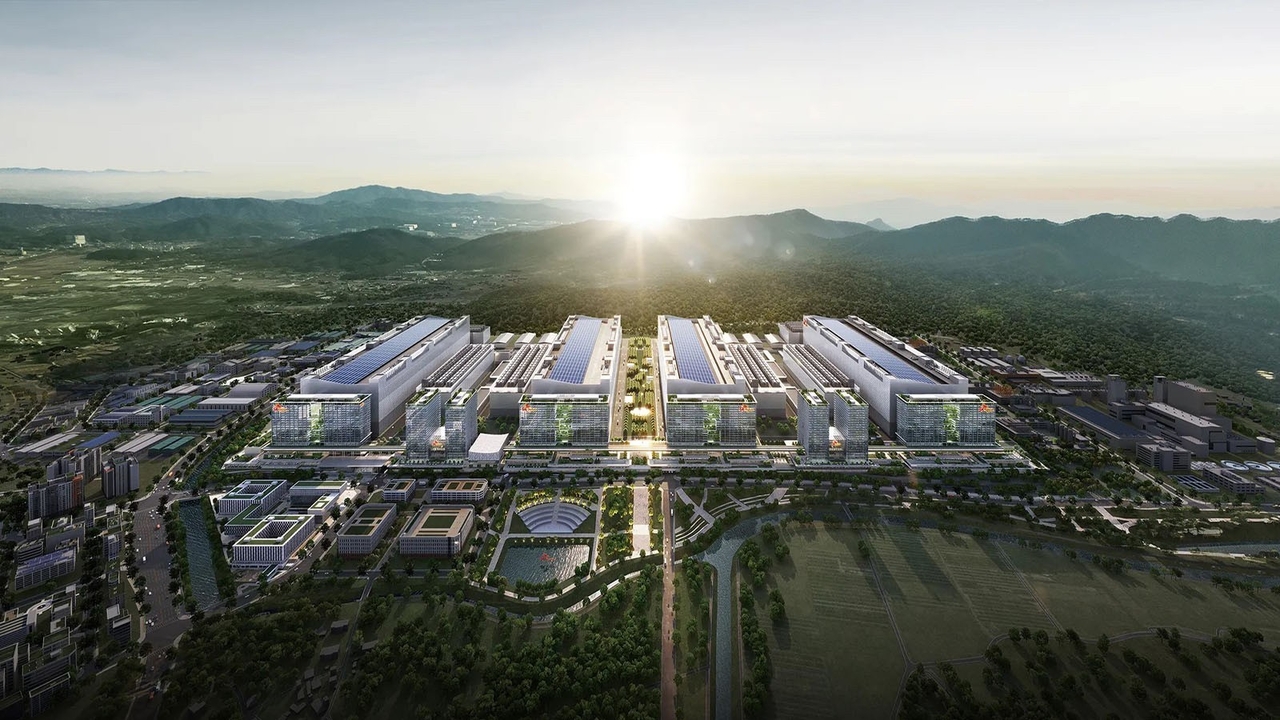
This anticipated infusion of fresh capital is designated to fuel SK hynix’s aggressive expansion strategies already in progress. The company recently reported a record operating profit of 37.6 trillion won in the first quarter, underscoring its financial strength. Demonstrating its technological leadership, SK hynix shipped samples of its advanced 12-layer HBM4E chips to key customers on June 17. Furthermore, a substantial investment of approximately 31 trillion won is being channeled into the inaugural plant at its state-of-the-art Yongin chip cluster, located south of Seoul. The semiconductor industry widely acknowledges that High-Bandwidth Memory (HBM) remains a critical bottleneck in the production of high-performance AI accelerators, with expectations for this supply shortage to continue.
Investors will keenly observe Wednesday’s earnings report from Micron, treating it as a crucial barometer for assessing the ongoing momentum and future trajectory of the broader AI chip market rally.