South Korea’s ‘Yellow Envelope’ Law Expands Employer Responsibility: Landmark Rulings Impact Hyundai Motor & Hanwha Ocean
In a landmark decision, South Korean labor authorities have significantly expanded the definition of employer responsibility, ruling that major corporations like Hyundai Motor and Hanwha Ocean are legally accountable for collective bargaining with certain subcontracted workers. This pivotal development is poised to transform labor-management relations and collective bargaining dynamics across South Korea’s vital manufacturing sector.
The Ulsan Regional Labor Relations Commission recently affirmed the “employer status” of Hyundai Motor, ruling in favor of ten subcontractor labor unions. These unions had sought direct collective bargaining, establishing a precedent for the automaker’s legal obligations towards these workers.
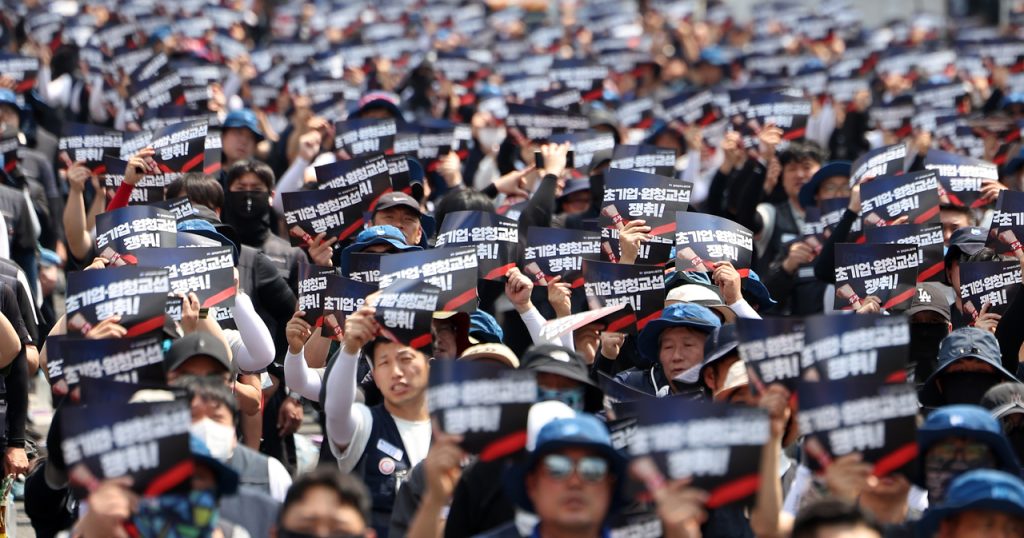
These unions collectively represent approximately 1,675 workers, all affiliated with the influential Korea Metal Workers’ Union. Their members span various roles crucial to Hyundai Motor’s operations, including logistics, security, cleaning, cafeteria services, and vehicle sales at key facilities like the Ulsan, Asan, and Jeonju plants, alongside the Namyang research center.
While the full details of this significant ruling are pending, labor officials anticipate that the comprehensive written decision, expected within approximately a month, will clarify whether employer status has been universally recognized for all ten unions or applied selectively.
This landmark decision marks the first major ruling involving a prominent automaker since the “Yellow Envelope” law, officially known as amendments to the Trade Union and Labor Relations Adjustment Act, became effective in March. This transformative legislation significantly broadens the definition of an “employer” to include entities that “substantially and specifically control” working conditions, thereby empowering unions representing workers in indirect or outsourced roles with crucial collective bargaining rights.
The ruling follows the unions’ initial request for collective bargaining with Hyundai Motor on March 10, coinciding with the revised law’s implementation. Hyundai’s subsequent refusal prompted the unions to formally petition the labor commission.
Concurrently, the National Labor Relations Commission issued a separate ruling on the same day, affirming Hanwha Ocean’s employer status for workers employed by Welliv. Welliv, a subcontractor, manages essential services such as cafeteria operations, laundry, and shuttle bus transport at the shipbuilder’s extensive facilities.
The commission’s rationale highlighted Hanwha Ocean’s “substantial and concrete control” over these workers’ conditions. It noted that significant improvements to facilities, including kitchens, laundry rooms, and commuter bus systems, could not be undertaken by the subcontractor without the shipbuilder’s direct approval and cooperation.
Consequently, the commission determined that Hanwha Ocean possesses the authority to effectively dictate the employment conditions of these workers, thereby qualifying it as an employer for the purposes of collective bargaining.
Both Hyundai Motor and Hanwha Ocean have indicated they will formulate their official positions upon thorough review of the written decisions.
A Hyundai Motor official stated, “We will comprehensively review the case after receiving the written decision and meticulously consider our response in strict accordance with legal procedures and regulations.”
Similarly, a Hanwha Ocean official commented, “We received notification of the results via text messages from the National Labor Relations Commission and will ascertain our position following a thorough legal review of the written decision.”
These rulings are particularly impactful as their scope transcends traditional core production activities, like shipbuilding, to encompass essential support functions, including catering and transportation services. Labor authorities have effectively established that collective bargaining demands pertaining to workplace safety and overall working conditions necessitate the direct involvement of the principal contractor, given its control over the physical facilities where employees operate.
Industry stakeholders express significant concern that these landmark rulings could set a precedent, potentially leading to widespread collective bargaining demands throughout South Korea’s manufacturing sector and other industries heavily reliant on subcontracted labor.
Business groups have vocally criticized these decisions, arguing that such an expansive interpretation of employer responsibility introduces significant uncertainty and potential operational disruptions for companies.
The Korea Enterprises Federation (KEF) specifically contended that the Hanwha Ocean decision contradicts existing guidelines from the Ministry of Employment and Labor. These guidelines previously indicated that outsourced operations, such as factory cafeterias, do not inherently constitute structural control over subcontracted workers.
In a strongly worded statement, the KEF warned, “Expanding the scope of collective bargaining counterparts beyond direct production subcontracting arrangements to include indirect support-service relationships risks creating significant disruptions across industrial sectors.”
The prominent business lobby urged the National Labor Relations Commission (NLRC) to refrain from issuing rulings that might “increase uncertainty in the market.” Instead, it called for objective, neutral decisions anchored in rigorous legal standards to avert “unnecessary confusion in the workplace and labor-management relations.”
sahn