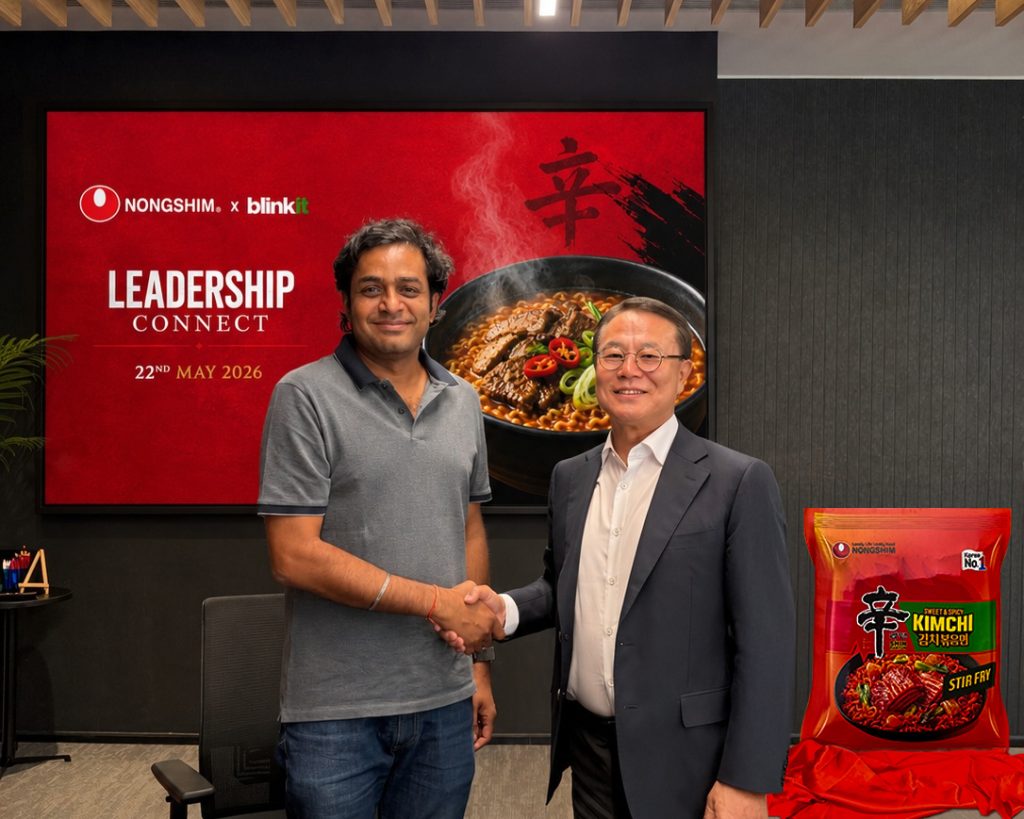
Leading Korean food company, Nongshim, is significantly boosting its expansion into the vibrant Indian market through a strategic partnership with Blinkit, India’s foremost instant delivery platform.
Leveraging Blinkit’s expansive rapid-delivery network, which commands approximately half of India’s fast-growing grocery delivery sector, Nongshim is set to aggressively expand Shin Ramyun sales across key metropolitan hubs including New Delhi and Mumbai.
To captivate its target demographic, the Korean food maker recently hosted an exciting launch event in Gurugram for its new Shin Ramyun Kimchi Stir Fry. This initiative specifically targets younger Indian consumers, who are highly engaged with app-based instant delivery services and emerging food trends.
The vibrant event immersed attendees in a Korean street-food experience, featuring themed pop-up booths and exclusive tasting sessions. Local influencers actively participated, generating engaging content that was widely shared online, amplifying Nongshim’s promotional campaigns for Shin Ramyun.
Nongshim emphasized that this strategic partnership is crucial for solidifying its market foothold within India’s exponentially growing online food retail sector.
Supporting this aggressive expansion, data from the Korea International Trade Association, cited by Nongshim, projects India’s burgeoning e-commerce market to surge from an estimated $90 billion in 2025 to a remarkable $240 billion by 2030.
Within this digital landscape, the rapid-delivery segment – characterized by the swift delivery of groceries and daily necessities via mobile apps – is forecast to experience even more explosive growth, expanding from $8 billion to an impressive $50 billion over the identical timeframe.
A Nongshim official articulated their vision: “Through our robust partnership with Blinkit, we are strategically positioned to significantly expand the presence of the beloved Shin Ramyun brand throughout India. Our ultimate goal is to seamlessly integrate Shin Ramyun into the everyday lives and culinary experiences of Indian consumers.”
stlee0329