
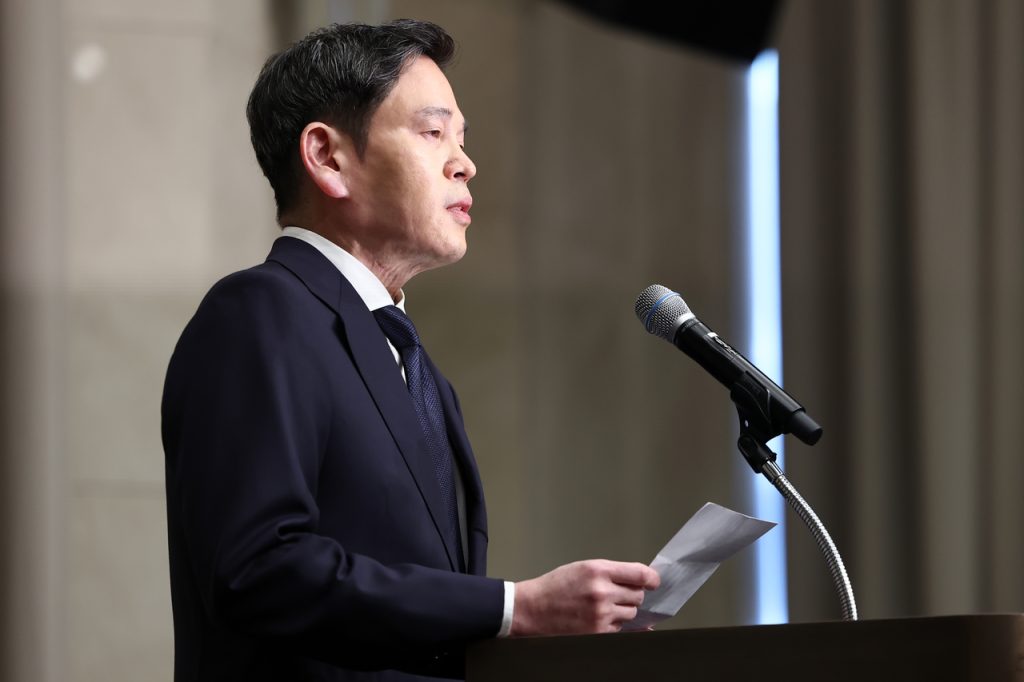
Shinsegae Group Chairman Chung Yong-jin formally apologized Tuesday, bowing his head before victims’ families and taking personal accountability for a controversial Starbucks Korea promotion. This incident ignited widespread public outrage across South Korea, deeply touching one of the nation’s most painful political tragedies, the May 18 Democratic Uprising.
Addressing a press conference, Chairman Chung stated, “To the bereaved families of the May 18 Democratic Uprising, the family of activist Park Jong-chul, the citizens of Gwangju, and the Korean public who suffered deep pain and disappointment because of this incident.”
“As chairman of Shinsegae Group, I sincerely bow my head in apology and ask for your forgiveness,” he added, emphasizing the gravity of the situation.
This marks the second official apology from Chairman Chung, following an initial statement issued on May 19 in response to the escalating criticism.
The renewed apology comes after days of intense backlash concerning a specific Starbucks Korea promotion launched on May 18. The “Tank” tumbler collection stirred significant controversy by employing phrases that disturbingly evoked both the military tanks deployed during the brutal Gwangju Democratic Uprising on May 18, 1980, and the subsequent authoritarian government’s notorious cover-up of the death of pro-democracy activist Park Jong-chul.
Acknowledging the severity of the misstep, Chung declared, “I will make no excuses. Whatever the reason, wounding the hearts of the public is not a responsibility that can be taken lightly.”
Chairman Chung urged the public to direct their anger toward management, asserting that the ultimate responsibility lay with leadership, not frontline Starbucks workers. He further committed to a comprehensive overhaul of Shinsegae Group’s internal systems and a significant strengthening of its standards for corporate social responsibility and ethical conduct.
“We will start again from the beginning, creating meaningful change through actions rather than words,” Chung pledged, signaling a commitment to tangible reforms within the company.


