Starbucks can repurchase Emart’s stake at steep 35% discount under liability clause in licensing deal
Following the controversial “Tank Day” marketing campaign by Starbucks Korea, a high-stakes ownership agreement is under renewed scrutiny, potentially creating substantial financial risks for Emart and its parent company, Shinsegae Group.
In July 2021, Emart strengthened its position in Starbucks Korea by acquiring an additional 700,000 shares from Starbucks Coffee International, the global licensing division of Starbucks. This 474.3 billion won ($314 million) transaction boosted Emart’s ownership to 67.5 percent, securing management control. The remaining 32.5 percent stake was purchased by Apfin Investment, an entity managed by the Government of Singapore Investment Corporation.
Crucially, the existing licensing agreement between Emart and Starbucks outlines two distinct call option clauses, empowering Starbucks Coffee International to repurchase all shares in Starbucks Korea should specific conditions be met.
The first clause permits Starbucks Coffee International (SCI) to repurchase the shares at a mutually determined fair market valuation. However, the second clause carries significant implications for Emart: if the licensing agreement faces termination due to Emart’s liability, SCI holds the right to acquire Emart’s 67.5 percent stake at a substantial 35 percent discount from the valuation established by the standard pricing methodology.
This critical provision is now under intense scrutiny in the wake of Starbucks Korea’s recent marketing controversy, especially considering the coffee chain’s vital role as a primary profit driver and cash flow generator for Emart.
SCK Company, the operator of Starbucks Korea, reported sales of 3.24 trillion won last year, a 4.4 percent increase year-over-year. This growth coincided with an expansion to 2,115 locations, positioning South Korea as one of Starbucks’ largest and most densely concentrated global markets. However, operating profit decreased by 9.3 percent to 173 billion won, and net profit fell by 5.9 percent to 142.5 billion won, marking the company’s first earnings decline since 2022, attributed to rising operational costs and heightened market competition.
Despite this dip in profitability, Starbucks Korea sustained a significant dividend payout of 106.2 billion won last year, representing approximately 74.5 percent of its net profit. Emart alone received about 71.7 billion won in dividends, comprising the majority of its total dividend income from affiliates, thereby highlighting Starbucks Korea’s indispensable role as a critical cash cow for the retailer.
As of Wednesday, Starbucks’ global headquarters had not issued a response to inquiries from The Korea Herald regarding whether the contentious “Tank Day” campaign could be deemed grounds for contractual liability, or if the company is actively considering exercising its buyback option.
Starbucks Korea faced intense public backlash on Monday following the launch of a tumbler promotion campaign that controversially used the phrases “Tank Day” and “Bang on the desk.” These expressions were widely condemned for appearing to mock two deeply sensitive and pivotal moments in South Korea’s democratization history.
The phrase “Tank Day” drew severe criticism for its potent evocation of the military tanks deployed to suppress the May 18, 1980 Gwangju Democratic Uprising during the Chun Doo-hwan regime. Similarly, “Bang on the desk” resonated with many Koreans as a stark reminder of the dictatorship’s infamous efforts to conceal the torture-related death of student activist Park Jong-chul in 1987.
Recognizing the gravity of the public outcry, the company promptly withdrew the controversial campaign within hours and issued an official apology, acknowledging the phrases used were deeply inappropriate.
To mitigate the widespread fallout, Chung Yong-jin, a key figure in Shinsegae Group, acted swiftly, dismissing Starbucks Korea CEO Son Jeong-hyun later that day, preceding a formal public apology issued on Tuesday.
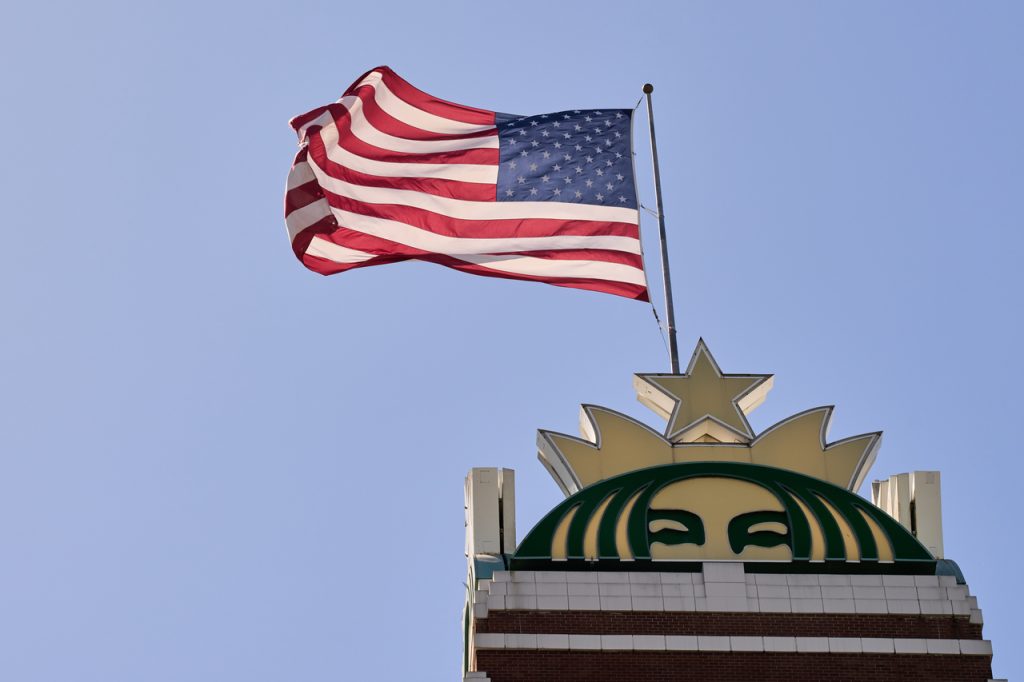
Starbucks’ global headquarters also characterized the incident as an “unacceptable marketing incident,” stating that it is actively reinforcing internal controls, enhancing review standards, and implementing companywide training programs to prevent any recurrence of similar issues.
A legal expert specializing in franchise and licensing agreements, who requested anonymity, commented, “The swift decision to dismiss the CEO was likely the bare minimum Shinsegae Group could undertake given the severity of the circumstances.”
The lawyer further elaborated, “While the precise terms and contractual thresholds are not publicly disclosed, significant damage to a global brand’s image could potentially be construed as legitimate grounds for the termination of a licensing agreement.”
Nevertheless, Shinsegae Group seemingly maintains that the incident does not escalate to the level of contractual liability required for termination. The company reportedly considers the current controversy distinct from conditions typically stipulated in license termination clauses, such as unmet store expansion targets, payment defaults, or breaches of confidentiality.
The public backlash has continued to intensify and spread across online platforms, with some consumers sharing videos of themselves actively destroying Starbucks tumblers, tearing up Starbucks merchandise, or discarding products into trash bins, signaling a growing anti-Starbucks movement.
hwkan