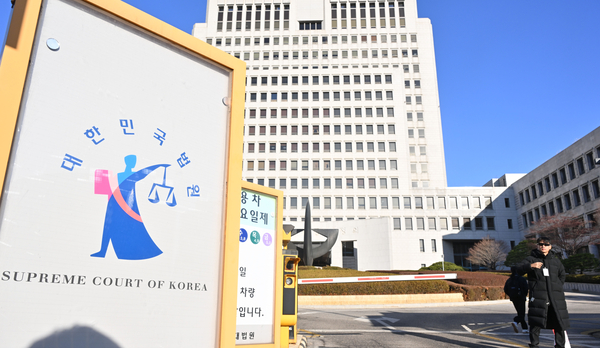
South Korea’s Supreme Court recently delivered a pivotal ruling, asserting that payments made to a US firm by a South Korean company for technical know-how could be subject to corporate tax in Korea. This significant decision has led the case to be remanded to a lower court for further examination.
As reported by legal experts on Monday, the top court overturned a previous lower court verdict that had favored US pharmaceutical company Genosco. The original dispute involved Genosco’s lawsuit against the Dongjak Tax Office head, who had declined to issue a tax refund.
The case originated from a 2016 technology transfer agreement between Genosco and Yuhan Corp. Under this agreement, Genosco transferred specific technology and proprietary know-how related to compounds for targeted liver cancer treatments to Yuhan in exchange for royalties.
That year, Yuhan paid Genosco 500 million won ($330,000) as part of these royalties. In accordance with Korean tax regulations, Yuhan withheld a portion as corporate tax before remitting it to the Korean tax authorities.
According to Korea’s Corporate Tax Act, foreign corporations generating Korea-sourced income are liable for corporate tax. While the foreign entity is primarily the taxpayer, the Korean company facilitating the payment is often required to withhold the tax and pay it to Korean tax authorities on behalf of its foreign counterpart.
Genosco subsequently sought a refund, arguing that the royalties received for the transfer of technical know-how should not be subject to corporate taxation. Following the tax authorities’ refusal, the company initiated legal proceedings.
The central contention revolved around whether the payment for the know-how qualified as income derived from a capital asset. Under the existing Korea-US tax treaty, income from capital assets is typically exempt from taxation.
The Seoul High Court had previously sided with Genosco, concluding that the know-how in question constituted a capital asset, thereby deeming the payment exempt from tax liability.
However, the Supreme Court disagreed with this interpretation and remanded the complex case back to the lower court for reconsideration.
The highest judicial body clarified that the term “capital assets” is not explicitly defined in Korean law. It therefore interpreted the term within the framework of US tax law as it stood in 1976 when the Korea-US tax treaty was initially signed. At that time, US tax law specifically excluded depreciable property from the scope of capital assets.
The Supreme Court concluded that technical know-how generally falls under the category of depreciable property. Consequently, it is “generally excluded” from the definition of capital assets under the Korea-US tax treaty, which implies it should be subject to corporate tax.
Nevertheless, the court further stipulated that the specific know-how could potentially be classified as “intangible personal property” under the treaty. In such an instance, the income’s taxability would hinge on where the sale of the know-how took place. The court indicated that additional review is essential to accurately determine the exact location of the sale.
seungku99