
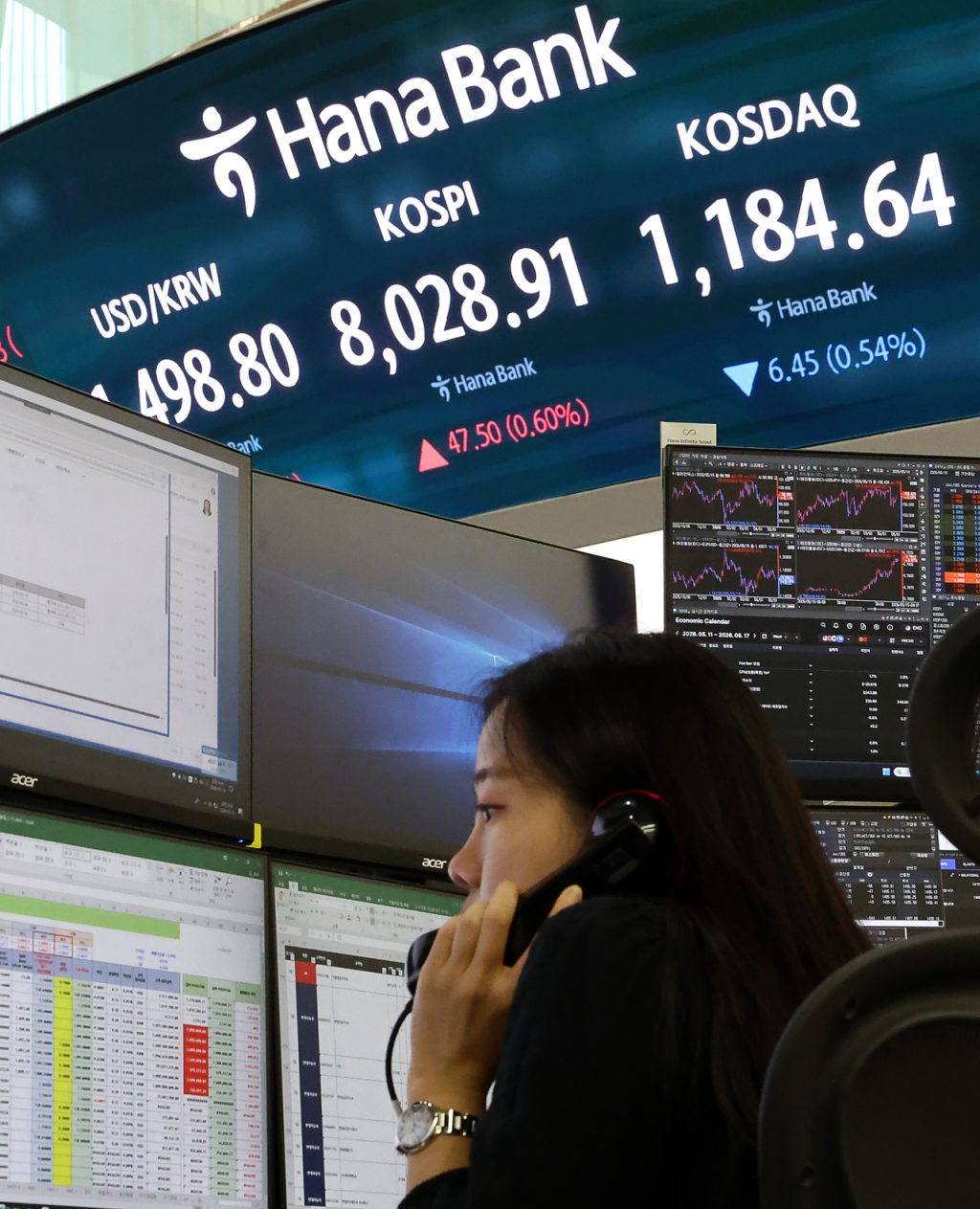
The South Korean won experienced a significant dip on Friday, reaching its weakest point against the US dollar in over a month. This decline was primarily driven by rekindled concerns over global inflation, following stronger-than-anticipated inflation figures from the United States, which fueled speculation of impending interest rate hikes by the Federal Reserve.
Opening at 1,494.2 won per US dollar, the currency showed an immediate downturn, shedding 3.2 won compared to the prior trading session’s closing rate.
Throughout the day, the South Korean currency continued its downward trend, quoting at 1,500.8 won against the dollar by 3:30 p.m. This marked a sharper decline, totaling a 9.8 won drop from its previous close.
This breach below the crucial psychological threshold of 1,500 won per US dollar was the first occurrence since April 7, highlighting the extent of the currency’s depreciation.
The downward pressure on the South Korean won in recent days stems from a confluence of factors. Beyond the robust U.S. inflation figures, escalating geopolitical tensions, specifically renewed concerns surrounding the US-Iran situation, have significantly contributed to rising global oil prices.
This surge in international oil prices directly impacts the won, as South Korea, a nation heavily dependent on imported energy, requires more US dollars to finance its crude oil purchases. This increased demand for dollars naturally weakens the local currency.
Meanwhile, earlier in the trading day, South Korea’s benchmark stock market, the Kospi index, briefly surpassed the 8,000-point mark before quickly retreating and paring back most of its initial gains, reflecting broader market uncertainty.


