
Easing US-China Tensions May Support Korean Chip Exports While Accelerating China’s Semiconductor Ambitions
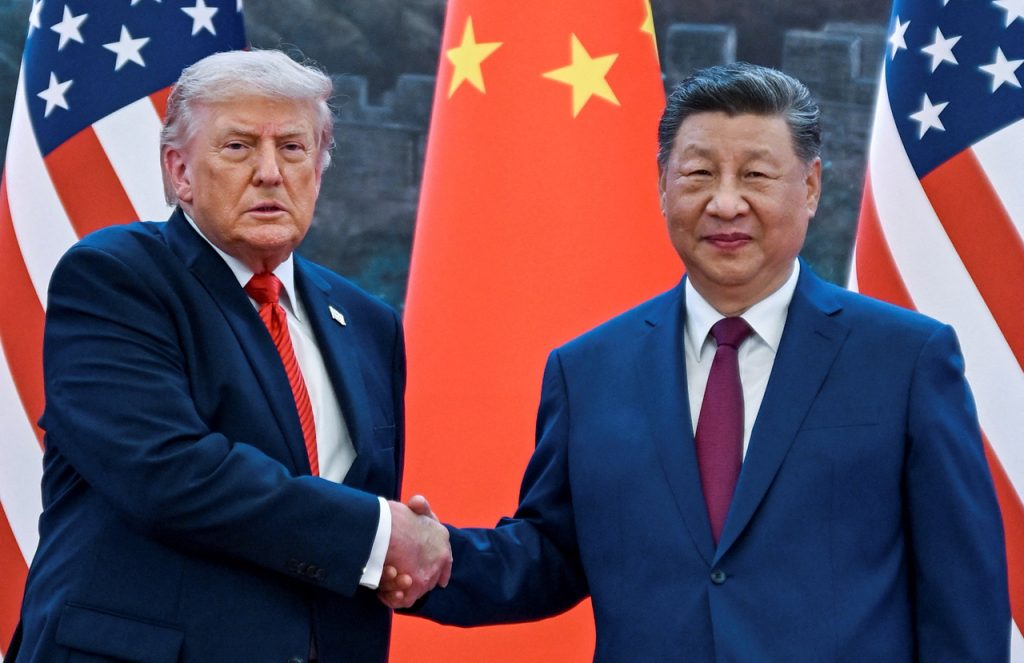
The recent Trump-Xi summit in Beijing presents a complex challenge for Korea’s semiconductor industry. It forces a careful evaluation of potential benefits: fresh business opportunities for equipment suppliers in China, balanced against the long-term risk of inadvertently helping Chinese chipmakers bridge the technology gap with leading Korean manufacturers like Samsung Electronics and SK hynix.
At the core of the two-day discussions were Washington’s stringent semiconductor export controls and Beijing’s strategic leverage over rare earth supplies. Both issues carry significant, direct implications for Korea’s critical chip supply chain and its semiconductor export outlook.
The United States has actively tightened restrictions on semiconductor equipment exports to China, aiming to decelerate Beijing’s progress in crucial areas such as artificial intelligence and high-performance computing. Concurrently, China is widely anticipated to utilize its dominant position in rare earths as a key bargaining chip, especially as both nations deliberate extending the trade truce initially established in October of last year.
These high-stakes negotiations also hold considerable political weight for US President Donald Trump, particularly with November’s midterm elections approaching. Analysts suggest a scenario where the US could potentially relax some restrictions on semiconductor equipment exports, provided Beijing commits to increasing purchases of US agricultural goods, energy products, and Boeing aircraft.
“If the US eases some restrictions on semiconductor equipment exports while China guarantees stable rare earth supplies, both sides could frame the outcome as a diplomatic success,” noted Yeo Tae-kyung, an analyst at Hyundai Motor Securities.
Speculation surrounding potential deals intensified following Jensen Huang, chief executive of Nvidia, joining Trump’s delegation after initially being omitted from the list. Industry observers are now suggesting that discussions might encompass the potential export of Nvidia’s advanced H200 AI chips to China.
However, for Korean chipmakers, the ramifications of these developments are more intricate. Cho Yeon-joo, an analyst at NH Investment & Securities, emphasized that any relaxation of restrictions pertaining to 14-nanometer and 7-nanometer semiconductor processes would require vigilant monitoring. This is particularly relevant as Chinese firms, including Hua Hong Semiconductor and Shanghai Huali Microelectronics Corp., aggressively pursue more advanced-node production capabilities.
“ASML’s immersion lithography equipment, which is essential for 14-nanometer and 7-nanometer logic production, is also critically utilized in advanced DRAM manufacturing,” Cho explained.
“Such a development would represent a negative scenario for Korean memory makers,” she added, further asserting that China currently appears to possess stronger negotiating leverage through its strategic control of rare earth supplies.
Despite these concerns, experts generally believe that the direct threat to industry leaders Samsung Electronics and SK hynix could remain contained, unless Washington grants China access to highly advanced extreme ultraviolet (EUV) lithography systems.
“The absolute key is EUV lithography equipment, and I do not believe the US will permit China to access it,” stated Park Jae-geun, a distinguished professor in semiconductor engineering at Hanyang University.
He further elaborated, “If EUV access were granted, China could significantly accelerate its catch-up in logic foundry and advanced memory chip production. However, it is highly improbable that such critical equipment would be easily released.”
Professor Park also pointed out that current US restrictions on DRAM production below 17 nanometers and NAND flash with over 200 layers are already close to the technological benchmarks Chinese chipmakers have achieved in certain specialized areas.
“Even if these restrictions are eased somewhat, it is unlikely to pose an immediate, direct burden on Samsung Electronics or SK hynix,” he concluded.
Conversely, Korean semiconductor equipment manufacturers stand to gain considerably if Chinese firms intensify their capacity expansion efforts.
“Should Chinese chipmakers prioritize faster mass production and robust revenue growth, they are likely to turn to Korean equipment suppliers who already possess extensive experience and proven track records in memory production,” Park explained. “In this specific context, the situation could indeed be positive for Korean equipment companies.”
A broader de-escalation of US-China tensions also promises to provide significant support for Korea’s overall exports to China, with semiconductors being a prime beneficiary.
Park Sang-hyun, an analyst at iM Securities, highlighted that Korea’s exports to China soared by an impressive 62.5 percent year-on-year in April, marking the fastest growth among its major export destinations. Shipments to China continued their strong ascent, rising 81.8 percent during the May 1-10 period, a stark contrast to a 17.9 percent increase in exports to the US during the same timeframe.
“Semiconductors have undeniably spearheaded the recovery in exports to China,” he affirmed. “If the summit successfully helps ease the tensions between the US and China, it could provide a substantial boost to China’s economy and further invigorate Korean semiconductor exports to the country.”


