
The American Chamber of Commerce in Korea (AmCham) has issued a warning that a potential strike at Samsung Electronics could severely disrupt global supply chains and diminish South Korea’s attractiveness as an investment destination.
This concern arises amidst escalating labor tensions at the semiconductor giant, as workers prepare for a possible 18-day walkout commencing May 21. Their demands include lifting performance bonus caps and receiving a 15 percent share of operating profit as incentive compensation.
AmCham highlighted Samsung’s critical role, especially in the burgeoning global artificial intelligence sector, where it serves as a dominant supplier across numerous technology supply chains worldwide. The chamber warned that any extended industrial action could significantly tighten global memory supply, potentially leading to increased bottlenecks, volatile price fluctuations, and widespread supply chain instability.
“Many AmCham member companies across various industries, including AI, cloud infrastructure, automotive, manufacturing, industrial technology, and energy, heavily rely on stable semiconductor supply chains rooted in Korea,” AmCham stated in a press release.
“In today’s interconnected global economy, disruptions in strategically important industries can create ripple effects extending well beyond a single company or market,” the statement added.
Furthermore, AmCham cautioned that prolonged instability might compel multinational corporations to diversify their operations away from Korea, potentially bolstering rival regional manufacturing hubs.
The organization also underscored broader risks to Korea’s overall investment climate. Citing its internal survey, AmCham noted that South Korea has fallen to third place as a preferred Asian regional headquarters destination for multinational companies, now trailing Singapore and Hong Kong. Key contributing factors cited were labor policy, regulatory predictability, and alignment with global business standards.
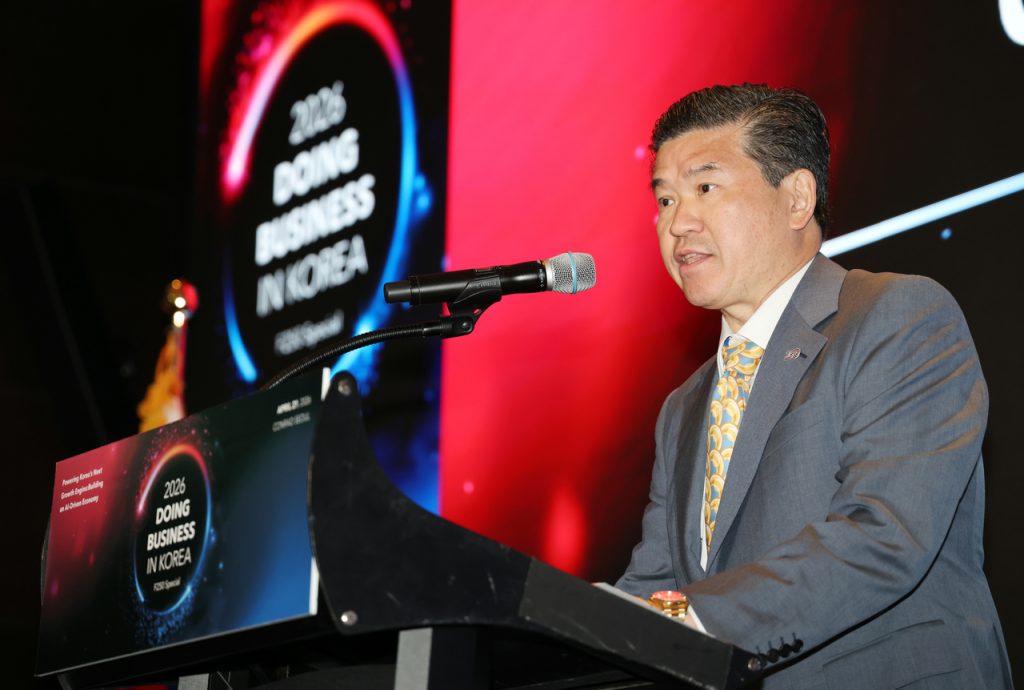
AmCham Chairman and CEO James Kim emphasized, “Maintaining a stable and predictable business environment aligned with global standards is essential to strengthening Korea’s position as a leading regional headquarters and investment hub in the Asia-Pacific region.”
He further added, “Continued efforts to reinforce supply chain reliability, operational stability, and business predictability will be important to sustaining Korea’s long-term global competitiveness.”
Meanwhile, Samsung Electronics management and labor representatives recommenced two days of government-mediated negotiations on Monday. This crucial meeting is widely seen as a final attempt to prevent a strike that, according to industry estimates, could result in losses exceeding 30 trillion won (approximately $20.4 billion).


