
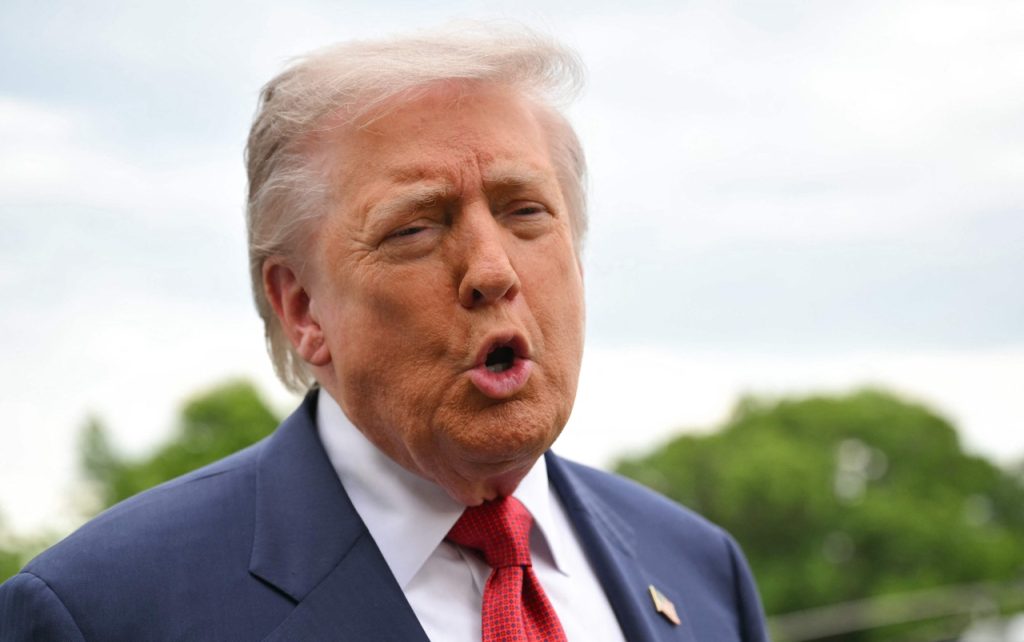
US President Donald Trump recently declared his affection for South Korea, stating, “I love South Korea,” despite previously expressing displeasure over Seoul’s and other allies’ perceived lack of support for American military operations targeting Iran.
President Trump made these remarks during a press availability at the White House. This statement followed closely after Seoul and Washington finalized a memorandum of understanding (MOU) aimed at advancing shipbuilding cooperation, a key component of last year’s bilateral trade and investment agreement.
His declaration came in response to a reporter’s question regarding a social media post on Monday, where Trump claimed Iran had fired upon a South Korean-operated cargo ship in the critical Strait of Hormuz—an allegation vehemently denied by Tehran.
These comments signal a notable shift in tone from President Trump, who had earlier conveyed his dissatisfaction with South Korea and other allies. His prior appeals for naval assistance, such as providing warships to escort merchant vessels through the crucial waterway to help reopen the strait, had largely gone unheeded.
Just last month, Trump publicly criticized South Korea, labeling it “not helpful” to the U.S. He underscored the significant commitment of American troops stationed “in harm’s way” in the Asian nation, highlighting its strategic proximity “right next to” North Korea’s formidable nuclear forces.
Regarding the South Korean-operated vessel reportedly struck by an explosion in the strait, Trump asserted it was “shot at” after deciding to “go it alone.” He emphasized that it was high time for South Korea to join a mission dedicated to ensuring freedom of shipping through the strait, which he suggested was effectively constrained by the US-Israeli confrontation with Iran.
In a positive development strengthening Seoul-Washington cooperation, the two nations formally inked the MOU on shipbuilding collaboration. This agreement underscores Seoul’s commitment to aiding in the revitalization of the American shipbuilding sector, a vital aspect of their broader bilateral trade deal.


