
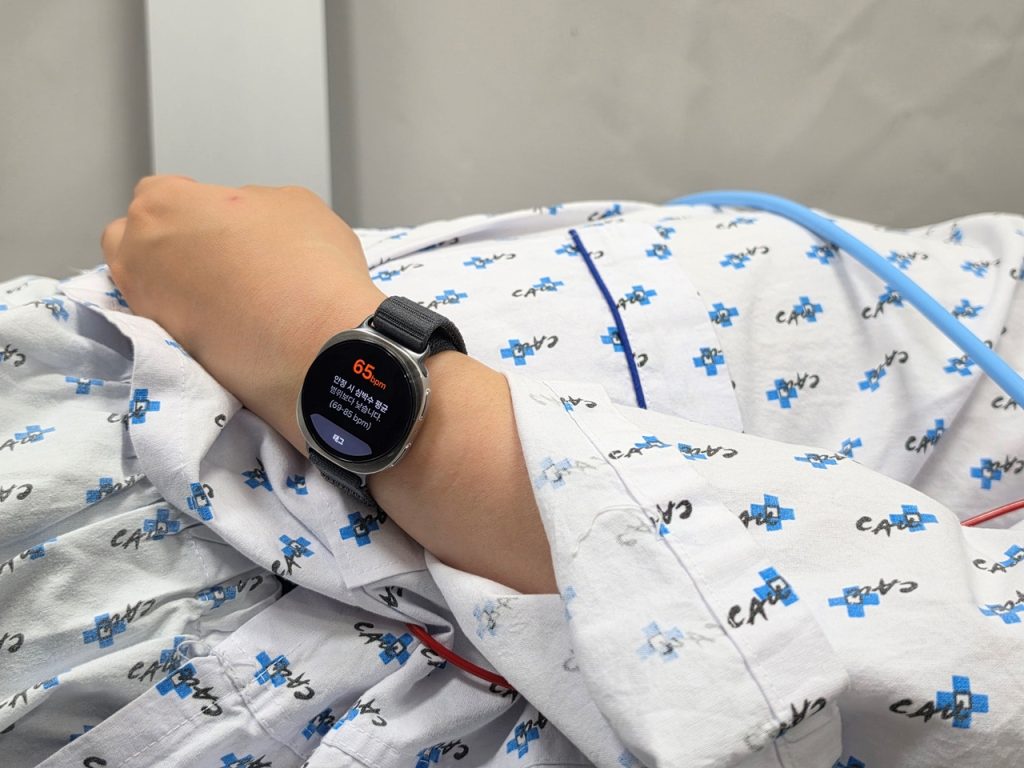
Samsung Electronics has announced a groundbreaking achievement, demonstrating the Galaxy Watch’s ability to predict vasovagal syncope with high accuracy. This world-first capability leverages advanced biosignal analysis technology developed through a collaborative clinical study with Chung-Ang University Gwangmyeong Hospital.
The pioneering research findings have been published in the European Heart Journal Digital Health, the official digital health journal of the esteemed European Society of Cardiology. This marks the first time that syncopal attacks, commonly known as fainting spells, have been successfully predicted using a smartwatch.
Vasovagal syncope involves a temporary loss of consciousness, often triggered by significant anxiety or stress, leading to a sudden drop in blood pressure. The condition necessitates extreme caution as sudden falls can result in serious secondary injuries, including fractures or cerebral hemorrhage.
The clinical study was meticulously conducted by Professor Cho Jun-hwan’s laboratory within the cardiology division at Gwangmyeong Hospital. Researchers performed head-up tilt tests, a standard procedure for diagnosing unexplained fainting, on 132 patients suspected of vasovagal syncope.
Each participant wore a Galaxy Watch 6, which continuously collected real-time heart rate variability data using its integrated photoplethysmography (PPG) sensors. This rich biosignal data became the foundation for the predictive model.
Subsequently, the collected data underwent sophisticated AI analysis. This artificial intelligence model successfully predicted fainting incidents 5 minutes in advance with an impressive 84.6 percent accuracy. Such timely predictions empower patients to adjust to a safer position and secure crucial “golden time” to call for assistance, significantly enhancing their safety.
Professor Cho Jun-hwan emphasized the widespread impact, stating, “The lifetime cumulative prevalence of syncope reaches 40 percent, with one-third of these individuals experiencing repeated episodes. Real-time prediction of passouts will profoundly prevent accidents for patients who often struggle to recognize precursor signs.”
Choi Jong-min, director of the Digital Health Team at Samsung Electronics’ Mobile eXperience division, commented on the broader implications: “This research has opened up an unprecedented possibility to transform healthcare from a reactive post-care model to a proactive prevention-focused approach, powered by wearable technology. Moving forward, Samsung remains committed to delivering preemptive health care solutions through the innovative Galaxy Watch platform.”
stlee0329


