
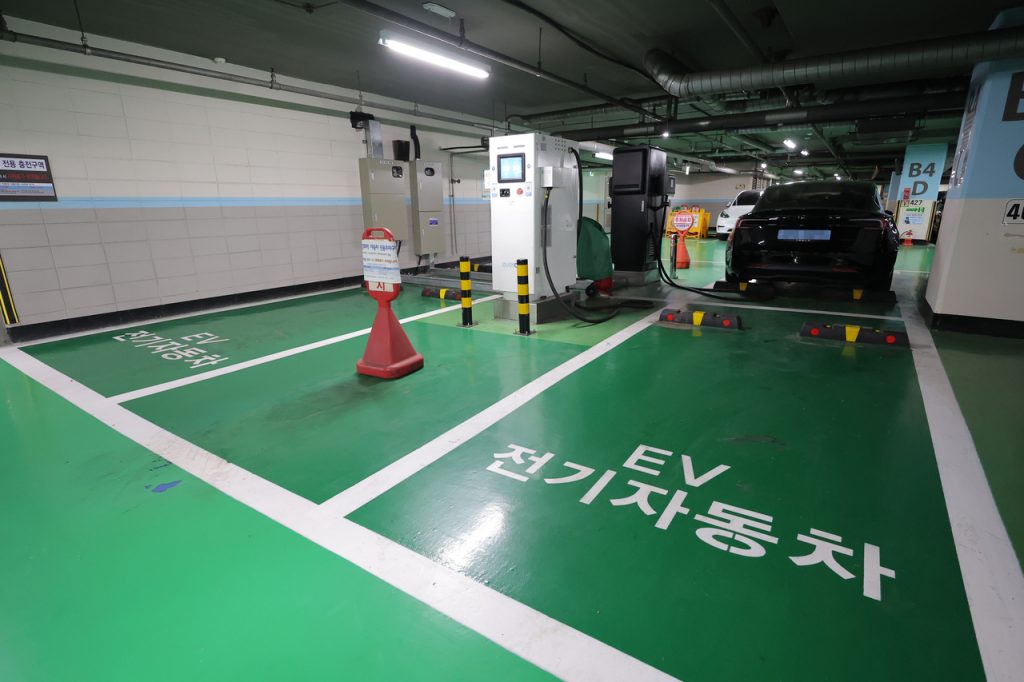
To alleviate the significant upfront cost burden for consumers, South Korea’s leading business lobby recently proposed a crucial regulatory reform: permitting the separate ownership of electric vehicle (EV) batteries from their vehicles.
This key proposal is one of 100 comprehensive regulatory reform recommendations put forth by the Federation of Korean Industries (FKI) to the Office for Government Policy Coordination. These recommendations are meticulously gathered from input provided by FKI’s diverse member companies, aiming to foster a more dynamic economic environment.
The FKI’s proposals span various governmental bodies, with specific allocations: 26 recommendations directed to the Land Ministry, 13 to the Trade Ministry, 11 to the Environment Ministry, nine to the Financial Services Commission, six to the Labor Ministry, and five to the Finance Ministry.
A central component of these recommendations is the establishment of a legal framework designed to formally separate electric vehicle battery ownership from the vehicle itself. Presently, in South Korea, EV batteries are legally classified as an integral part of the vehicle, granting effective control to automakers, despite their actual manufacturing by specialized battery suppliers.
The FKI advocates that by recognizing EV batteries as independent assets, consumers could significantly reduce the upfront purchase price of electric vehicles, as the substantial battery cost would be excluded. Furthermore, this model would facilitate efficient and rapid battery swapping services via dedicated charging and exchange stations.
This ‘Battery-as-a-Service’ (BaaS) model, where independent entities own and manage the batteries while users pay flexible subscription or rental fees, has already demonstrated success and gained considerable traction in key markets like China and India.
However, an industry insider highlighted that while a Battery-as-a-Service (BaaS) model undeniably offers consumer benefits, its implementation faces considerable hurdles. This is primarily due to the significant shift it would entail in the balance of power, moving control from traditional automakers to battery manufacturers.
The source explained, “Given that automakers are increasingly striving to internalize battery development – a component that can represent up to 40 percent of an electric vehicle’s total cost – relinquishing ownership to battery cell manufacturers would mean surrendering control over one of the most strategic and costly vehicle components.”
In addition to EV battery reforms, the FKI also advocated for the implementation of a legal safe harbor clause concerning the use of copyrighted materials for Artificial Intelligence (AI) training. This proposal stresses the importance of appropriate safeguards for personal data, recognizing the impracticality of securing individual permissions for vast datasets. Japan was cited as a successful model, where such content use is generally permissible for AI development, provided it doesn’t involve direct content utilization.
Further innovative proposals include permitting robotic parking systems within apartment complexes, which are currently restricted due to their classification as mechanical parking facilities. The FKI also suggested broadening insurers’ existing MyData “bundled data” services to incorporate essential documents such as family relationship certificates, enhancing convenience and data integration.
Lee Sang-ho, who heads the FKI’s economic policy division, underscored the urgent need for bold reform of what he termed “outdated regulations.” He expressed optimism that the recently upgraded Regulatory Rationalization Committee is well-positioned to effectively drive these meaningful and much-needed changes across various sectors.
hyejin2


