
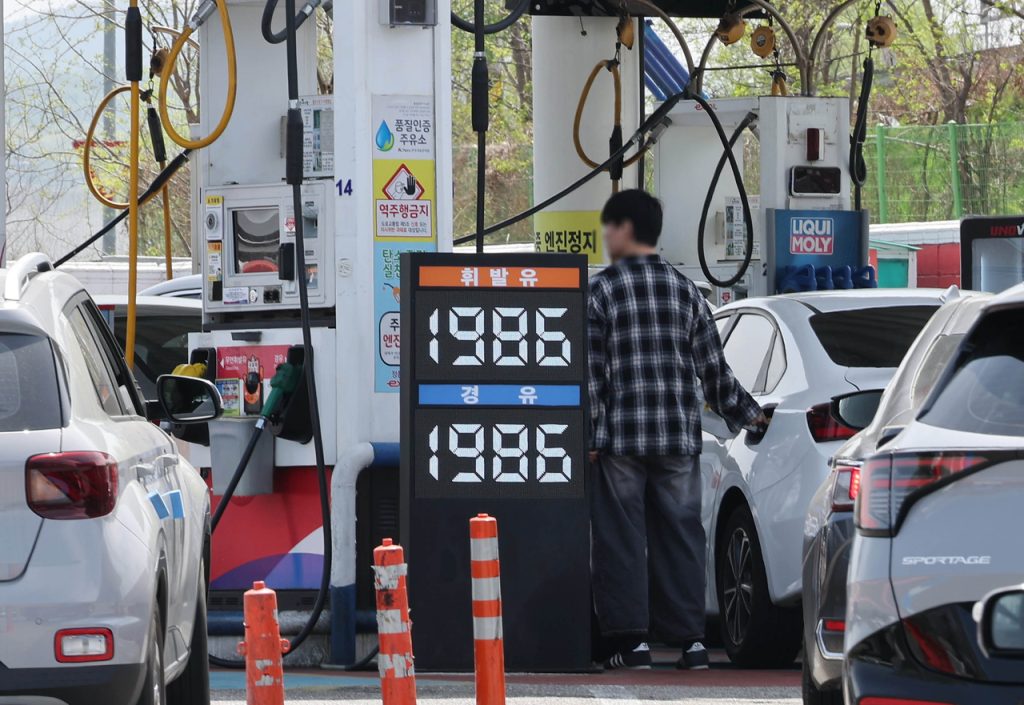
South Korea experienced its fastest surge in consumer prices in 21 months this April, primarily driven by a significant escalation in fuel costs. This latest government data, released on Wednesday, highlights mounting inflationary pressures across the nation.
The Consumer Price Index (CPI), a crucial indicator of inflation, climbed 2.6 percent year-on-year last month, according to figures from the Ministry of Data and Statistics. This marks the most substantial annual increase since July 2024, when the inflation rate also reached 2.6 percent.
This recent rise in South Korea’s consumer prices was largely propelled by a sharp increase in petroleum product costs, which soared by 21.9 percent compared to a year ago. This represents the steepest jump recorded since July 2022.
Specifically, diesel prices in South Korea escalated by an alarming 30.8 percent year-on-year, while gasoline prices saw a 21.1 percent increase. Both figures also denote their sharpest annual growth since July 2022, directly impacting daily living and business operations.
The global oil market has seen significant price hikes following the effective closure of the Strait of Hormuz since US-Israeli strikes on Iran in late February. This disruption to global oil supplies has a pronounced effect on South Korea, a nation heavily dependent on energy imports.
Despite these pressures, the ministry noted that the overall price increase was partially mitigated by temporary price caps on fuel products. These government measures were implemented to control price surges stemming from the Middle East conflict.
“The measures had a moderating effect not only on fuel prices but also on overall consumer inflation,” stated Lee Doo-won, a ministry official. He cautioned, however, that “fuel prices may see a slight increase in May,” suggesting continued vigilance is necessary.
Beyond fuel, prices for industrial products also saw a notable rise of 3.8 percent, marking their fastest growth since February 2023, when they increased by 4.8 percent.
Service prices also contributed to the inflation, increasing by 2.4 percent from the previous year, primarily due to higher insurance costs across various sectors.
The ripple effect of rising global oil prices extended to fuel surcharges, leading to a sharp increase in international airfares for South Korean travelers.
The cost of international flights accelerated significantly in April, jumping 15.9 percent compared to a mere 0.8 percent the month prior. While domestic airfares rose by 0.8 percent, the ministry anticipates further increases for domestic flights in May.
“If fuel prices had risen further, the increase in personal services and international airfares would have been even greater,” Lee emphasized, underscoring the pervasive impact of energy costs.
In contrast, prices for agricultural, livestock, and fishery products offered a glimmer of relief, decreasing by 0.5 percent. This marked the second consecutive month of decline in this sector.
This welcome fall was largely attributed to a significant 12.6 percent drop in vegetable prices, facilitated by favorable weather conditions that supported abundant harvests.


