
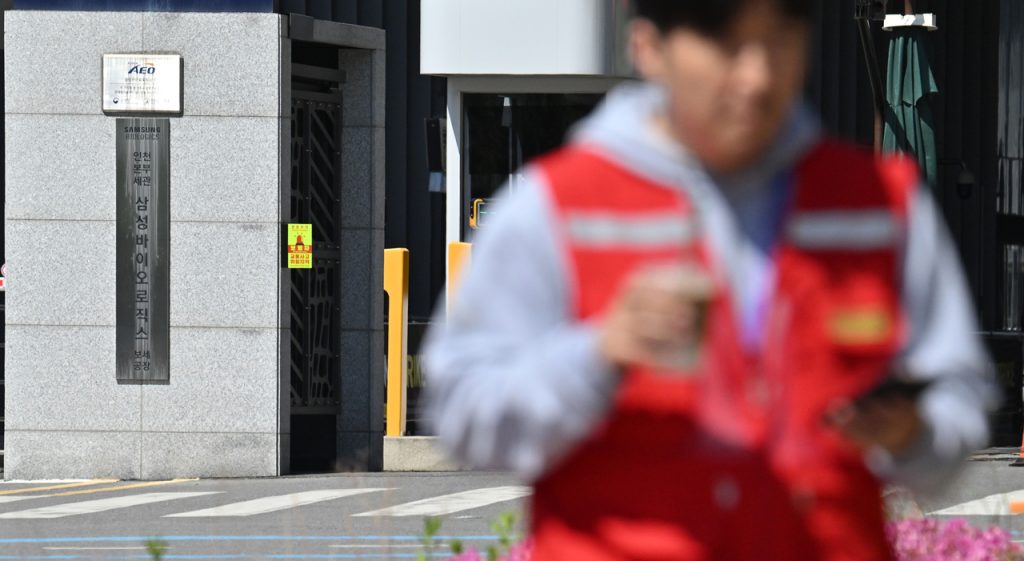
The ongoing five-day strike at Samsung Biologics, culminating on Tuesday, is poised to escalate into a new phase starting Wednesday, as a resolution between labor and management remains elusive.
This significant general walkout, spearheaded by the Samsung Biologics labor union—marking the first industrial action in 15 years—has seen approximately 2,800 employees, representing over half the company’s workforce, participate. Instead of traditional mass rallies, workers have opted for strategic actions like taking paid leave and declining weekend shifts.
Upon the conclusion of the full strike, the union announced that employees would transition to a ‘work-to-rule’ campaign. This strategy aims to sustain pressure on management without initiating a complete operational shutdown, ensuring continued leverage in negotiations.
Union officials clarified that the work-to-rule initiative will entail a strict refusal of overtime and weekend shifts. Furthermore, employees will rigorously adhere to all safety protocols and Good Manufacturing Practice (GMP) standards, potentially impacting production efficiency.
This escalation follows inconclusive talks held on Monday under the auspices of the regional Ministry of Employment and Labor office. While no immediate resolution was reached, both parties have committed to resuming negotiations later in the week. Crucial one-on-one meetings between chief negotiators are scheduled for Wednesday, preceding a broader session with government officials on Friday.
The union’s comprehensive demands encompass several key points: an average wage increase of approximately 14 percent, a one-time payment of 30 million won (roughly $20,300 USD) per employee, a bonus equivalent to 20 percent of the company’s operating profit, and a formal voice in critical management decisions, including hiring practices, performance evaluations, and potential mergers.
The ramifications for Samsung Biologics are considerable, given the sensitive nature of biopharmaceutical manufacturing. Even minor disruptions or partial halts can necessitate the costly disposal of entire production batches, highlighting the immense financial risks associated with ongoing industrial action.
Samsung Biologics currently estimates its strike-related financial losses at approximately 150 billion won. This figure represents a significant reduction from earlier projections, which anticipated losses of up to 640 billion won under a complete shutdown scenario. The company attributes this mitigation to court-approved partial operations and the strategic deployment of replacement workers.
Despite efforts to contain immediate financial impact, industry analysts caution that the long-term damage could extend beyond the balance sheet. Prolonged delays and the perception of operational instability may severely impact Samsung Biologics’ competitiveness and ability to secure new contracts within the fiercely contested Contract Development and Manufacturing Organization (CDMO) market.


