
Samsung Electronics Union Faces Exodus as Chip Bonus Demands Ignite Deep Internal Rift
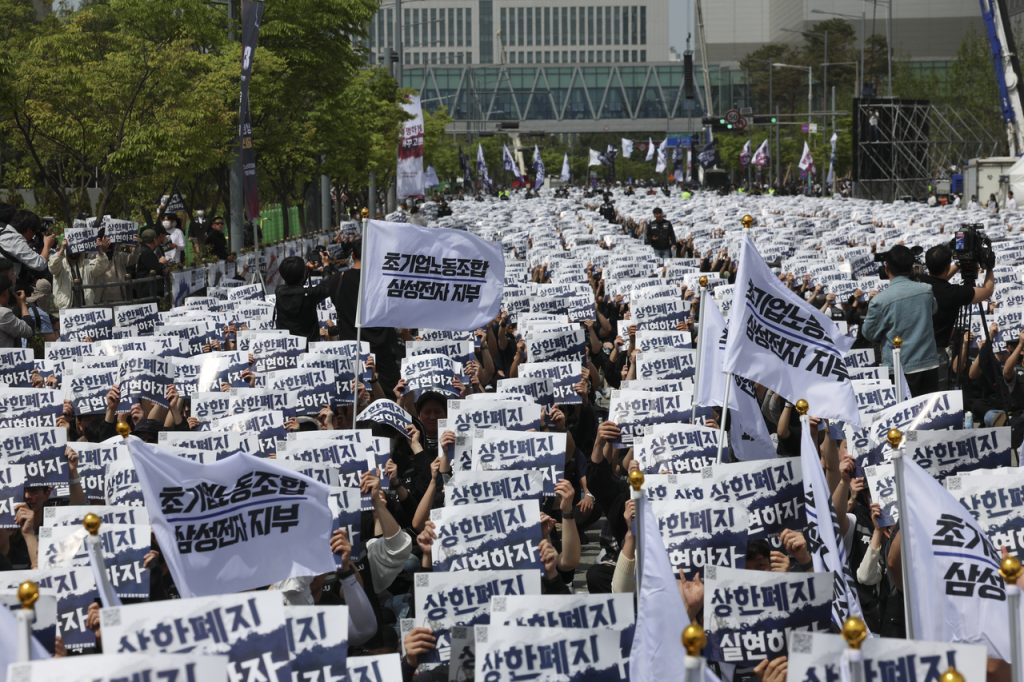
The Samsung Electronics labor union is grappling with a significant exodus of members, particularly from divisions outside its dominant semiconductor business. This surge in withdrawals comes as a planned strike over contentious chip-focused bonus demands exposes widening internal divisions within the tech giant’s workforce.
Industry sources reported Monday that withdrawal requests have dramatically surged on the union’s official website in recent days. Over 2,500 members are estimated to have departed in the 10 days leading up to Saturday, with daily exits escalating sharply from under 100 earlier last month to more than 1,000 by Wednesday.
The vast majority of these departures are understood to originate from Samsung’s Device eXperience (DX) division, which is responsible for smartphones, televisions, and other key consumer electronics. DX employees represent approximately 20 percent — around 15,000 — of the union’s total 74,750 members, indicating that roughly 15 percent of DX membership has left in just over a week.
Leadership of the union is predominantly held by employees from the Device Solutions (DS) division, Samsung’s critical semiconductor business. This division constitutes about 80 percent of the union’s total membership and is at the core of the impending industrial action.
The union’s primary demand is for Samsung to award DS employees performance bonuses equivalent to 15 percent of the chip division’s operating profit, alongside the permanent removal of the current bonus cap.
Should this proposal be accepted, it would result in an average payout of approximately 600 million won ($408,000) per DS employee. Critically, no separate demands have been made for DX division workers, even as this consumer electronics segment battles rapidly deteriorating profitability.
In the first quarter, DX’s operating profit plummeted 36 percent year-on-year, partly attributed to increased semiconductor costs sourced from Samsung’s own chip manufacturing operations. Some analysts are even projecting the division could record a full-year loss.
Frustration among DX employees has intensified further due to the union’s pursuit of similar lucrative compensation structures for other DS units, such as foundry and System LSI, despite these units often reporting weaker earnings or outright losses.
Tensions have been exacerbated by the union’s recent recruitment drive for strike participants, which offers 3 million won to members willing to engage in strike-related activities for at least 15 days.
This initiative has brought renewed scrutiny to a January decision to significantly raise union dues during strike periods, from 10,000 won to 50,000 won. The union had stated this increase was intended to build a fund supporting members involved in industrial action.
The rapidly widening rift casts serious doubts on the union’s overall representativeness and the validity of the impending strike itself. However, with DX employees constituting only about one-fifth of the total membership, industry observers anticipate that the union leadership will likely proceed with their plans.
The union has officially announced an 18-day full-scale strike, scheduled from May 21 to June 7. Their demands remain the removal of the bonus cap and enhanced transparency in bonus calculation methodologies. The union has issued a stark warning that the walkout could potentially lead to staggering losses of up to 30 trillion won for Samsung Electronics.


