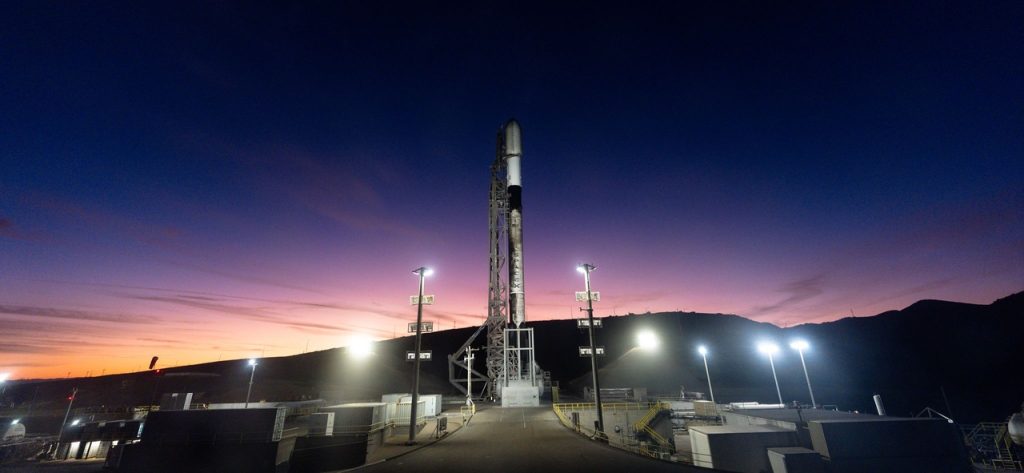
South Korea’s advanced Earth-observation satellite has successfully launched from a U.S. space base in California, establishing contact with a ground station after reaching its intended low-Earth orbit, authorities confirmed Sunday.
The momentous launch, executed by SpaceX, saw a powerful Falcon 9 rocket lift off from Vandenberg Space Force Base in Santa Barbara County, California, at 11:59 p.m. Saturday (local time). This mission carried a total of 45 diverse payloads into space.
Approximately one hour after its successful liftoff, the advanced satellite precisely separated from the launch vehicle, a critical milestone confirmed by the Korea AeroSpace Administration.
This pivotal mission is officially designated CAS500-2, referencing the primary payload: the Compact Advanced Satellite (CAS) 500-2, developed by Korea Aerospace Industries. This cutting-edge, next-generation midsized satellite, specifically designated No. 2 in its series, is engineered to significantly enhance capabilities in disaster monitoring and agricultural observation.
Following its separation, the satellite was anticipated to establish its initial communication with a dedicated ground station located in Norway, an event projected to occur approximately 15 minutes post-separation.