Hassabis sees AI ushering in new scientific renaissance, while Korean Go grandmaster urges caution over losing control of AI
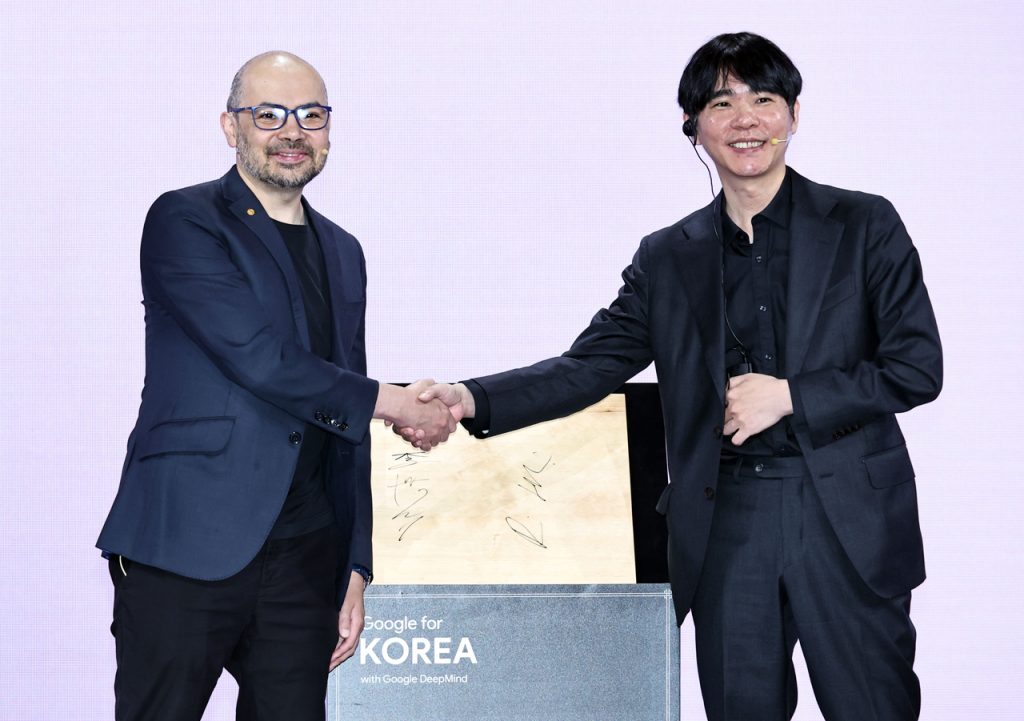
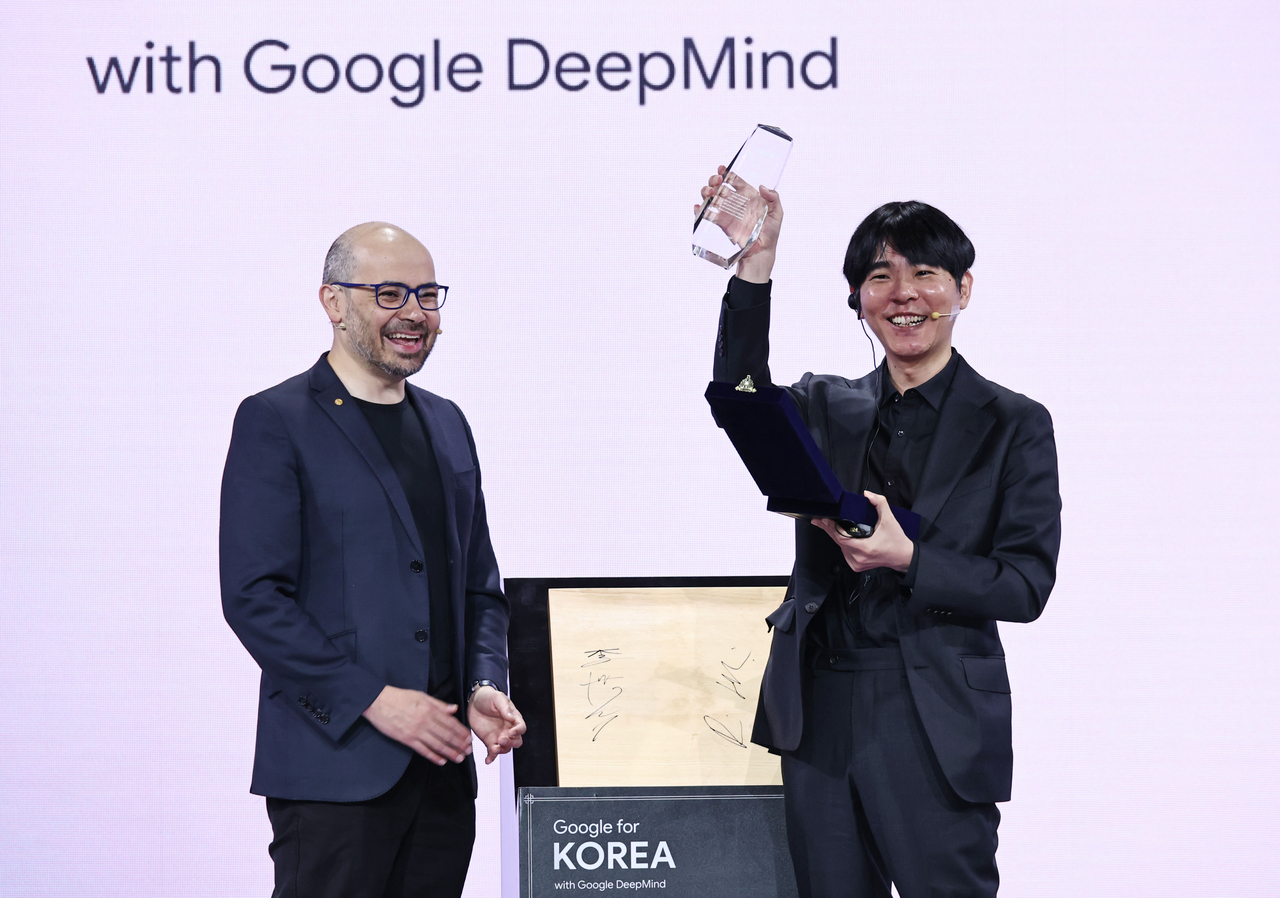
Google DeepMind CEO Demis Hassabis reconnected with legendary Korean Go grandmaster Lee Se-dol in Seoul on Wednesday, ten years after their groundbreaking 2016 AlphaGo match that fundamentally altered the course of artificial intelligence development.
Their reunion took place during a special session at the ‘Google for Korea 2026’ event, hosted at The Westin Josun Seoul. Here, Lee Se-dol, alongside author and YouTuber Cho Seung-yeon, engaged with Hassabis in a panel discussion revisiting the monumental five-game series.
Hassabis remarked on the rapid pace of progress, stating, “It feels like a hundred years have passed in terms of the advances since then.” He added, “We’re proud of the profound legacy the AlphaGo match has left in the technology world, and it’s truly great to be back here where this pivotal journey began.”
Hassabis specifically pointed to AlphaGo’s ‘move 37’ and Lee’s ‘move 78’ as iconic instances from the series, embodying the striking contrast between nascent machine creativity and profound human intuition.
For Lee Se-dol, the match fundamentally redefined Go. He observed, “After AI, the core concepts of Go changed entirely. Watching AlphaGo made me realize how narrow our previous understanding was; we had only seen a small part of a much broader world.”
Brandon Yoon, Google Korea’s newly appointed country managing director, characterized the 2016 AlphaGo vs. Lee Se-dol match as a pivotal, symbolic milestone where the realms of human creativity and advanced AI capabilities uniquely converged.
Hassabis articulated his view that the rapid AI advancements of the past decade have propelled progress across numerous scientific disciplines. He emphasized AI’s potential to address critical global challenges, including complex diseases and pressing environmental issues.
Looking ahead, Hassabis expressed profound optimism, envisioning AI as a ‘course multiplier’ for scientists and medics in the coming decade, facilitating “incredible breakthroughs.” He further speculated, “We could perhaps even solve many of these societal problems within the next 10 to 20 years, leveraging AI’s assistance with environmental issues and the development of new energy sources.” Hassabis concluded by predicting, “I think there will be incredible breakthroughs made over the next decade in various sciences that will truly usher in a new golden era – a new renaissance of human flourishing.”
Describing AlphaGo as a foundational “AI agent,” Hassabis highlighted how these sophisticated technologies could readily extend to practical, everyday applications, from streamlining administrative tasks to augmenting creative brainstorming processes.
While acknowledging AI’s rapid advancements over the past decade, Lee Se-dol tempered the optimism with a note of caution regarding its broader implications.
He powerfully stated, “Back then, seeing AlphaGo made me feel like we had been frogs in a well,” referencing the idiom for having a limited worldview. Lee emphasized, “AI can certainly be a powerful partner for humanity, but it is imperative that we exercise extreme care not to lose control.”
Beyond the AlphaGo reflections, Google underscored its strategic plans to significantly deepen cooperation with South Korea across critical technology sectors, including cutting-edge semiconductors, advanced robotics, and innovative manufacturing.
Hassabis commended Korea’s consistently forward-looking approach and its ideal conditions to emerge as a global leader in advanced technologies, specifically highlighting its robust strengths in chips, robotics, and manufacturing.
The Google DeepMind chief also held a significant meeting with South Korean President Lee Jae Myung, focusing on expanding comprehensive AI cooperation. Discussions included ambitious plans to establish an AI campus in Seoul and Google’s support for the government’s “K-Moonshot” project. This national initiative is designed to integrate AI with science and technology to effectively address key national challenges and enhance overall research productivity.
Further underscoring Google’s commitment to Korea, Hassabis engaged in high-level talks with prominent business leaders: Samsung Electronics Chairman Lee Jae-yong, SK Group Chairman Chey Tae-won, Hyundai Motor Group Executive Chair Chung Euisun, and LG Group Chairman Koo Kwang-mo, to explore broad collaboration opportunities in AI.
Earlier on Wednesday, the “2026 Leaders AI Roundtable” breakfast session convened executives from major Korean companies, including representatives from Hyundai Motor Group, LG Electronics, CJ ENM, Olive Young, and GS Retail. They were joined by Kareem Ayoub, Vice President of AI Technical Strategy at Google DeepMind, for discussions aimed at fostering cross-industry cooperation in AI.
yeeun