
South Korea’s Public Procurement Overhaul Targets Market-Driven, Transparent, and Innovation-Led Growth
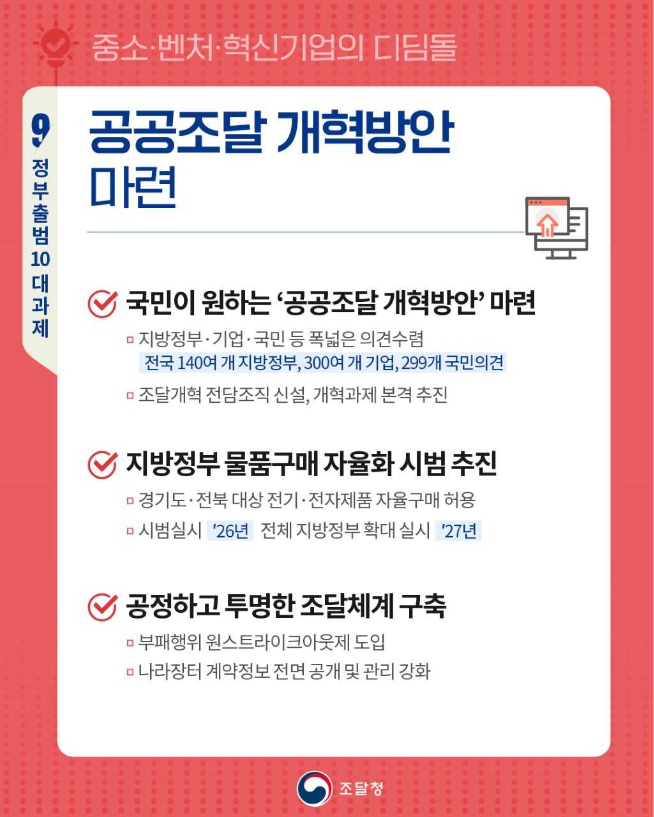
The Public Procurement Service (PPS) of South Korea has introduced a comprehensive reform package designed to transform public purchasing into a more “citizen- and market-centered” system. This strategic overhaul also aims to significantly bolster its support for the nation’s burgeoning emerging industries.
This extensive plan encompasses approximately 70 specific measures, structured around four core pillars: expanding procurement autonomy for local governments, boosting competition and transparency across the system, actively fostering new and innovative industries, and championing socially responsible procurement practices.
Representing an annual expenditure of approximately 225 trillion won ($160 billion), South Korea’s public procurement sector is being strategically repositioned. This reform initiative underscores its critical role as a powerful policy tool for national economic development, a sentiment recently emphasized by the agency’s leadership.
A cornerstone of this reform initiative is the significant expansion of procurement autonomy for local governments, empowering them with more direct control over their purchasing decisions.
Historically, numerous local authorities were mandated to acquire goods via centrally managed contracts. The new framework introduces flexibility, permitting these authorities to opt for either centralized or independent procurement pathways, based on which option delivers superior value and efficiency.
Implementation of this policy will proceed in carefully managed phases. A pilot program is slated for next year, initially covering around 120 categories of electrical and electronic products within Gyeonggi Province and North Jeolla Province, paving the way for eventual nationwide expansion.
To proactively combat corruption and unfair trade practices, the PPS is implementing stringent oversight mechanisms. This includes a “one-strike-out” policy for severe violations like false origin claims or non-compliance with direct production mandates. Furthermore, complete contract information, encompassing all negotiated agreements, will be fully transparent and accessible via the government’s dedicated procurement platform.
This reform package also endeavors to broaden market participation in public procurement, specifically by mitigating the concentration of contracts among a limited number of suppliers.
Key measures include refining competition criteria within multi-supplier contracts and transitioning certain monopolized procurement items to open bidding processes, fostering a more competitive environment.
New pricing standards will be more closely aligned with private-sector benchmarks, and contracts without adequate price verification will be restructured into lump-sum agreements. Concurrently, new mechanisms will be implemented to rapidly adjust for fluctuations in raw material costs, thereby securing reasonable profit margins for supplying companies.
Quality assurance will be significantly expanded beyond merely safety-related goods to encompass all contracted products. This will be coupled with enhanced incentives designed to promote and reward the provision of certified high-quality items.
A cornerstone and pivotal element of this reform is leveraging public procurement as a robust platform for nurturing South Korea’s future-oriented industries.
The government intends to substantially scale up “innovation procurement,” where it actively functions as an early adopter and buyer of cutting-edge technologies. A primary focus will be placed on pivotal sectors like artificial intelligence (AI), climate technology, and robotics.
Projections indicate that by 2030, the volume of innovation procurement will surpass 2.5 trillion won, with the roster of designated innovative products anticipated to reach approximately 5,000.
To accelerate the adoption of these advanced solutions, the agency will streamline entry for AI-based products into the government procurement marketplace. This includes introducing crucial liability protections and specialized evaluation frameworks specifically designed for artificial intelligence technologies.
Beyond purchasing AI products, the government is also championing the integration of artificial intelligence into procurement operations themselves. AI tools will be deployed for sophisticated price analysis, precise cost estimation, and objective bid evaluation, forming a key component of a wider “AI transformation” across public administration.
Crucially, the comprehensive reform also places a strong emphasis on sustainability and corporate social responsibility.
The government plans to significantly increase its procurement of low-carbon and environmentally certified products. Concurrently, environmental criteria will be integrated into bid evaluations, actively supporting the nation’s transition towards a greener, more sustainable economy.
Furthermore, enhanced support will be directed towards companies demonstrating strong labor practices, offering robust work-life balance policies, and promoting social economy organizations.
Within the critical construction sector, more stringent safety standards are set to be introduced. Consequently, only firms that rigorously meet these predefined safety criteria will be eligible to participate in government bids.
According to officials, this sweeping overhaul signifies a profound shift in the perception of public procurement. It is moving beyond a mere transactional function to become a powerful, strategic instrument driving economic policy and national objectives.
“This reform is meticulously designed to place citizens at its core,” stated PPS Administrator Baek Seung-bo, “simultaneously ensuring that public procurement makes a substantial contribution to both economic growth and corporate competitiveness.”
kwonhl


