Bonuses nearing $475,000 pull students, workers into chip sector
Yoon, a Kia employee in his late twenties, found himself grappling with an unexpected dilemma while browsing SK hynix’s recruitment portal: whether to omit his bachelor’s degree from his application. SK hynix’s recent openings for production-line positions specifically target high school graduates. “My initial thought was, ‘What if I simply don’t mention my four-year degree?'” he shared with The Korea Herald, preferring to be identified only by his surname. “I’m not proud of that impulse. However, it reflects just how appealing this role appears. It’s no longer perceived as merely a factory job; it’s a stable career at a leading corporation offering potentially life-altering compensation.”
This phenomenon is widespread. Throughout South Korea, the booming artificial intelligence-driven semiconductor supercycle is fundamentally reshaping career trajectories across all levels. This includes high school students planning their university applications and seasoned professionals reconsidering career changes they would have dismissed just a couple of years prior.
The numbers behind the frenzy
The immense scale of this semiconductor boom cannot be overstated. Samsung Electronics reported a staggering 57.2 trillion won ($41.3 billion) in first-quarter operating profit on April 7, almost tripling its prior quarterly record. SK hynix, set to release its earnings on Thursday, is forecast to achieve approximately 38 trillion won, marking a more than 400 percent year-on-year increase.
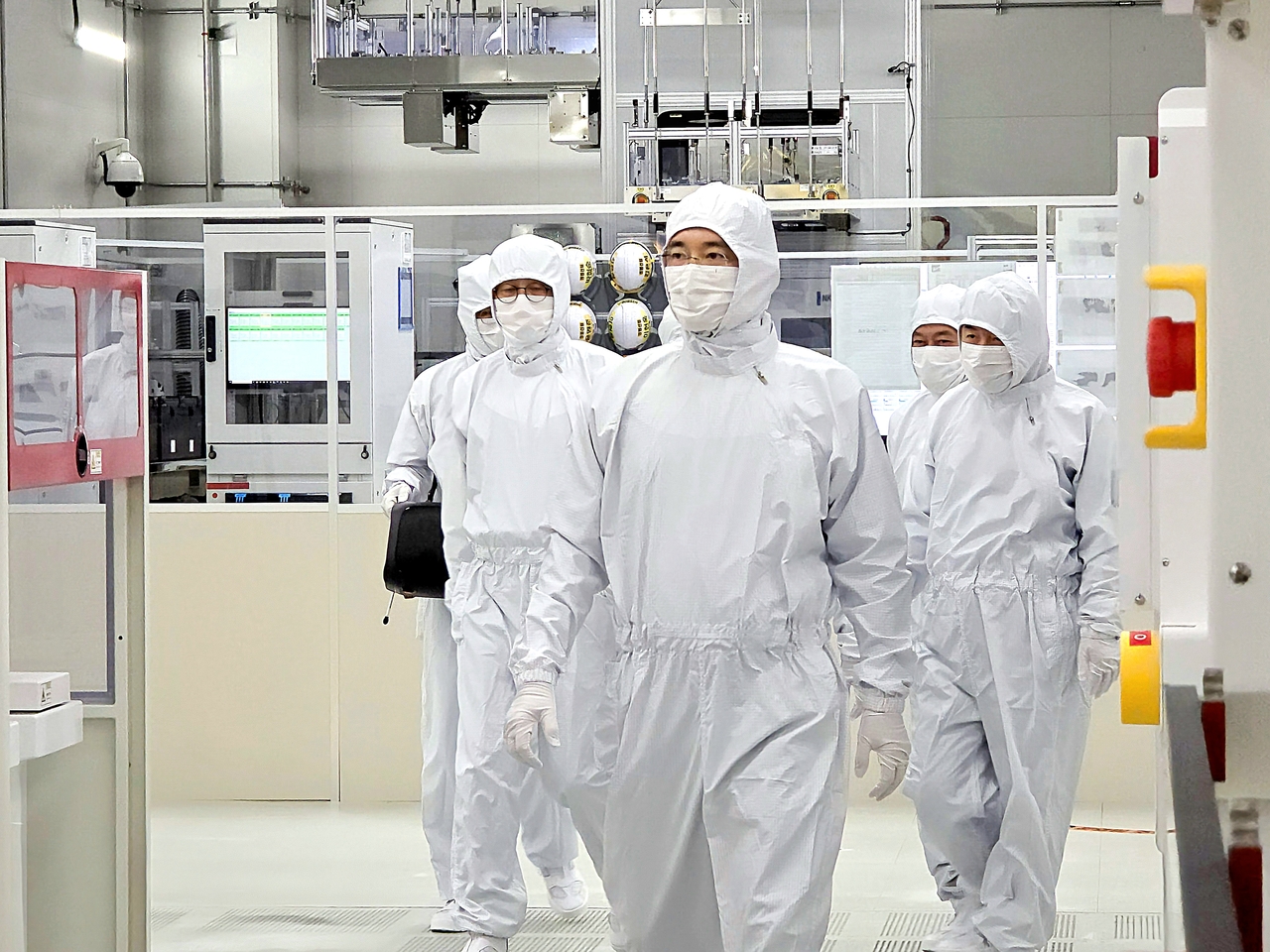
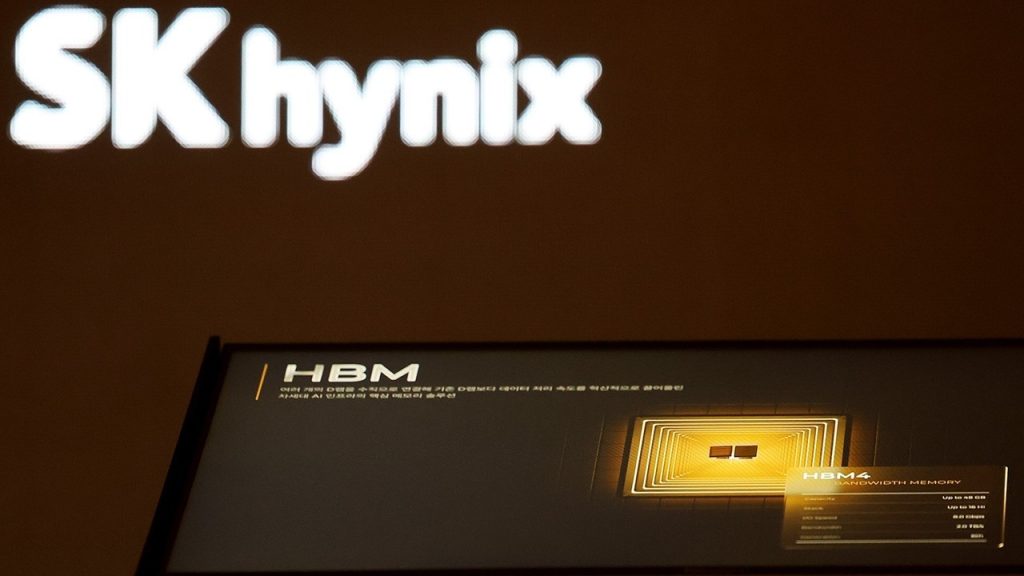
The unprecedented demand for server memory, driven by artificial intelligence, has caused chip prices to soar, with the benefits directly impacting employees. In 2025, Samsung semiconductor workers received bonuses nearing 50 percent of their base salary. Meanwhile, SK hynix, having eliminated its bonus cap last year, disbursed an average of approximately 140 million won per employee.
Should SK hynix meet analyst projections for the current year, individual employee bonuses distributed in early 2027 could potentially reach an astounding 700 million won.
Both Samsung and SK hynix initiated significant spring recruitment campaigns this year, leading to fierce competition among job seekers. Sales of preparation guides for Samsung’s exclusive hiring examination surged by 40 percent year-on-year in the first quarter. Similarly, a study guide for SK Group’s comparable test climbed to the top of Yes24’s e-book bestseller charts. Specialized cram schools have introduced intensive SK hynix crash courses, covering aptitude tests to interview techniques.
Even private fabrication training programs, where students invest up to 1 million won for week-long courses to gain a competitive edge in hiring, now boast waitlists exceeding 12,000 applicants.
‘Go where hardship pays the most’
Jung, a master’s candidate in his mid-twenties researching semiconductor devices at a Seoul-area university, is contemplating whether to complete his degree. He articulated, “Remaining in the lab offers no guarantee of superior job placement.” He added that with companies “hiring aggressively and the cycle being so hot,” the opportunity cost of dedicating another year to academia continually increases.
However, his rationale extends beyond mere salary. He stated, “I’ve come to realize that hardship is an inherent part of this industry, whether you’re working in a lab or on a production floor. The critical question then becomes: where does that hardship yield the greatest reward?”
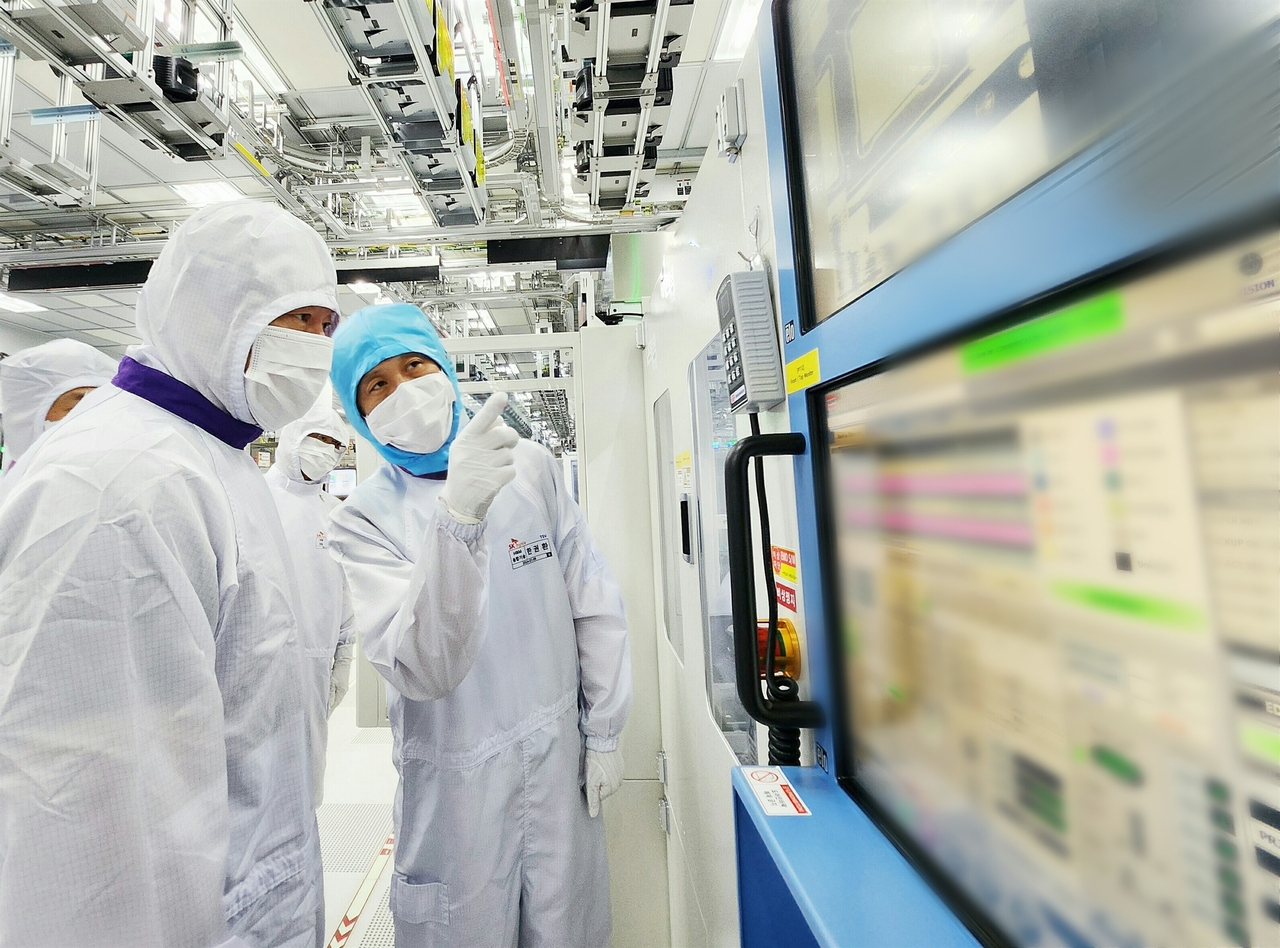
This strategic calculation is also evident among existing employees, even within the semiconductor sector itself. Im, a 28-year-old Samsung Electronics semiconductor production worker with four years of experience, revealed he is considering a transition to SK hynix. “The most straightforward reason is compensation,” he explained. “Among professionals actively working in this industry, the consensus is clear: SK hynix currently offers undeniably superior incentives.”
Park, an SK hynix production-line worker in his late thirties, highlighted the rapid reordering of workplace prestige. “Just two years ago, moving from SK hynix to Kia’s production line was viewed with envy here,” he recalled. “Now, that sentiment has entirely flipped.”
The widespread fervor has permeated university admissions and the private education sector. Samsung and SK hynix-partnered semiconductor contract departments, which guarantee employment for graduates within their partner companies, saw an average competition ratio of 7.16 to 1 this year. This significantly surpassed the national medical school average, which typically stands at around 6 to 1.
Cram schools in Seoul’s prominent Daechi-dong district have introduced specialized preparatory courses for semiconductor departments. Today, high-achieving students commonly apply to both chip-industry programs and medical schools—a combination that would have been considered preposterous by Korean parents just five years ago.
Professor Shin Chang-hwan, a semiconductor engineering expert at Korea University, suggests that this supercycle could act as “the catalyst transforming a nation historically fixated on medical school into one enamored with engineering.”
Despite the excitement generated by this semiconductor supercycle, some of its closest observers express concern about the prevailing narrative. Yoo Hoi-jun, Dean of KAIST’s Graduate School of AI Semiconductor, challenged the notion that students opting for industry over graduate studies are merely pursuing rapid financial gain. He noted that individuals who gain initial experience in fabrication facilities before returning to academia frequently evolve into more adept researchers “because they’ve witnessed firsthand where the genuine challenges lie.”
What truly concerns him, however, is society’s broader perception of this period. “Some portray this phenomenon akin to Bitcoin or a lottery win,” he remarked. “In reality, it demonstrates that individuals who have dedicated immense effort are finally receiving appropriate compensation within an exceptionally demanding industry.”
He further suggested that even this level of compensation might still not be entirely adequate.
A 2025 survey by the Bank of Korea revealed that 44.9 percent of 2,700 science, technology, engineering, and mathematics (STEM) postgraduates were contemplating relocating overseas within three years, primarily citing significant pay disparities as their motivation.
A postdoctoral memory-design researcher from a university in the Seoul region pointed out that international salaries “begin above 100 million won and can potentially triple.” He concluded, “If such an opportunity arises, there’s no compelling reason not to seize it.”
mjh