
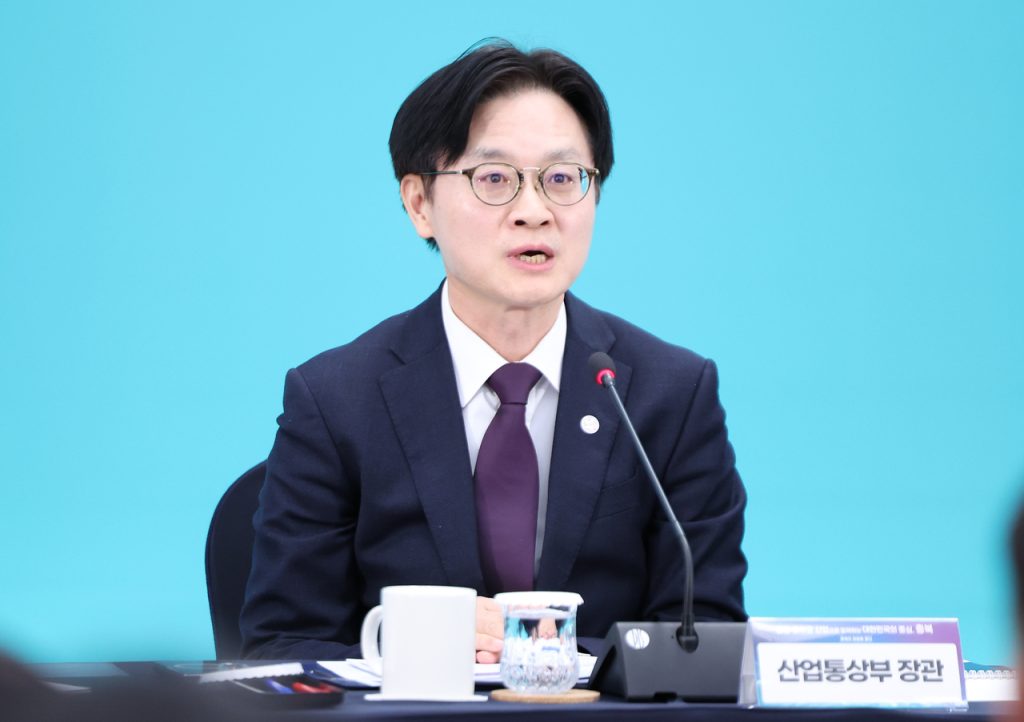
South Korea’s Industry Minister Kim Jung-kwan has initiated legal action against several YouTube channels, filing criminal complaints over the dissemination of false information alleging that oil reserves stored in Ulsan were illicitly diverted to North Korea.
The Ministry of Trade, Industry and Energy (MOTIE) announced on Tuesday that Minister Kim has reported the operators of three YouTube channels – Jeon Han-gil News, Jeolla U-Turn, and TV Liberty Daily – to the Seoul Metropolitan Police Agency. The charges include defamation through the spread of false information and obstruction of business due to the propagation of unsubstantiated claims.
Prior to the legal action, MOTIE had already refuted the allegations, stating unequivocally that they were without merit.
“Exploiting a national crisis for personal or political gain is unacceptable,” Minister Kim stated. “Fake news disrupts social order and undermines efforts to overcome national challenges. We will respond decisively to such actions.”
The controversy arose following confirmation that a foreign company had sold approximately 900,000 barrels of crude oil stored at the Ulsan reserve under an international joint stockpiling agreement.
Subsequently, unverified claims began circulating online, suggesting the oil had been secretly diverted to North Korea. MOTIE has firmly denied these claims, asserting that they lack any factual basis.
The Ministry clarified that the oil transaction was a commercial transaction conducted overseas and was unrelated to any inter-Korean activities or dealings.
Furthermore, MOTIE has initiated an audit of the Korea National Oil Corp. (KNOC), focusing specifically on its response to the oil transaction.
Authorities are investigating why KNOC, a state-run company, did not promptly exercise its right of first refusal, a mechanism that would have allowed the government to purchase the stored oil before it was sold to third parties.
The joint stockpiling program enables foreign companies to store crude oil in South Korea’s reserve facilities in exchange for rental income.
In return for the storage service, the South Korean government retains the right of first refusal to purchase the oil in the event of supply disruptions, enhancing its energy security.
yeeun


