
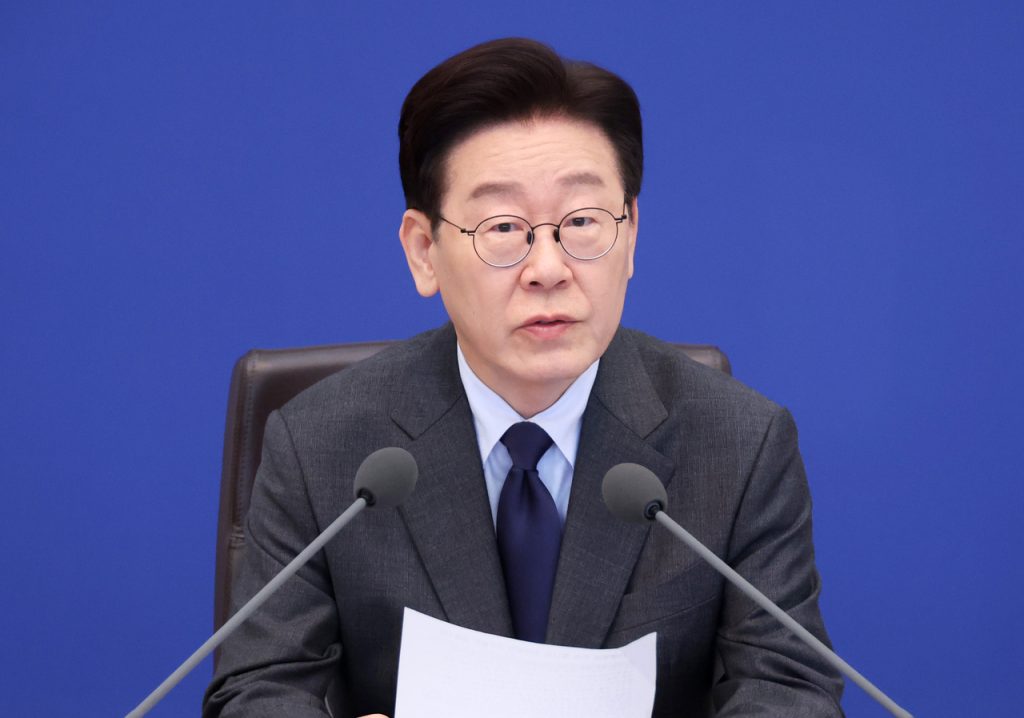
President Lee Jae Myung urged the South Korean government on Tuesday to proactively implement an emergency response system amid growing concerns about potential oil and gas supply disruptions. The call to action comes as the conflict involving the U.S., Israel, and Iran continues, potentially impacting global energy markets.
During a Cabinet meeting, President Lee also emphasized the need for the swift approval of a supplementary budget. This budget is intended to support small and medium-sized enterprises (SMEs) and vulnerable households struggling with rising energy costs.
“Petrochemical products are integral to various sectors, from food packaging to medical devices, making it challenging to predict potential disruptions,” stated President Lee. “This poses a significant threat to the livelihoods of our citizens, and the government must take proactive steps to activate a national-level emergency response system.”
He directed government ministries to thoroughly assess items at risk of supply chain disruptions, evaluate their potential impact, and identify alternative supply sources. The goal is to develop comprehensive contingency plans to mitigate worst-case scenarios.
Highlighting the upcoming second phase of the oil price cap system, scheduled for Friday, President Lee instructed the government to devise practical strategies to alleviate the burden of increasing fuel prices on consumers and businesses.
The initial temporary fuel price cap system was introduced on March 13 to stabilize the energy market, with adjustments planned every two weeks.
President Lee also issued a strong warning against price gouging during this period of instability. He noted that prosecutors initiated an investigation on Monday into allegations of collusion among local refiners to manipulate domestic oil prices.
“Authorities must identify and strictly punish any unfair profiteering that exploits public hardship, adhering to the law and principles,” he asserted, encouraging the petrochemical industry to actively participate in nationwide efforts to overcome the current crisis.
President Lee further appealed for public cooperation in energy conservation efforts. He suggested that public institutions implement vehicle rotation schemes, based on license plate numbers, every five days and encouraged the public to utilize public transportation.
Finally, he reiterated the importance of swiftly finalizing the supplementary budget, focusing on measures to stabilize the domestic economy, minimize the impact on affected industries, and bolster the resilience of supply chains.


