
Kia, the South Korean automaker, is accelerating its electric vehicle (EV) strategy, announcing plans to launch 13 new EV models by 2030. The company also aims to broaden its manufacturing footprint across key global markets.
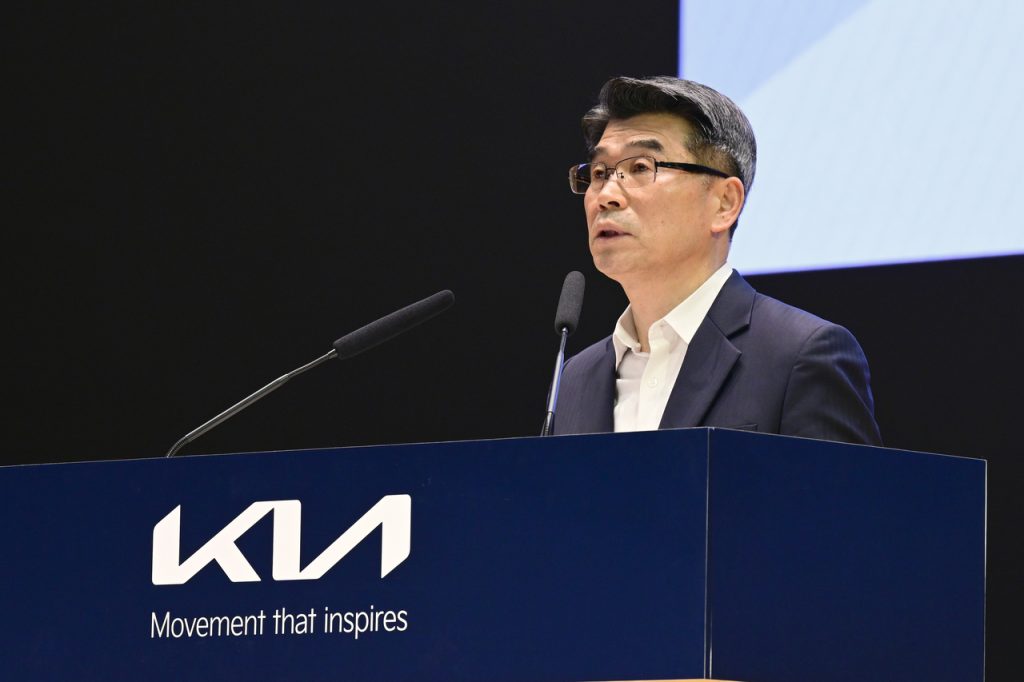
At Kia’s annual general meeting in Seoul, President and CEO Song Ho-sung detailed the company’s roadmap to spearhead EV adoption and navigate the current slowdown in EV demand. The core strategies include expanding its EV lineup, investing in charging infrastructure, and diversifying production across global regions.
“We will strengthen our EV competitiveness by launching a total of 13 EV models by 2030 that will meet diverse customer needs and enhance product competitiveness,” Song stated to shareholders.
Kia will extend its EV production beyond its Korean plant, a central hub for EV development and manufacturing, to cater to the specific needs of European, US, and emerging markets.
Beyond EVs, Kia is investing heavily in its “Platform Beyond Vehicle” (PBV) initiative. This modular electric vehicle platform, built on a flexible chassis, will support various applications, including passenger transport, logistics, retail, and leisure.
Kia plans to expand its PBV offerings beyond the PV5, launched last year. The PV7 is slated for release in 2027, followed by the PV9 in 2029. These vehicles will be manufactured at dedicated PBV facilities, including the EVO Plant in Hwaseong, Gyeonggi Province.
Kia is collaborating with partners to develop customized PBV models, including open-bed trucks, cargo vans, and camping vehicles.
Song also discussed Kia’s plans to introduce software-defined vehicles (SDVs) by 2027, integrating artificial intelligence (AI)-powered user experiences and advanced connectivity features.
To bolster its self-driving capabilities, Kia is partnering with Motional, Hyundai Motor Group’s autonomous driving joint venture, and software affiliate 42dot.
Despite ongoing uncertainties related to US tariffs and geopolitical issues, Song reaffirmed Kia’s commitment to electrification.
“Upcoming geopolitical shifts and regulatory barriers will also serve as opportunities for Kia to expand its market position, given its competitiveness in eco-friendly vehicle models and its capabilities to restructure its business and production systems flexibly,” Song concluded.
sahn


