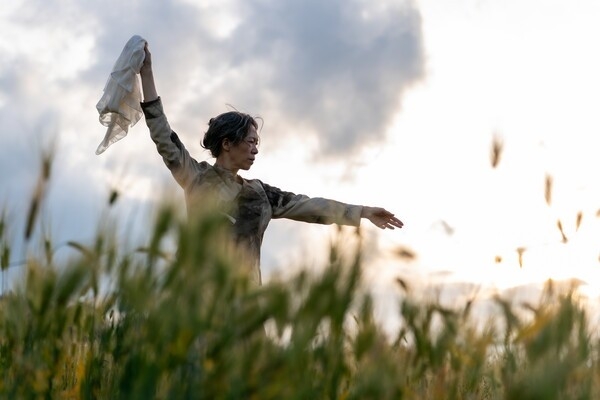
“My Name”: Chung Ji-young’s Haunting Exploration of Korean History and Generational Violence
By Woo Jae-yeon
Director Chung Ji-young, renowned for powerful historical dramas like “The Boys” (2022), “Black Money” (2019), and “Unbowed” (2012), presents his latest cinematic endeavor, “My Name.” This compelling feature film masterfully intertwines two distinct timelines – the tumultuous late 1940s and the challenging 1990s – to expose the deep-seated mechanics of violence and its enduring impact across generations in Korean society. Premiering at the Forum section of the Berlin International Film Festival, “My Name” is set to captivate local audiences next Wednesday.
Unraveling the Shadows of the Jeju April 3 Uprising
At its heart, “My Name” is a mystery drama deeply rooted in the tragic 1948 Jeju April 3 uprising. The narrative follows Young-ok, an 18-year-old (portrayed by Shin Woo-bin), who grapples with an “old-fashioned and feminine” name he despises, and his mother, Jung-soon (played by the formidable Yeom Hye-ran), who fiercely guards their shared identity and secrets. The film vividly portrays the historical backdrop of the uprising, which began as a protest against the U.S. military-led administration post-Japanese colonial rule. This unrest was brutally suppressed by the newly formed South Korean government, leading to the estimated deaths of 14,000 to 30,000 civilians, marking it as one of the bloodiest civilian crackdowns in Korea’s modern history.
A Parallel Saga of Violence and Identity
The film brilliantly uses a parallel storyline to connect past and present. In the 1990s, Young-ok confronts his own brutal reality at school. The arrival of a transfer student from Seoul disrupts the class dynamic, sowing seeds of hatred and triggering a chain of vicious fights. This contemporary struggle mirrors the historical conflicts, illustrating how the arrival of an “outsider” can ignite a drive to establish a “new order,” often through violent means. This narrative structure powerfully demonstrates how easily and quickly violence can tear apart once-close communities and individuals.
Beyond the central mother-son story, “My Name” further explores the pervasive nature of state violence and its ripple effects. Glimpses of other lives fractured by historical tragedies are woven into the main narrative: Jung-soon’s husband returns from the Vietnam War physically broken and emotionally unstable, while her daughter’s life is tragically upended by the chaos of the 1980 democratization movement. Carrying these profound wounds in silence, Jung-soon’s family embodies Korea’s scarred history, portraying them not just as victims of systemic violence but also as reluctant bystanders, forced into survival by circumstance.

Compelling Performances and Critical Reception
Actress Yeom Hye-ran delivers an unforgettable performance as Jung-soon, imbuing the character with an unwavering conviction that transcends mere acting. She embodies a real woman from Jeju, one who has silently endured decades, burying the profound secrets of her name and her son’s within the deepest parts of herself. While the parallel structure effectively highlights the cyclical nature of violence, the school subplot, at times, strains credibility. The portrayal of the teenagers’ behaviors feels occasionally too mature for their age, suggesting that a more nuanced approach might have enhanced its impact.
Despite these minor narrative missteps, “My Name” powerfully fulfills its purpose: to shatter society’s silence surrounding a painful past and to honor those who were crushed under the weight of unjust state power and ideological conflicts. The film’s profound message is underscored in its ending credits, revealing that “My Name” was crowd-funded by ordinary people, united in their willingness to carry the burden of collective memory. For director Chung Ji-young, this collective act of remembrance is what truly completes the film, transforming it into a poignant tribute to forgotten histories.