(ATTN: ADDS details in para 5; TRIMS)
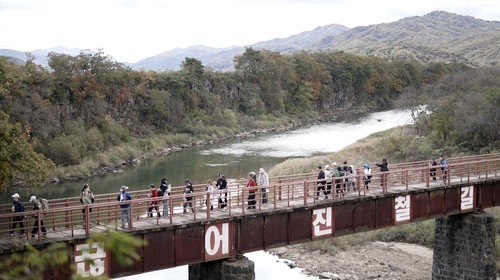
Explore the Korean Demilitarized Zone (DMZ) with the DMZ Peace Trail, opening from April 17th to November 30th, announced the Ministry of Culture, Sports and Tourism. Note: operations will be paused in July and August due to summer heat.
Launched in 2019, these trails across Incheon, Gyeonggi, and Gangwon provinces offer South Korean citizens a unique opportunity to discover the ecological, cultural, and historical importance of the heavily guarded border. While some routes have operated intermittently with restrictions, the full season resumes after a winter break.
The DMZ, a 250-kilometer-long and 4-kilometer-wide buffer zone, has divided the Korean Peninsula since the Korean War armistice agreement in 1953, technically leaving North and South Korea still at war.
Certain walking routes in Paju, Cheorwon, and Goseong, previously closed to the public since April 2024 due to heightened tensions, will remain closed. The Unification Ministry had originally hoped to reopen these specific sections.
The government aims to increase the number of operating days and available slots for participants this year, providing more opportunities to experience the DMZ.
Currently, access is restricted to South Korean nationals. Advance registration is required through the official DMZ Peace Trail website (www.dmzwalk.com) or the Durunubi travel app. A participation fee of 10,000 won ($6.65) applies per person.
The U.N. Command (UNC), responsible for administering the DMZ under the Korean War armistice, clarified that the 2024 program doesn’t introduce any changes to the currently accessible border trails.
The UNC stated that “The Republic of Korea government’s announcement does not reflect a change to current activities within the DMZ,” emphasizing its role in maintaining safety and stability within the zone.
“The UNC, in accordance with the Armistice Agreement, manages and enforces activities within the DMZ to ensure safety and stability. Activities inside the DMZ require prior review, coordination, and authorization under established procedures.”