Naver Maps Feature Sparks Controversy Over ‘Foreigner Booking’ Settings Amidst Global Expansion Efforts
Naver is set to revise the wording of a specific Naver Maps setting after widespread criticism suggested the feature could facilitate discrimination against international customers. The controversial setting appeared to enable businesses to decline bookings from foreign customers within the platform.
At the heart of the issue is Naver SmartPlace, the essential platform businesses utilize to manage reservations, process payments, and update their store information directly on Naver Maps.
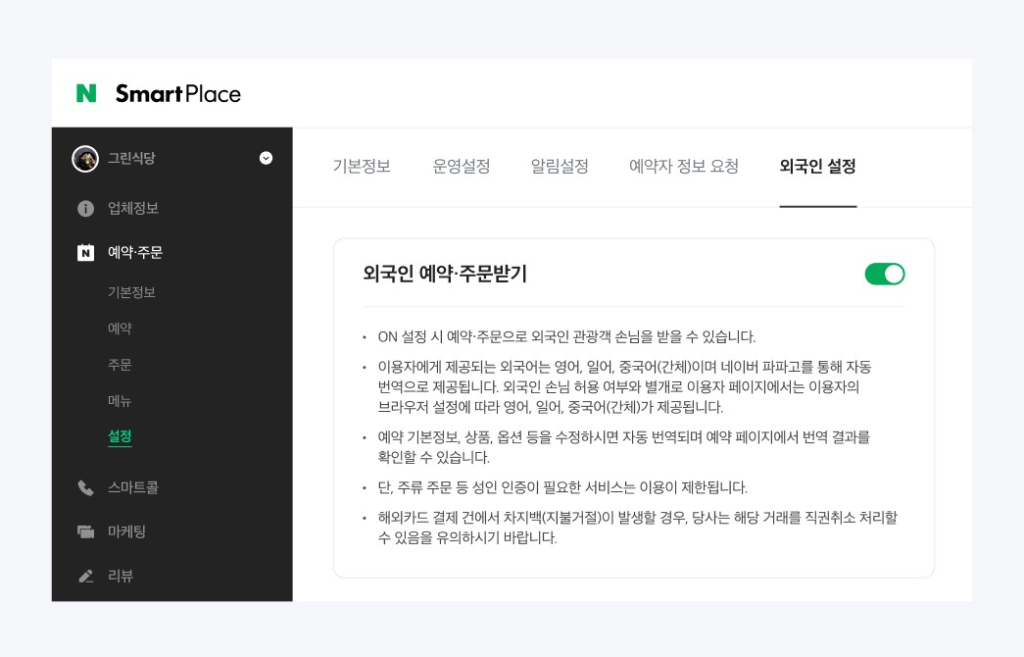
This particular setting was initially designed to offer merchants control over whether to accept reservations and purchases made with credit cards issued outside of Korea. However, the instructions presented to business owners ambiguously framed this choice, asking if they wished to accept bookings from “foreigners.”
The original instructions read: “If set to ‘on,’ you can accept reservations and bookings from foreigners.” It further advised: “If you do not wish to accept reservations and bookings from foreigners, change the setting to ‘off.’”
The ambiguous wording garnered significant attention when a foreign resident in Korea published an Instagram video, equating the feature to “the digital equivalent of a ‘No Foreigners’ sign.” The video quickly went viral, criticizing Naver for seemingly allowing businesses to “consciously opt out of accessibility,” leading to a wave of condemnation from other international users.
One user commented, “This is truly disheartening and enraging as a foreigner residing here.” Another questioned, “Isn’t this simply discrimination?”
Naver clarified on Wednesday that the setting’s true intention was to empower merchants to decide on accepting payments from overseas-issued credit cards, which often incur higher processing fees and present additional chargeback risks.
A Naver official informed The Korea Herald, “We are actively reviewing whether to rename the existing ‘foreign customer reservation/booking setting’ to the more precise ‘global reservation/booking setting’ to preempt any unnecessary misunderstandings.”
“These crucial changes will be implemented as swiftly as possible,” the official confirmed.
Naver Clarifies ‘Foreigner Booking’ Setting Targeted Overseas Card Transactions, Not Customers
Naver further explained that the dispute stemmed from a linguistic oversight, where the phrasing failed to adequately distinguish between international customers and credit cards issued abroad.
The company originally rolled out this feature in June 2025 as part of a broader initiative to expand its multilingual reservation and payment services, primarily targeting international visitors and tourists.
Naver emphasized that its core objective was to facilitate seamless bookings and payments for tourists and other non-resident users via Naver Maps. Concurrently, it aimed to provide merchants with the option to manage the additional costs and potential risks associated with foreign card transactions.
“Our intention was to strike a balance,” the official stated.
According to Naver, transactions made using overseas-issued cards are subject to a 3.85 percent processing fee. Furthermore, merchants might face chargeback regulations imposed by foreign card issuers in instances involving fraud or stolen cards.
“This is precisely why we offered business owners the flexibility to determine for themselves whether to accept transactions processed with foreign cards,” the official elaborated.
Naver Maps has actively promoted itself as a comprehensive, all-in-one platform for international users. Its robust features allow users to effortlessly search for destinations, make reservations and purchases, find optimal transportation routes, and access reviews, all within the convenience of a single app.
The company reported in June that foreign-language usage of Naver Maps surged by 16.4 percent in April compared to September 2025, with its monthly active users exceeding 31 million.
Naver’s International User Focus Intensifies Amidst Growing Google Maps Competition in Korea
This strategic expansion and subsequent public relations challenge occur as Naver faces increasing pressure to enhance its dominant domestic map service for international users. This push is set against the backdrop of renewed debates concerning Google Maps’ persistent requests for access to Korea’s highly detailed map data.
Since 2007, Google has repeatedly sought permission to export Korea’s 1:5,000-scale digital map data, which contains highly precise information on roads, buildings, and terrain.
For many years, Korea consistently denied these requests, citing national security concerns. However, in February, the government shifted towards conditional approval, following the Trump administration’s identification of restrictions on map data exports as a non-tariff trade barrier in 2025.
An industry insider, who preferred to remain anonymous, informed The Korea Herald that the government had, last year, urged Naver to improve services for international users. This directive came as Google argued that expanded access to Korean map data was crucial for better serving international visitors.
The source indicated that this government request likely played a significant role in Naver’s recent acceleration of multilingual support and direct reservation and payment services initiatives.
seungku99