South Korea’s Rental Car Industry: Evolving into a Hub for Broader Mobility Services
The **rental car industry** in South Korea is undergoing a significant transformation, moving beyond traditional vehicle leasing to become a pivotal gateway for comprehensive **mobility services**. This shift is attracting global private equity firms, eager to invest in what they view as an emerging mobility platform built around convenient **vehicle access**.
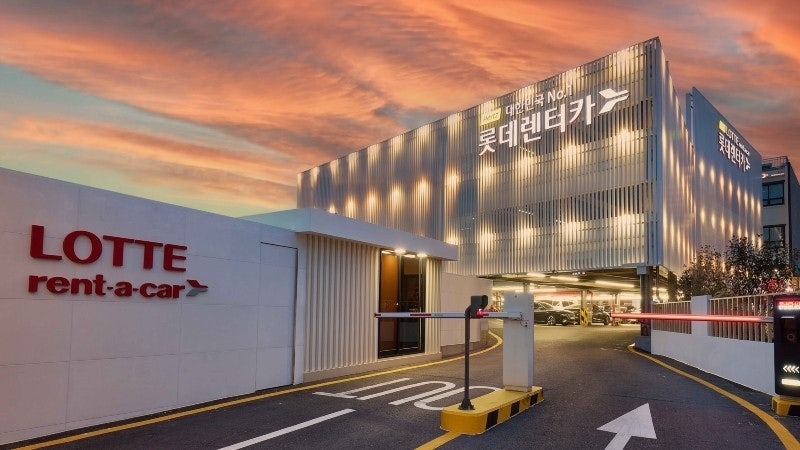
US-based private equity giant TPG is actively pursuing the acquisition of a controlling stake in Lotte Rental, the parent company of Lotte Rent-a-Car, the nation’s second-largest **car rental brand**.
After securing exclusive rights for due diligence, TPG is reportedly aiming to purchase the 61.21 percent stake currently held by Hotel Lotte and Busan Lotte Hotel. The deal is estimated to exceed 1 trillion won ($662 million), highlighting the substantial **investment opportunity** within the **South Korean rental car market**.
This potential acquisition follows Hong Kong-based Affinity Equity Partners withdrawing its prior bid for Lotte Rental. Affinity had initially sought to acquire the company, but the Fair Trade Commission raised antitrust concerns due to its existing ownership of SK Rent-a-Car, South Korea’s leading **rental car operator**.
Should TPG successfully complete this acquisition, both of Korea’s largest **rental car companies** would be under the ownership of foreign private equity firms, signaling a significant international interest in the sector.
Even if the current deal for Lotte Rental does not materialize, the robust overseas appetite for the **Korean mobility sector** shows no signs of diminishing.
The sale process for Lotte Rental has reportedly attracted a formidable lineup of global buyout heavyweights, including KKR, The Carlyle Group, EQT, and Bain Capital. This strong interest underscores a growing conviction that South Korea’s **rental car industry** has emerged as one of the country’s most compelling **mobility investment plays**.
“Global private equity firms are recognizing the scalability of **rental car operators** as versatile **mobility platforms**,” stated an official from a local private equity fund, emphasizing the strategic shift in investment focus.
From Stable Cash Flow to Future Mobility Platforms: The Investment Evolution
The compelling investment case for South Korea’s **rental car operators** now extends far beyond their conventional business of **leasing vehicles**. Investors are increasingly perceiving these companies as foundational **future mobility platforms**, central to the evolving paradigm shift from traditional **vehicle ownership** to flexible **vehicle access**.
Historically, **rental car companies** were primarily valued for their predictable earnings models and stable cash flows. Their operations involved raising capital to acquire vehicles, generating consistent rental income throughout the lease period, and then recovering a significant portion of their investment by selling returned vehicles in the thriving **used-car market**.
However, contemporary investors are now assigning considerably greater value to the inherent potential of these companies to transform into dynamic **mobility platforms**. This re-evaluation is driven by a pronounced shift in consumer preferences, moving from the desire to own vehicles to the demand for convenient access to them.
**Rental car operators** are poised to transcend traditional leasing, evolving into comprehensive **mobility solutions** that effectively leverage their extensive vehicle fleets as a powerful competitive advantage in the emerging market landscape.
“As consumers increasingly transition from owning vehicles to utilizing them on-demand, **rental services** that offer the flexibility to choose the right vehicle at the optimal time and competitive cost are expected to become exceptionally attractive,” explained Park Kang-ho, an analyst at Daishin Securities.
Furthermore, rapid advancements in **artificial intelligence (AI)** and **autonomous driving technology** are anticipated to accelerate this transition. These innovations are set to make on-demand **vehicle access** even more appealing and practical than traditional ownership.
“The convergence of IT advancements and the rapid development of **AI agents** is catalyzing a fundamental paradigm shift from **car ownership** to rentals. Once **autonomous driving** reaches mainstream adoption, the **car rental market** is projected to experience substantial growth,” Park elaborated.
TPG’s strategic investment in Kakao Mobility, the operator behind South Korea’s leading taxi-hailing service, Kakao T, further reinforces these high expectations. TPG holds a 29 percent stake in Kakao Mobility, making it the second-largest shareholder after its parent group, Kakao.
During its due diligence process for Lotte Rental, TPG reportedly explored potential business synergies, overlaps, and bolt-on opportunities with Kakao Mobility, indicating a broader strategic vision for the **mobility sector**.
Park concluded by stating that Lotte Rental, by potentially partnering with Kakao Mobility as a portfolio company of TPG, could effectively “address a wider spectrum of customer **mobility needs**, diversify its business operations, and create innovative new revenue streams.”
silverstar