
Apple’s CXMT Chip Testing: A Strategic Move for Memory Price Leverage, Not a Direct Replacement for Samsung and SK Hynix
When Apple recently increased MacBook and iPad prices by up to 20 percent, leading to a $263 billion drop in its market value within a day, the tech giant cited “unsustainable” memory prices. This prompted Apple to seek permission in Washington to procure DRAM from a Chinese company currently on a Pentagon blacklist.
Kim Yang-paeng, a leading semiconductor researcher at the state-run Korea Institute for Industrial Economics and Trade, suggests that Apple’s true intent isn’t to purchase these chips, but rather to be seen actively pursuing such options.
“From a consumer’s perspective, a 20 or 30 percent price hike appears to go directly into Apple’s profits,” Kim explained to The Korea Herald. He added that Apple can now present a compelling narrative: that it undertook political risk by exploring Chinese memory suppliers, only to find no suitable alternatives.
The Financial Times reported Wednesday that Apple has commenced testing DRAM from ChangXin Memory Technologies (CXMT) for devices intended for the Chinese market. Earlier, Bloomberg had revealed that Apple CEO Tim Cook personally lobbied Trump administration officials on this matter.
The ensuing market selloff underscored the seriousness with which investors perceived this development. Even after Samsung Electronics announced record quarterly earnings, its shares fell 6.25 percent, while SK Hynix saw a 5.68 percent drop on Wednesday. Investors were not solely reacting to the record profits but to the potential emergence of a credible challenger to Korea’s long-standing dominance in the global memory chip market.
For nearly two decades, Apple treated memory much like airlines treat legroom, offering lean base configurations and charging a premium for upgrades, which translated into substantial margins.
However, the introduction of Apple Intelligence fundamentally changed this strategy. On-device language models require their weights to be stored in memory for optimal speed, making slower storage inadequate. Consequently, Apple had to elevate the base memory specifications across almost its entire product lineup. For instance, the MacBook Air’s base memory doubled from 8GB to 16GB in late 2024, without a change to its $999 price point – a significant first for Apple’s Mac products.
Such decisions, implemented across multiple product lines, mean Apple now purchases significantly more DRAM per device than in 2023. This increased demand coincides with a severe market shortage: contract prices for DRAM surged by approximately 95 percent quarter-on-quarter in early 2026, according to UBS, which anticipates this supply squeeze will persist until at least late 2027.
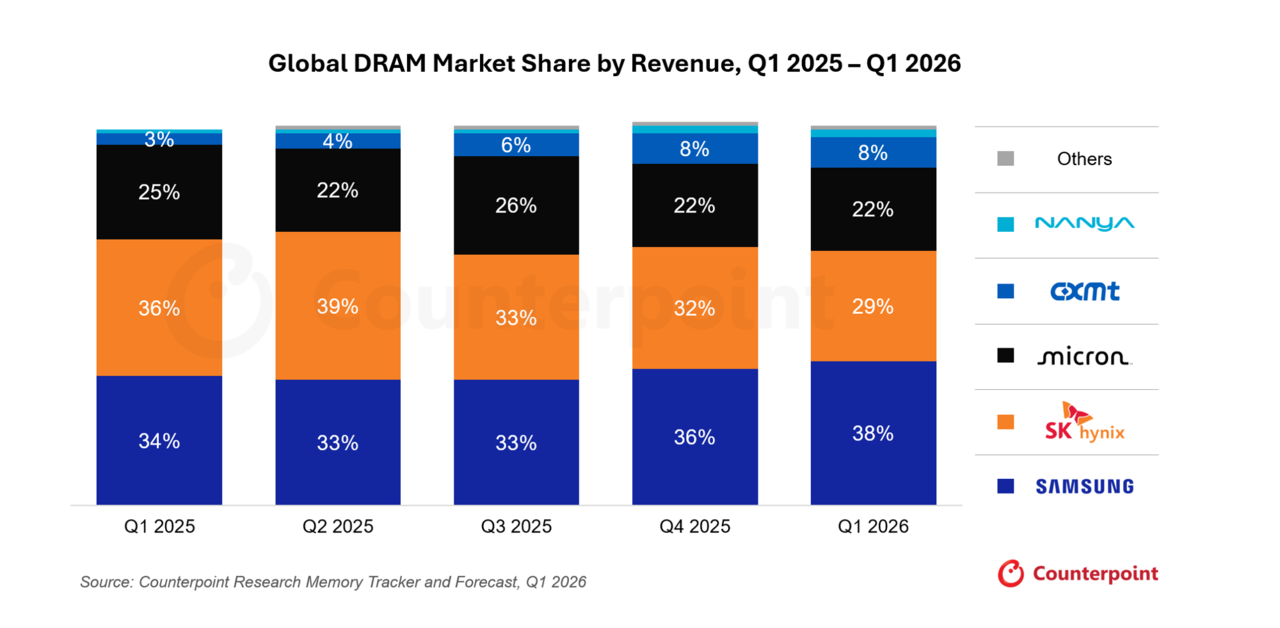
The vast majority of this critical memory is supplied by three key companies, two of which are Korean giants. This scenario leaves Apple paying escalating prices to suppliers it cannot easily replace, making CXMT an attempt to identify a viable fourth option.
China’s Memory Industry: Not Yet Ready for Apple’s Demands
Apple’s endeavor to diversify its memory supply chain faces significant hurdles on two fronts.
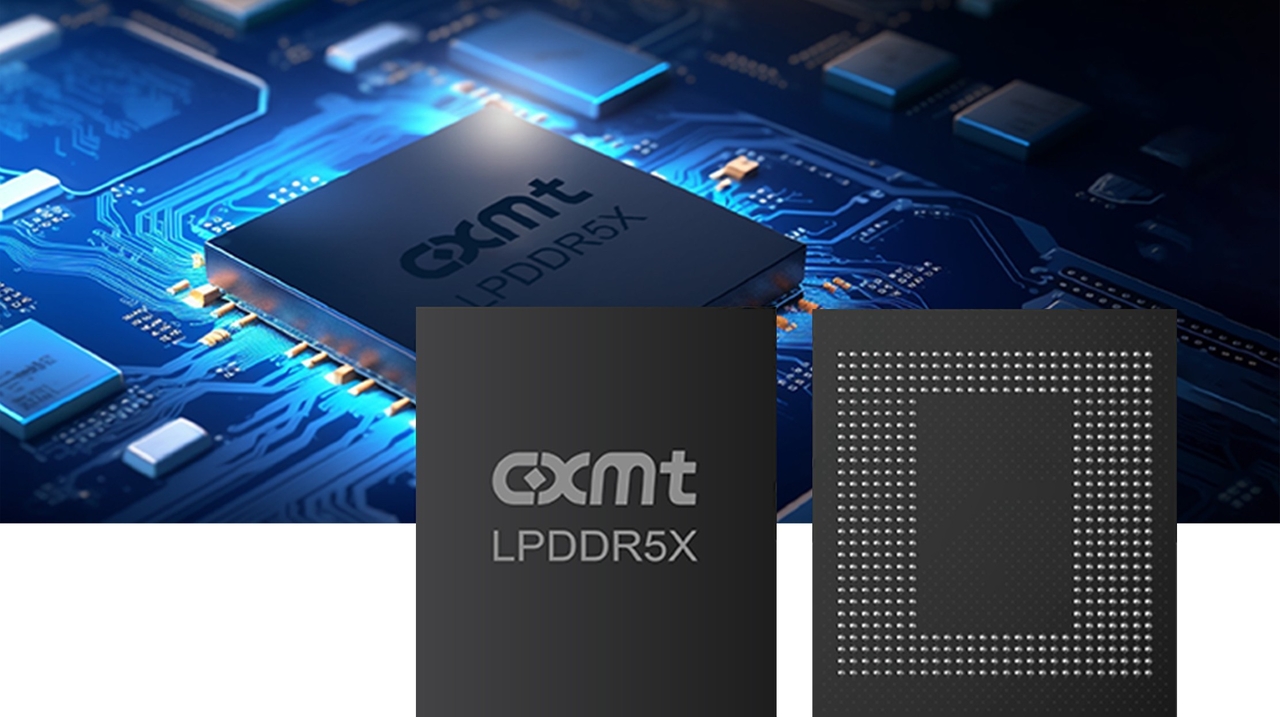
The first challenge lies with the chips themselves. Ray Wang, head of memory coverage at SemiAnalysis in Seoul, indicated that Apple’s current testing appears “closer to early-stage qualification than a near-term move toward commercial adoption.” He informed The Korea Herald that CXMT’s low-power DRAM still lags behind Samsung, SK Hynix, and Micron in critical attributes Apple demands, including power efficiency, yield rates, and operational speed.
This performance gap is reflected in the economics. According to SemiAnalysis, CXMT sells its DDR5 at prices within 5 to 10 percent of the three market leaders, despite its production cost per bit being over 30 percent higher.
Moreover, Bank of America advised clients on Sunday that even the most probable scenario, supplying budget iPhones in China, “won’t be significant” due to low sales volumes of inexpensive iPhones in that market.
The second major obstacle is geopolitical pressure from Washington. CXMT is listed on a Pentagon blacklist, and U.S. lawmakers have unequivocally stated their opposition to any potential deal. Representative John Moolenaar, who chairs the House committee on China, branded a partnership with a Chinese military-linked company as “a grave mistake.” Apple has faced similar resistance before; in 2022, it abandoned plans to purchase storage from Yangtze Memory after Senator Marco Rubio warned against “playing with fire.” Rubio has since been appointed Secretary of State.
Given that the Chinese supply route faces formidable barriers on both technological and political fronts, why did Apple pursue it so overtly? The answer lies in Apple’s true objective: it was never about immediately switching suppliers, but rather about being publicly perceived as actively exploring alternatives.
Testing an alternative supplier, Wang explained, allows Apple to “signal to incumbent memory makers that it is exploring other options.” In essence, the discussions with CXMT serve as a potent bargaining chip. This card doesn’t need to be played to exert influence; its value comes from being held. Its effectiveness is amplified precisely because Korean suppliers currently dominate the market: the more dependent the world becomes on Korean memory, the greater Apple’s need for strategic leverage.
Looking at the longer term, Wang adopts a more cautious stance. He believes the real challenge from China is a matter of “when,” not “if,” but emphasizes that the near term is not yet upon us. CXMT’s factories are already operating near full capacity, with much of its output pre-sold to Chinese buyers, and new fabrication plants require years to construct. SemiAnalysis projects CXMT’s share of global output to increase only modestly, from approximately 9 percent to 12 percent by 2027.
Wang also noted that CXMT’s impressive earnings growth is primarily a result of the prevailing market cycle, rather than definitive proof of having closed the technology gap. The Q1 profit surge largely stemmed from soaring memory prices, not from increased chip sales volumes or superior cost efficiency compared to its rivals. Instead, Korea should closely monitor the foundational machinery of the Chinese semiconductor industry, which, like its solar and electric vehicle sectors, benefits from patient state investment and continuously compounding production capacity.
“Even as CXMT expands,” Wang concluded, “it will remain supply constrained for at least the next two years.”
mjh


