South Korea’s Strategic Shift: Leveraging Defense Technology for Stronger Global Partnerships Post-Canada Submarine Bid
South Korea’s recent unsuccessful bid for Canada’s next-generation submarine project has underscored both the formidable competitiveness of its burgeoning defense industry and the inherent limitations it encounters when targeting major NATO alliance markets.
On Monday, Canada officially selected Germany’s Thyssenkrupp Marine Systems (TKMS) as the preferred bidder for the critical Canadian Patrol Submarine Project. This ambitious program aims to procure up to 12 conventionally powered submarines for the Royal Canadian Navy.
Hanwha Ocean, which had presented its advanced KSS-III-based proposal, was designated the reserve bidder, standing ready should negotiations with the German firm falter.
For Seoul, this decision came as a significant disappointment, following months of extensive, high-level campaigning spearheaded by the government, the Republic of Korea Navy, and Hanwha Ocean. President Lee Jae Myung and presidential envoy Kang Hoon-sik actively championed the Korean submarine bid.
However, defense officials and industry analysts maintain that the bid holds profound significance. South Korea successfully advanced to the final stage of one of the world’s largest submarine procurement competitions, challenging Germany – the very nation that initially guided Korea in submarine construction.
President Lee Jae Myung remarked on Tuesday that despite the unsatisfactory outcome, the rigorous process effectively showcased Korea’s robust defense capabilities on the global stage.
Writing on his social media, President Lee emphasized that Korea’s direct competition with leading global submarine producers unequivocally proved its advanced technological prowess. He affirmed that Korea’s defense industry is rapidly “becoming a core industry for the country’s competitiveness and future growth.”
“What is paramount is to not pause, but to persistently forge ahead,” he added, reflecting a forward-looking strategy for South Korea’s defense technology exports.
Kang Hoon-sik echoed a similar sentiment on his social media, highlighting how the intense competition definitively confirmed the remarkable progress of South Korea’s defense industry. He stated that the bid demonstrated Korean submarines could now directly rival German platforms in terms of both performance and industrial cooperation potential.
“The result also brought to light the reality that technology alone cannot account for every aspect,” Kang wrote, referring to what he described as the “formidable wall” presented by NATO, a powerful military alliance solidified over more than seven decades.
Hanwha Ocean itself acknowledged its inability to surmount the NATO alliance factor, despite robust government backing, the superior performance of its submarine, and the Korean Navy’s extensive operational experience.
“We exerted our utmost effort, but regrettably could not achieve the desired outcome,” the company declared in an official statement. “We are committed to meticulously analyzing the lessons learned and challenges identified through this competition to pave a path for K-maritime defense to achieve even greater strides in the competitive global market,” it added, signaling a strategic reevaluation.
Defense Acquisition Program Administration (DAPA) Minister Lee Yong-chul shared a comparable perspective on Tuesday. He affirmed that South Korea had presented a highly competitive package encompassing exceptional submarine performance, a swift delivery timeline, and comprehensive industrial cooperation proposals.
Nevertheless, he concluded that NATO interoperability and the deeply entrenched, long-standing alliance cooperation appeared to have been the decisive factors in Canada’s procurement decision.
According to the DAPA minister, Canada cited several key strengths in the German offer. These included its advanced fuel-cell-based air-independent propulsion (AIP) system, superior battery performance, seamless NATO interoperability, established crew-sharing arrangements, Norway’s agreement to yield production slots for earlier delivery, comprehensive offset commitments, significant job creation, and extensive maintenance, repair, and overhaul (MRO) benefits.
Minister Lee argued that South Korea was not significantly lagging behind Germany in the majority of these crucial areas.
He pointed out that Seoul’s proposed delivery timeline remained faster, even when factoring in Norway’s production adjustment. The critical disparity, he suggested, stemmed predominantly from NATO interoperability and the long-established military cooperation framework among Canada, Germany, and other alliance members.
Analyzing Canada’s Strategic Choice: Germany’s Submarine Bid and NATO Interoperability
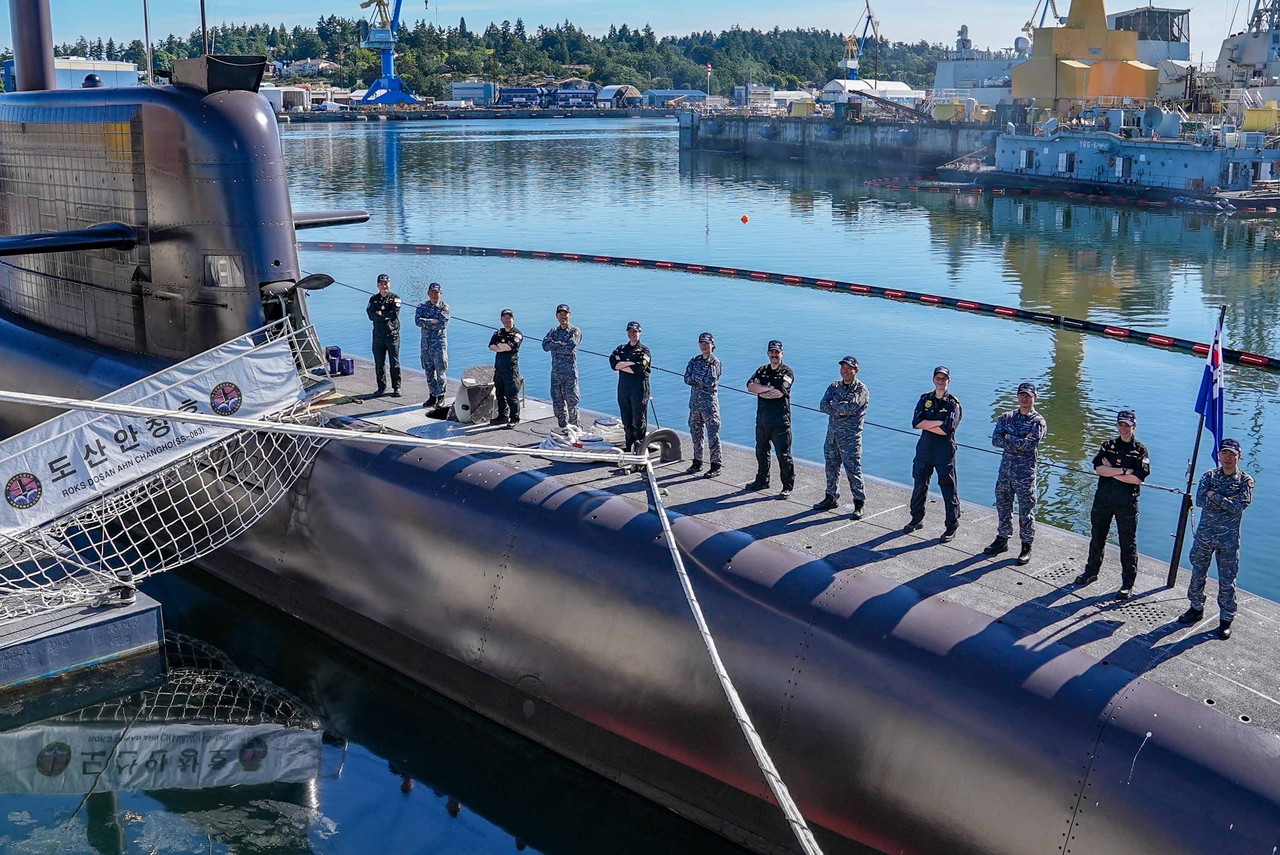
The Canadian government specifically highlighted that TKMS’ 212CD submarine is meticulously engineered for critical Arctic patrol missions, sophisticated undersea surveillance, and rapid special forces deployment. Ottawa further emphasized its complete interoperability with NATO standards and systems.
Canada explicitly stated that the new submarines would significantly enhance its capability to detect, track, deter, and, if necessary, defeat threats across all three oceans bordering the nation, a key strategic objective.
Experts concurred that this comprehensive strategic context heavily influenced Canada’s ultimate decision in the submarine procurement.
Canada’s submarine program transcends a mere naval modernization project. It represents a profound, long-term strategic choice intrinsically linked to Arctic security, Atlantic defense, active NATO operations, domestic industrial benefits, and robust supply-chain resilience.
For South Korea’s defense industry, this outcome distinctly highlights a persistent challenge frequently encountered in markets deeply integrated with NATO defense structures.
Korean defense companies have made remarkable strides, achieving exceptional competitiveness in terms of pricing, delivery speed, and overall platform performance. However, major strategic weapons deals in these critical markets frequently depend on deeply embedded political trust, robust alliance infrastructure, seamless logistics networks, shared training protocols, and decades of mutual operational familiarity.
Despite the setback, officials continue to view the Canada submarine bid as a potential strategic foothold rather than an isolated defeat for South Korea’s defense technology ambitions.
Minister Lee drew a parallel to South Korea’s earlier unsuccessful attempt to export its K2 tanks to Norway. Although the Korean tank received favorable evaluations during rigorous cold-weather trials, Norway ultimately opted for a German platform.
The K2 tank subsequently gained significant momentum in Poland, which, after thoroughly noting the tank’s impressive performance, proceeded to sign a substantial agreement with South Korea, showcasing the potential for market breakthroughs even after initial rejections.
Officials are optimistic that the Canada submarine bid could fulfill a similar pivotal role by serving as a high-profile global showcase for South Korea’s advanced submarine technology, raising its international profile.
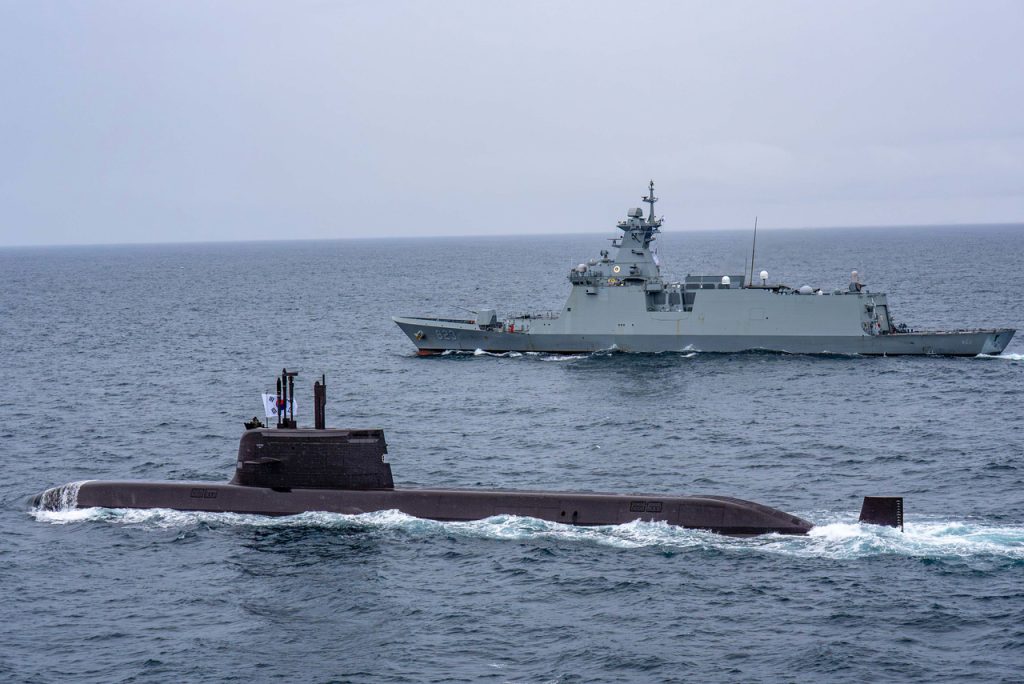
Throughout the intensive campaign, Hanwha Ocean consistently emphasized that its proposal was not based merely on a theoretical paper design. The company proudly highlighted that its platform was rigorously backed by the Korean Navy’s extensive operational experience, including proven long-distance deployment capabilities and superior crew habitability, offering a compelling real-world track record.
Beyond Platform Performance: Cultivating Enduring Defense Technology Partnerships
Nevertheless, officials acknowledged that future bids in the global defense market will increasingly necessitate more than merely offering strong hardware solutions.
Minister Lee noted that contemporary defense markets are progressively being shaped by the emergence of security blocs, the prevalence of domestic industry-first policies, and the critical importance of strategic alignment among nations.
To effectively surmount these multifaceted barriers, South Korea must diligently widen its technological edge, deepen its localization strategies for international partners, and significantly strengthen government-to-government communication channels with prospective buyers, he advised.
Defense experts underscored that the result should not be interpreted simply as a technological failure on South Korea’s part regarding its submarine capabilities. Rather, it profoundly illustrates that major weapons procurement programs are often inextricably linked to broader, overarching security relationships and geopolitical considerations.
“The Canada case unequivocally demonstrates that defense exports, particularly for strategic assets like advanced submarines, are not solely determined by platform performance,” stated Yu Ji-hoon, a distinguished research fellow at the Korea Institute for Defense Analyses.
“They are also significantly influenced by the buyer’s established alliance structure, their specific operational environment, and their long-term, critical security priorities,” Yu further elaborated on the complex decision-making process.
Yu concluded that South Korea’s bid nonetheless proved instrumental in demonstrating that its submarine industry has matured to a level where it can genuinely compete in the final stages of a major Western procurement race, validating its advanced capabilities.
“For South Korea, the paramount task now is to strategically build upon this valuable exposure and proactively develop defense cooperation in a more holistic and comprehensive manner,” he advised, outlining the path forward.
“This entails moving beyond individual defense platforms and instead offering a broader, integrated package that encompasses essential training, robust maintenance support, mutually beneficial industrial cooperation, and the cultivation of enduring, long-term security partnerships,” he concluded, emphasizing a shift towards a more complete defense solution approach.
flylikekite